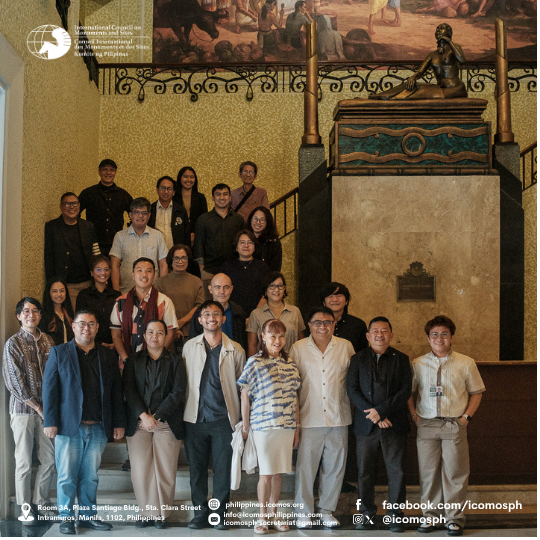
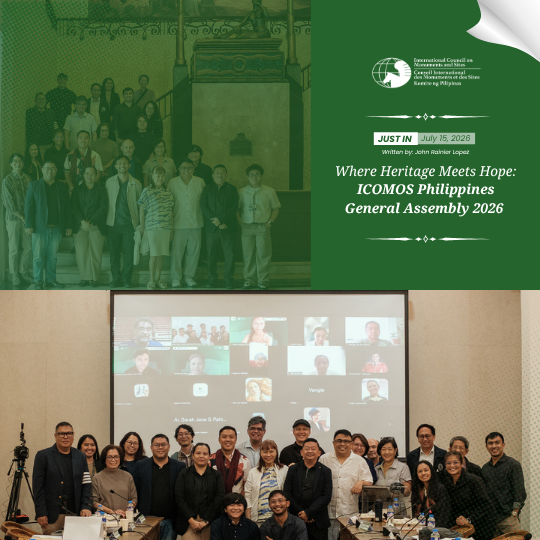
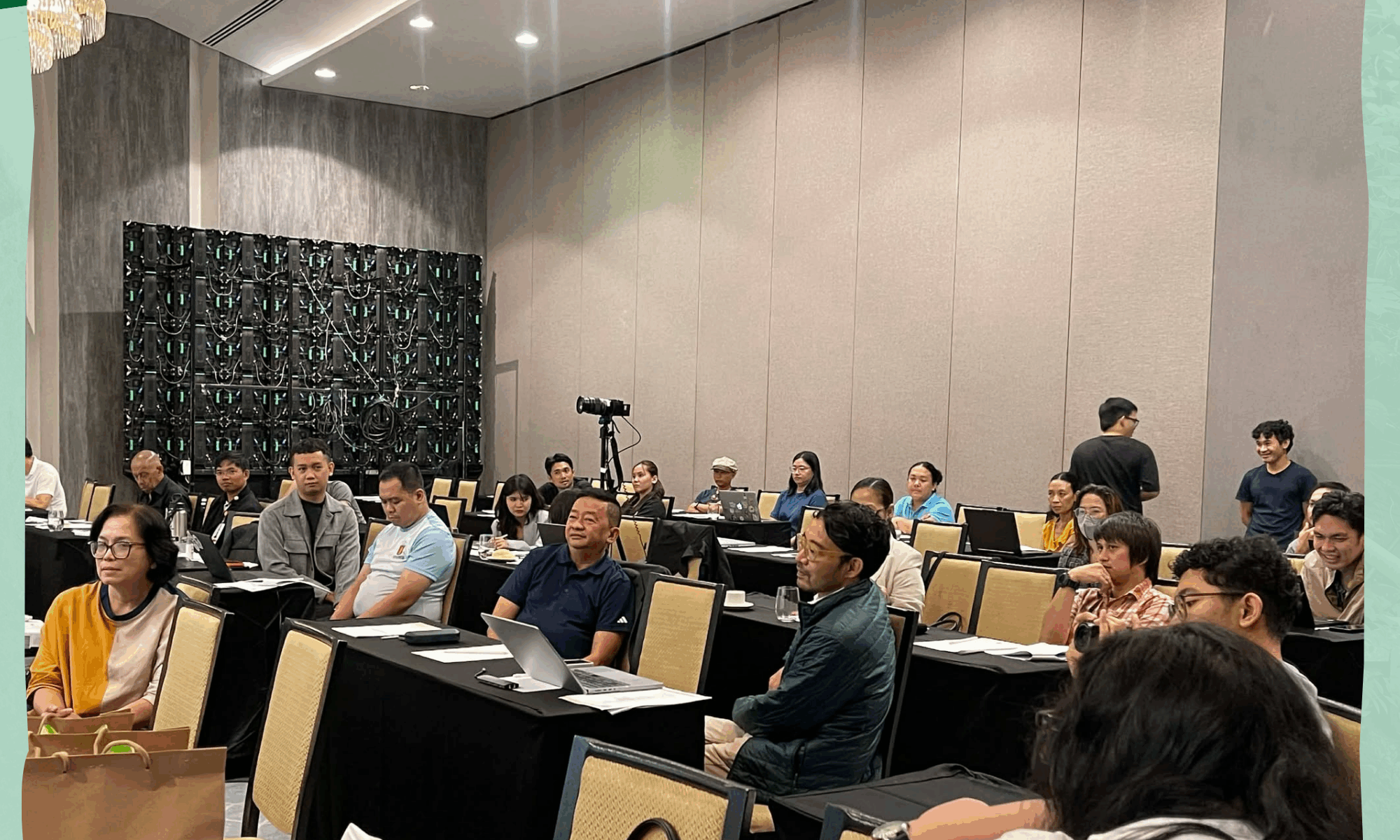
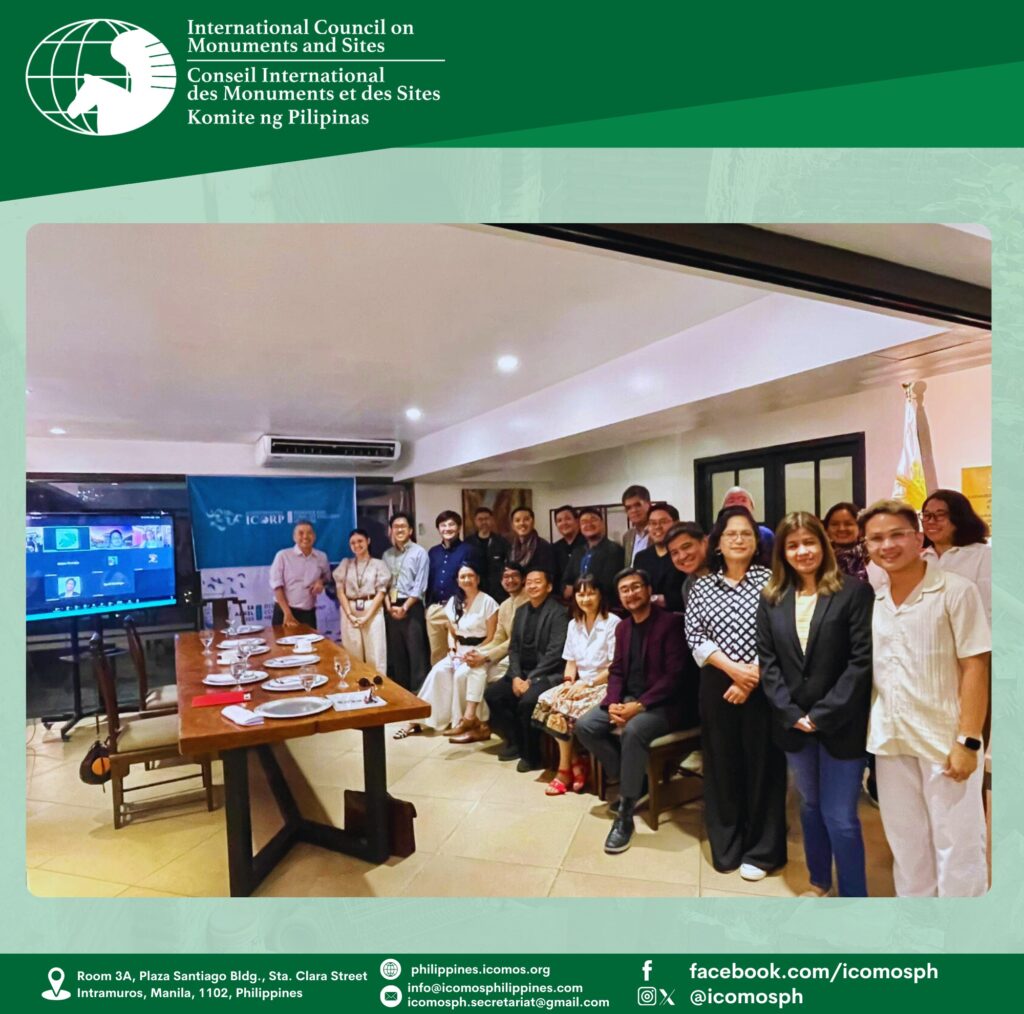
July 11, 2026 | Manila Metropolitan Theater, Philippines — Organizers in Barong Tagalog and Filipiniana moved with quiet precision, guiding participants into the hall. Attendees came bearing narratives of achievements and possibilities, each one a thread in the tapestry of Philippine heritage, some representing universities, others local governments, and many carrying the stories of their communities. Online, faces appeared on Zoom screens from distant cities and provinces. This was not just a meeting. It was a gathering of stewards of memory, people who believe heritage is a living force that shapes identity and resilience.
The assembly opened with a welcome to members, guests, and the outgoing Board of Trustees: Dr. Cheek S. Fadriquela, Ms. Caroline Marie Lising, Ms. Liliane Rosa Rejante-Manahan, Ar. Harvey Vasquez, and Ar. Ramil Tibayan. Quorum was confirmed, the minutes of the previous meeting approved, and technical reminders shared. Yet beyond the formalities, there was a sense of urgency. Heritage is fragile, and its guardians know this well.
Dr. Cheek Fadriquela’s President’s Report reflected on the organization’s journey from 2023 to 2026. He spoke of accomplishments: disaster risk management trainings, active participation in international dialogues that placed the Philippines on the global heritage map, publications and research that deepened conservation knowledge, and strengthened compliance with statutes that ensured credibility. His words carried the weight of collective effort. Members listened intently, others simply nodding, their faces showing pride in what had been achieved.
The Corporate Secretary’s Report, delivered by Ms. Liliane Rosa “Tats” Rejante-Manahan, focused on organizational updates and compliance, ensuring that ICOMOS Philippines remained aligned with international standards. The Treasurer’s Report was represented by Mr. Abdulbasir Endong on behalf of Ar. Harvey Vasquez, who was unable to attend. Endong presented financial updates, underscoring transparency and sustainability in resource management.
In his own Strategic Communications report, Endong highlighted the organization’s growing presence online. He spoke of social media engagements, of posts that reached thousands, of conversations sparked in digital spaces. His words painted a picture of heritage advocacy thriving in the virtual world. Meanwhile, Ar. Ramil Tibayan’s Membership Relations report focused on how ICOMOS engaged with its membership through outreach, collaborations, and active participation. He also presented the current status of membership, emphasizing that the strength of the organization lies in the strength of its members.
The assembly then turned to the Board of Trustees candidates. Each spoke not only of projects but of visions. Ar. Carmencita Solis described Tabang Cebu, her voice steady as she spoke of community-based conservation. Ar. Timothy Augustus Ong presented the Sanchez Mira, Cagayan Project, weaving together architecture and digital humanities. Ms. Beverly Bautista introduced the Samar Sentinel Project, her words carrying the urgency of community engagement. Mr. Phillip Norbert Ahmad Medina shared his Stakeholders’ Imperative on Heritage Conservation, reminding everyone of the importance of grassroots involvement. Ar. Giuseppe Luigi Abcede championed the Pasig River as National Cultural Treasure, his passion evident as he spoke of heritage in the heart of the city. Finally, Ar. Ramil Tibayan outlined his Heritage Consultancy Works Program, drawing from years of experience in conservation. Each presentation was more than a proposal. It was a call to action, urging communities to see heritage as a living, breathing part of daily life.
The spotlight then turned to the Kabilin Partnership Program, an initiative of the Ramon Aboitiz Foundation Inc. (RAFI) and ICOMOS Philippines. This collaboration reflects a shared vision of mobilizing heritage as a driver of sustainable development and resilience. Among the featured initiatives were Dr. Laya Bouqiren-Gonzales’ safeguarding of the Santo Niño devotion, Joselito Corpus’ disaster risk management training, and Lar. Gabriel Victor Caballero’s mobilization of heritage for sustainable development. As each speaker presented, the hall seemed to lean in, listening closely. These projects showed how heritage is not only a cultural anchor but also a catalyst for empowerment, sustainability, and hope.
As the day progressed, anticipation built toward the announcement of the newly elected Board of Trustees for 2026–2029. When the results were revealed, the hall erupted in applause. The new officers are: President Ar. Ramil Tibayan, Vice President Ms. Beverly Bautista, Corporate Secretary Ar. Timothy Augustus Ong, Treasurer Mr. Phillip Norbert Ahmad Medina, and Spokesperson Ar. Giuseppe Luigi H. Abcede. Their election signaled continuity and renewal, blending experience with fresh perspectives to guide ICOMOS Philippines into the next three years. Faces lit up with smiles, some clapping enthusiastically, others quietly reflecting on the responsibility that lay ahead.
It ended with pride etched on faces and hopes rising for the future of heritage conservation in the Philippines. Behind the smiles lay the weight of responsibility. Heritage is fragile, and its guardians know this well. Yet in every report, project, and election result, ICOMOS Philippines reaffirmed its commitment: heritage is not a relic of the past but a living force shaping the nation’s future.
Like the living memories of the past, the story of this assembly was not about titles or procedures. It was about people — the organizers who kept the program flowing, the members who traveled far to be present, the candidates who spoke with conviction, and the leaders who reflected on years of service. Together, they carried a shared promise: to keep memory alive.
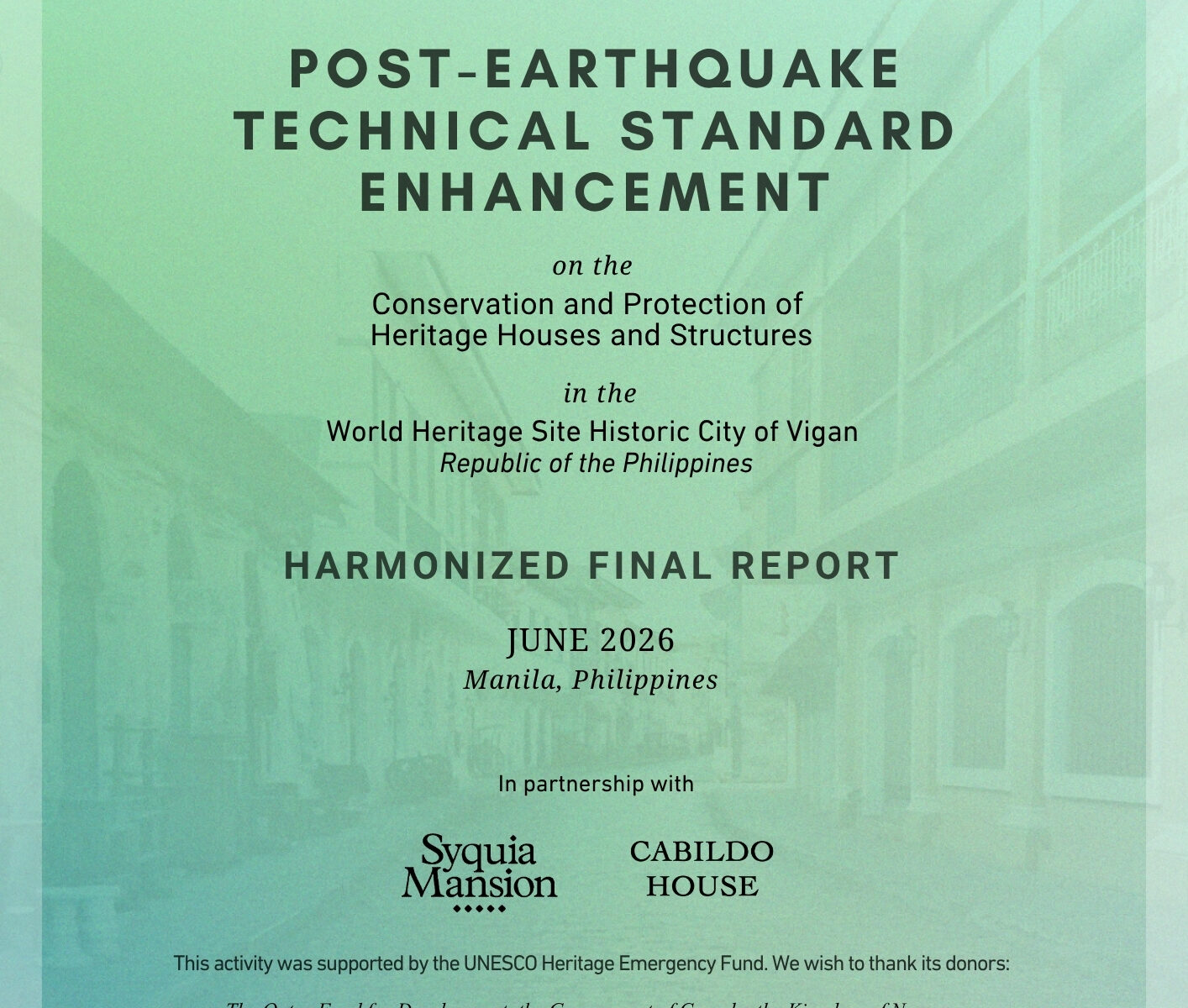
MANILA, Philippines — After the initial report on the damage assessment of the World Heritage Site of the Historic City of Vigan [Post-Earthquake Damage Assessment of Vernacular Building in the World Heritage City of Vigan [PEDAVBV],” UNESCO granted a Heritage Emergency Fund (HEF) for the Post-Earthquake Technical Enhancement of Standards for the Conservation and Protection of Ancestral Vernacular Houses of Vigan that was officially launched on September 14, 2023.
The content of this report resulted from the first Heritage Emergency Fund project in the Philippines. Conservation Expert Teams were tasked to enhance repair and restoration modalities for the vernacular ancestral houses and recommend technical standards enhancement, and there were also in-kind contributions that were performed to supplement the effort towards Vigan’s recovery.
To access the chapter report please download each file below.
Chapter 1 of the report is called “First UNESCO Heritage Emergency Fund (HEF) Project in the Philippines.” This section explains the objectives of the report, presenting the general introduction of the assignment as well as scope and project delimitations. It contains the strategic project framework on awareness raising, knowledge sharing, and collective application.
It also presents the stakeholders involved – the project management teams and expert teams’ delegation, organizational chart, calendar, and a chronological timeline of activities and milestones achieved.
Chapter 2 is the analytical report of the Structural engineering Conservation. This assessment included performing a comprehensive structural investigation, including material testing and characterization, evaluating the structure, and proposing a restoration design based on the evaluation results and conservation principles. Using the results of the assessment, strengthening measures and repair are proposed.
Moreover, the assessment addresses structural safety concerns for damaged areas by providing a shoring design.
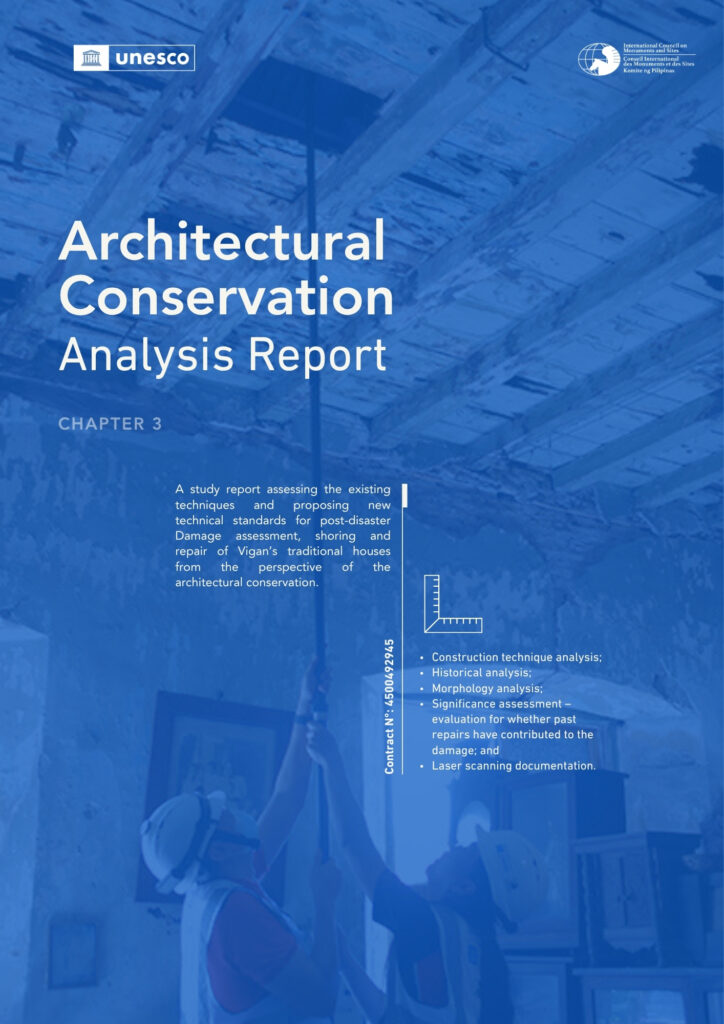
Chapter 3 of this report documents the Architectural Conservation Analytical Report. Highlights of this section of the report are the morphological analysis of the two pilot sites. Utilizing remnant design features, and architectural and structural components, the Architectural Conservation Team was able to forensically reconstruct the evolution of the two houses: its materials, design, and construction techniques.
Comparatively, this analysis considers the typologies of Filipino houses termed Bahay na Bato to the versions found in Vigan. This study also aims to analyze the kinship networks and ownership of these houses and how that affected their massing, form, function, and use.
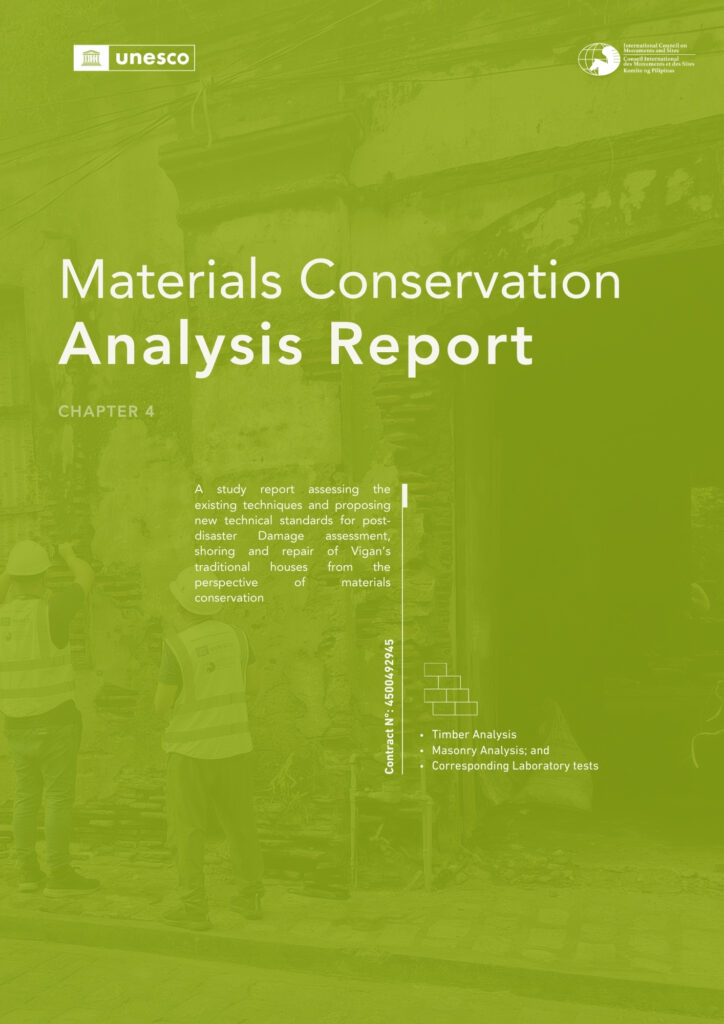
Chapter 4 details the analytical report on the Materials Conservation investigation of two ancestral houses, emphasizing the importance of studying construction materials for effective restoration. This ensures compatibility, minimal intervention, and reversibility while respecting original materials and ensuring security, protection, and disaster risk management.
Understanding materials helps conservators find suitable replacements. Specialists in timber and masonry conservation, along with a forester, a materials scientist, and a chemist, began their studies in October 2023, and this report presents the results from their onsite visits and lab tests.
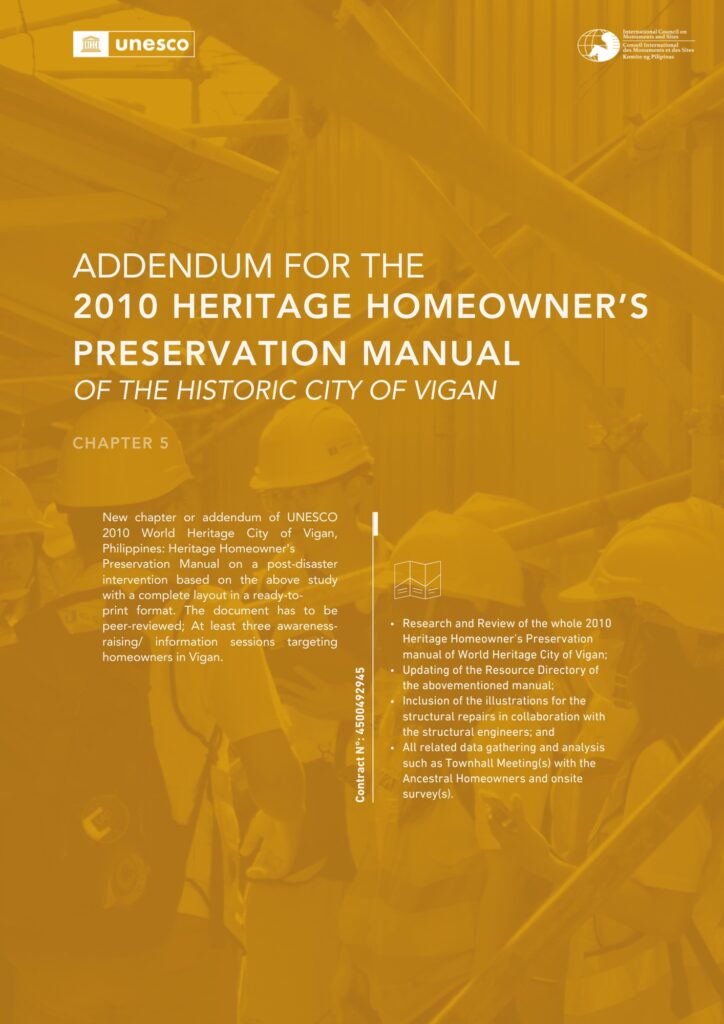
Chapter 5 outlines the addendum for the Heritage Homeowner’s Manual of the Historic City of Vigan. This update incorporates suggested technical standards, assessment findings, and the assigned team’s research methodologies. To gather more data for the manual, team leader Dr. Fatima Nicetas Alonzo co-led a project with Dr. Linda Shetabi and Ms Michelle Chelsea Ho from The University of Hong Kong (HKU),
where local team members and 21 faculty facilitators from the University of Northern Philippines (UNP) guided 104 students grouped in 15 teams in documenting 15 heritage structures damaged in the July 27, 2022 earthquake.
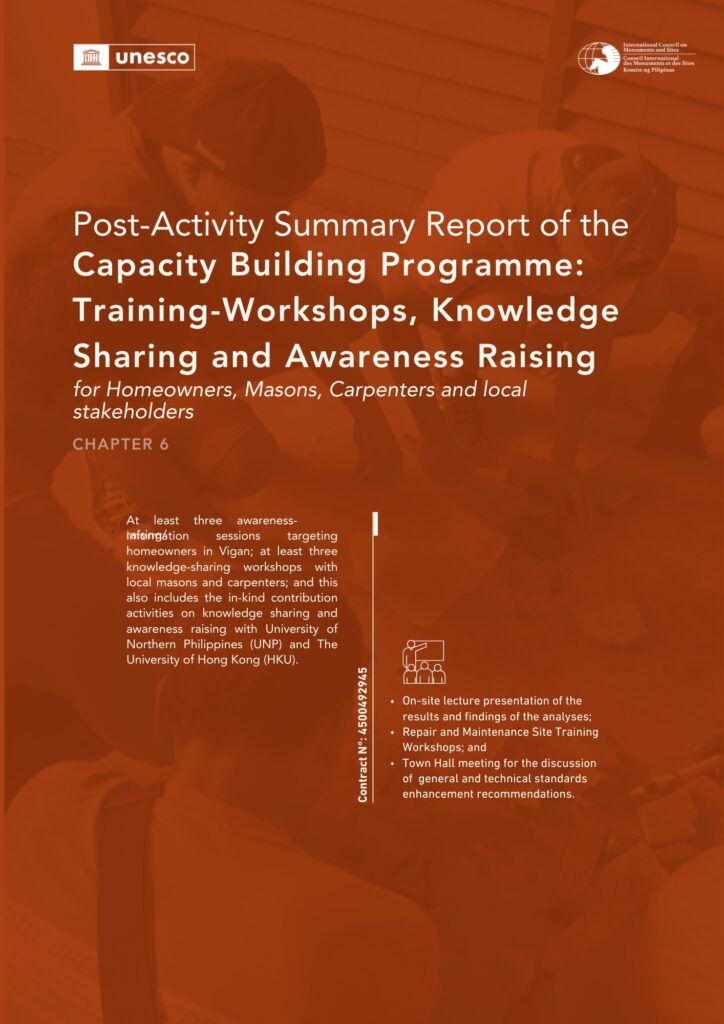
Chapter 6 details the Capacity Building Program and Awareness Raising activities that took place on March 11 – 13, 2024 in Vigan, organized by the Pontifical and Royal University of Santo Tomas Graduate School – Center for Conservation of Cultural Property and Environment in the Tropics (USTGS-CCCPET), the Training-Workshop Team of the project. As part of this report is a letter to UNESCO Jakarta that details activities until May 2024;
this is a summary of all the lectures, workshops, programs, and discussions which includes outputs, insights, and recommendations. This section has the following content: project title, technical details, description of activities, highlights, issues and recommendations/ideas, program brochures, and master list of participants with gender disaggregation and affiliation. As part of the project programming, the Local Manual Review (HCLMRE) Team organized a Town Hall Meeting with local stakeholders and homeowners at Tadena Hall, UNP. Furthermore, the USTGS-CCCPET held a series of lectures and training workshops on Vigan as a World Heritage Site which covered Vigan’s history, design, building materials, hazard vulnerabilities, and conservation strategies. Workshops by Master Mason Shiela Soliveres and Master Carpenter Elvin Alexon Ferrer at the Vigan Conservation Complex, provided by the local government, taught local participants like homeowners, contractors, and craftsmen how to handle traditional materials used in Vigan. These activities helped participants understand the conservation process and gain practical skills for conserving the heritage site.
Chapter 7 is a Disaster Risk Management Plan for Culture Heritage (HDRM) for Vigan. A disaster risk management plan for Vigan focuses on protecting and preserving the site against natural and human-made hazards. This plan includes assessing vulnerabilities, implementing early warning systems, and developing emergency response protocols to ensure rapid and effective action during disasters.
It also involves training local communities and stakeholders in disaster preparedness, conducting regular drills, and integrating traditional knowledge with modern techniques for site conservation. Additionally, the plan emphasizes the importance of collaboration with government agencies, non-governmental organizations, and international bodies to secure resources and support for ongoing risk reduction and recovery efforts.
Chapter 8 is a summation of the major project documentation and visibility outputs. Major project documentation and visibility outputs include detailed reports, visual records, and public presentations showcasing the project’s progress and results. These outputs ensure transparency and accountability, featuring comprehensive assessments, photographs, and videos of key activities.
Public exhibitions such as those tied with the closing ceremonies, press releases, and social media updates helped increase awareness and engagement among stakeholders and the wider community.
Chapter 9 reports donations or in-kind contributions for the HEF VIgan Project. In-kind contributions provided valuable resources and services without monetary exchange, significantly aiding projects and initiatives. For the UNESCO Emergency Fund, in-kind contributions from individuals, organizations, and partners were crucial in the recovery of Vigan after the earthquake.
These contributions varied and included investigation, expertise, lectures, and workshops, among others, which were essential towards the restoration and preservation efforts in Vigan. By supplying professional services, and volunteer work, these in-kind contributions augmented the project’s outputs, paving the way towards a more efficient recovery process. Their importance cannot be overstated, as they not only filled funding gaps but also fostered community involvement and ownership, ensuring that the conservation efforts were both comprehensive and sustainable.
Chapter 10: Closing Ceremony Summary Report. This portion of the report includes the summary of the closing ceremony activities that took place at Tadena Hall at the University of Northern Philippines at the World Heritage Site of the Historic City of Vigan on August 12, 2024. This momentous event provided the opportunity for all stakeholders, participants, and in-kind contributors to the HEF Vigan Project to celebrate its milestones and accomplishments in person and online in a hybrid session.
Eighty persons composed of homeowners, masons, carpenters, local and national government, in-kind contributors, partners, the academe, and the HEF team attended the ceremony. Individuals or representatives of organizations were asked to give a few words about the project’s impact and significance. The conclusion of the project marks the shared commitment to conserving the cultural heritage of Vigan. However, this event does not conclude the activities for the recovery of Vigan; from the HEF Vigan Project, testing and investigations and recommendations are available for use to rehabilitate damaged buildings still remaining.
Chapter 11 describes the initial project funded by the UNESCO Heritage Emergency Fund in the Philippines that had a clear goal: to enhance the conservation efforts for Vigan’s historic houses following an earthquake. With UNESCO Jakarta and ICOMOS Philippines at the helm, the project aimed to support Vigan’s recovery journey.
Experts from ICOMOS Philippines used a comprehensive set of principles and developed recommendations to improve technical standards and bolster the country’s preparedness for future disasters. These guidelines are designed to be flexible, catering to the specific needs of each heritage site. The overarching aim is to elevate conservation practices nationwide, ensuring a sustainable approach to preserving our cultural treasures for generations to come.
The last chapter of the report, Chapter 12, shares the Key Achievements and Milestones of the First UNESCO Heritage Emergency Fund Project in the Philippines. This chapter brings all of the activities together describing in detail the impact that the project had on the recovery of Vigan. Topics include mobilization of diverse, gender-sensitive, and intergenerational Expert Teams,
Technical Assessment and Conservation Standards Enhancement, enabling stakeholders through Capacity Building and Knowledge Sharing, Knowledge Sharing: Awareness-Raising towards Coalition Building and Collective Application, and centering Heritage as a Public Good to raise In-kind Contributions. A discussion of challenges and prospects for future emergency and related projects follows with an analysis of strengths, weaknesses, threats, and opportunities. Lastly in the third section, desirable outcomes and outputs on disaster risk management and post-crisis recovery are presented, reflecting on implementation of the fund – and how to bring continued recovery activities for the future.
In conclusion, the initiatives undertaken in response to the damage assessment of the Historic City of Vigan, supported by the UNESCO Heritage Emergency Fund, signify a significant step towards preserving and safeguarding cultural heritage in the Philippines. Despite inherent limitations and challenges, including governmental constraints and funding disparities, the project has created a multidisciplinary approach to conservation, encompassing structural, architectural, and materials assessments.
Furthermore, the integration of in-kind contributions and capacity-building lectures and workshops underscores the importance of community engagement and knowledge dissemination in ensuring the sustainability of conservation efforts.
Ultimately, the comprehensive achievements outlined in this report reflect a concerted commitment to enhancing conservation practices, reaffirming the significance of heritage as a collective endeavor for the benefit of future generations.
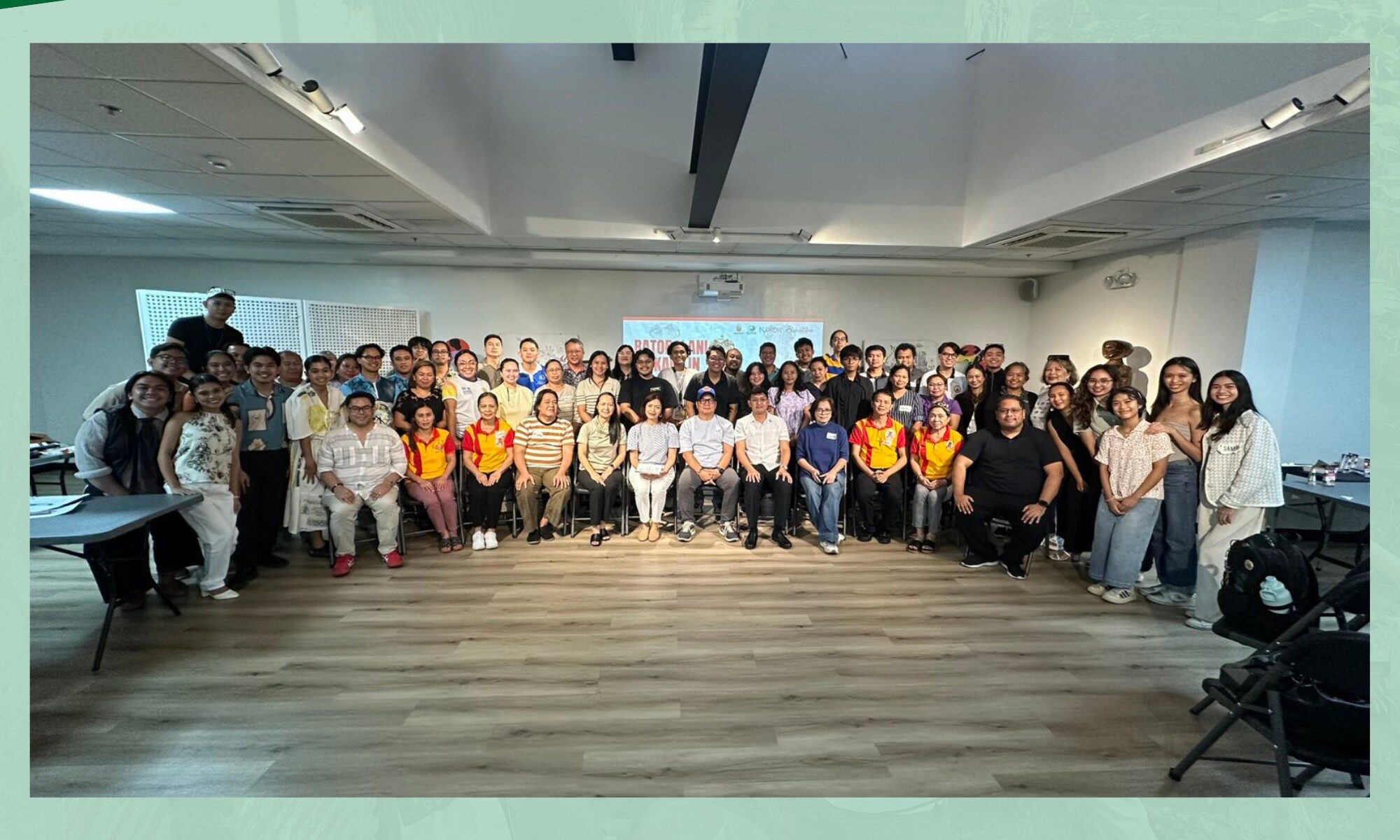
Batobalani sa Kabilin is a three-day safeguarding workshop under the Intangible Cultural Heritage of the Santo Niño de Cebu Devotion Project, implemented through the Kabilin Partnership between the Ramon Aboitiz Foundation Inc. (RAFI) and the International Council on Monuments and Sites (ICOMOS) Philippines. Drawing from the meaning of batobalani—a force that brings people together—the initiative celebrates the communities, cultural practices, and shared knowledge that sustain the Santo Niño devotion’s intangible cultural heritage elements within its broader cultural ecosystem as practiced in heritage sites. Through research aggregation, safeguarding planning, multi-stakeholder coalition building, education, interpretation, and community engagement, Project Batobalani seeks to strengthen this living heritage and support its transmission to future generations.
Across three days, the Batobalani sa Kabilin Workshop demonstrated that safeguarding is not merely about documenting traditions but about strengthening the relationships, knowledge systems, institutions, and communities that sustain them. By bringing together practitioners, devotees, community organizations, scholars, government agencies, and heritage professionals, the workshop embodied the principle of the widest possible participation and laid the foundation for a more inclusive, community-driven, and sustainable future for the intangible cultural heritage of the Santo Niño de Cebu devotion.
The workshop was attended by a diverse group of stakeholders representing the many communities and sectors that contribute to the vitality of the Santo Niño de Cebu devotion. Participants included representatives from Basilica community-mandated organizations, partner barangays, local government units, museums and heritage interpretation centers, academic and research institutions from Cebu and Leyte, image bearers and caretakers of devotional images, Sinug troupe culture bearers, craft artisans, tourism officers, sectoral representatives, and devotees. Their presence reflected the broad cultural ecosystem that sustains the devotion and affirmed the importance of collaborative safeguarding grounded in community participation in heritage sites and settings.
The organizers also extend their heartfelt appreciation to the Kabilin Youth Partners, a dedicated group of volunteer third-year students from the University of the Philippines Cebu College of Communication, Art, and Design Communication Program. Throughout the workshop, these young heritage advocates provided invaluable support in documentation, ensuring participant welfare, and logistics. Their enthusiasm, professionalism, and commitment to cultural heritage demonstrate the vital role of youth in safeguarding living traditions and ensuring that the values, knowledge, and practices associated with the Santo Niño de Cebu devotion continue to be appreciated and transmitted to future generations.
The team of Project Batobalani gratefully acknowledge the partnership and support of Ramon Aboitiz Foundation Inc. (RAFI), ICOMOS Philippines, and Casa Gorordo Museum. The workshop was made possible through the generosity of its venue partners and hosts: Cebu City Museum, Basilica Minore del Santo Niño de Cebu, and The Kabilin Center Open Space. We likewise extend our appreciation to the UNESCO Philippine National Commission and the National Commission for Culture and the Arts (NCCA) for enriching the workshop through their keynote sessions and contributions to the ongoing conversation on safeguarding living heritage in the Philippines and Asia.
International Council on Monuments and Sites – ICOMOS Philippines
RAFI – Ramon Aboitiz Foundation Inc.
Casa Gorordo Museum
Cebu City Museum
Basilica Minore del Santo Nino
The Kabilin Center
UNESCO-Philippine National Commission
National Commission for Culture and the Arts
UP Cebu College of Communication, Art, and Design – CCAD
Communicators of UP
Keynote Speakers and Panel Discussants:
UNESCO National Commission, Secretary General – Dr. Ivan Anthony Henares
UP Cebu CCAD Faculty and ICOMOS Member-Workshop Convener – Dr. Laya Boquiren Gonzales
National Committee on Monuments and Sites Member, National Commission on Culture and the Arts and UP Los Banos Faculty – Berniemack Arellano (MS Geography)
Cavite Historian and ICOMOS Member- Phillip Medina (Phd Candidate, UP Diliman History)
Cultural Worker and Anthropologist- Nestor Horfilla
Chief, Program Management Division,
National Commission on Culture and the Arts – Renee Talavera
CHAC Commissioner and Conservation Architect – Ar. Melva Java
Historian, PhD University of Navarra and University of Asia and the Pacific Professor of History – Dr. Svetlana Camacho
Cebu Normal University Assistant Professor – Ian Dale Rios
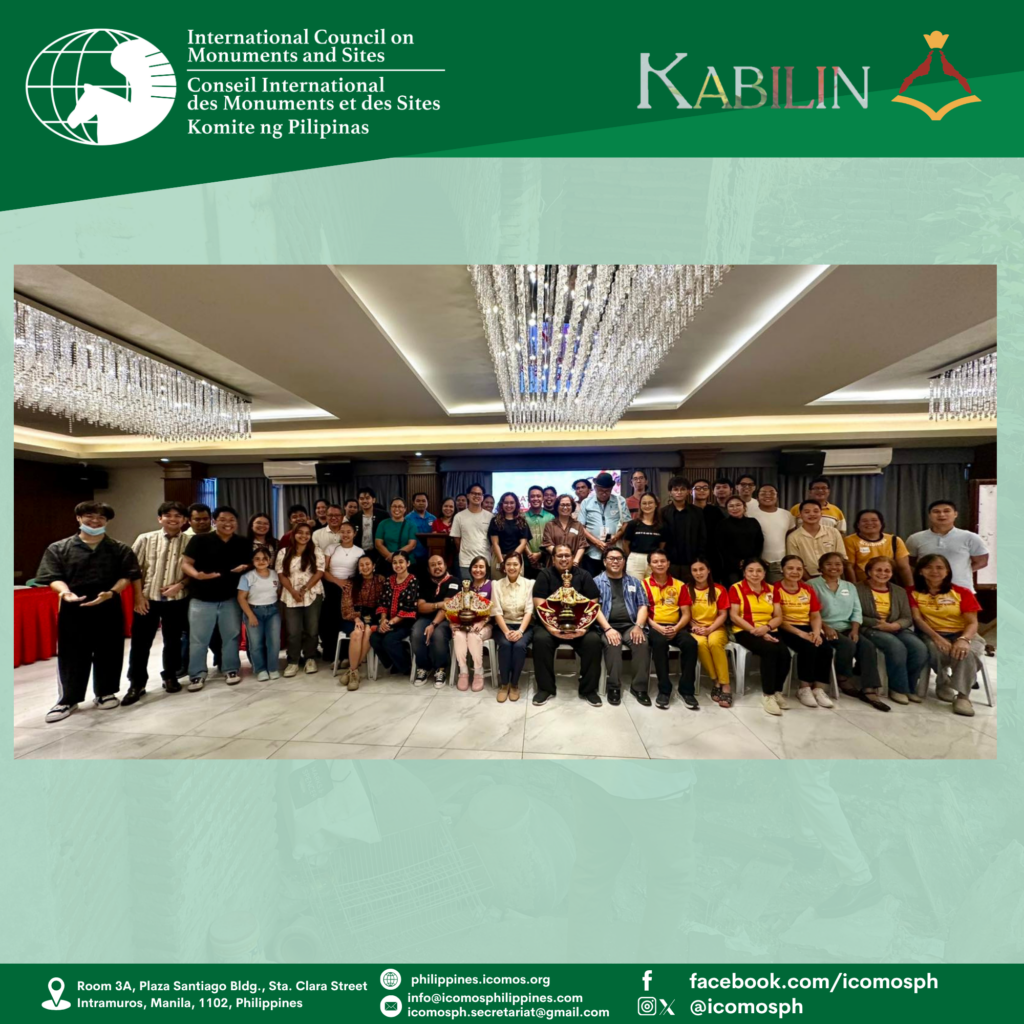
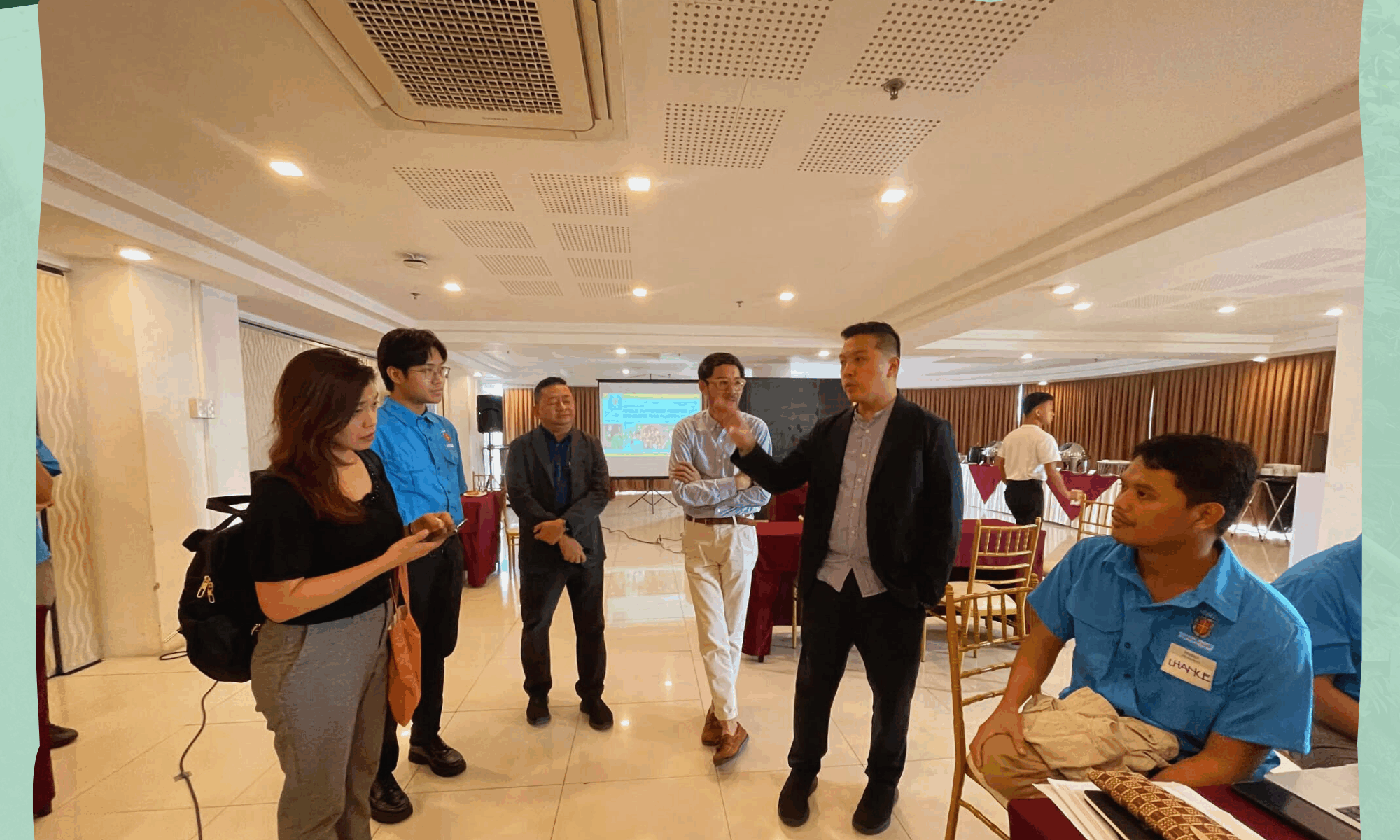
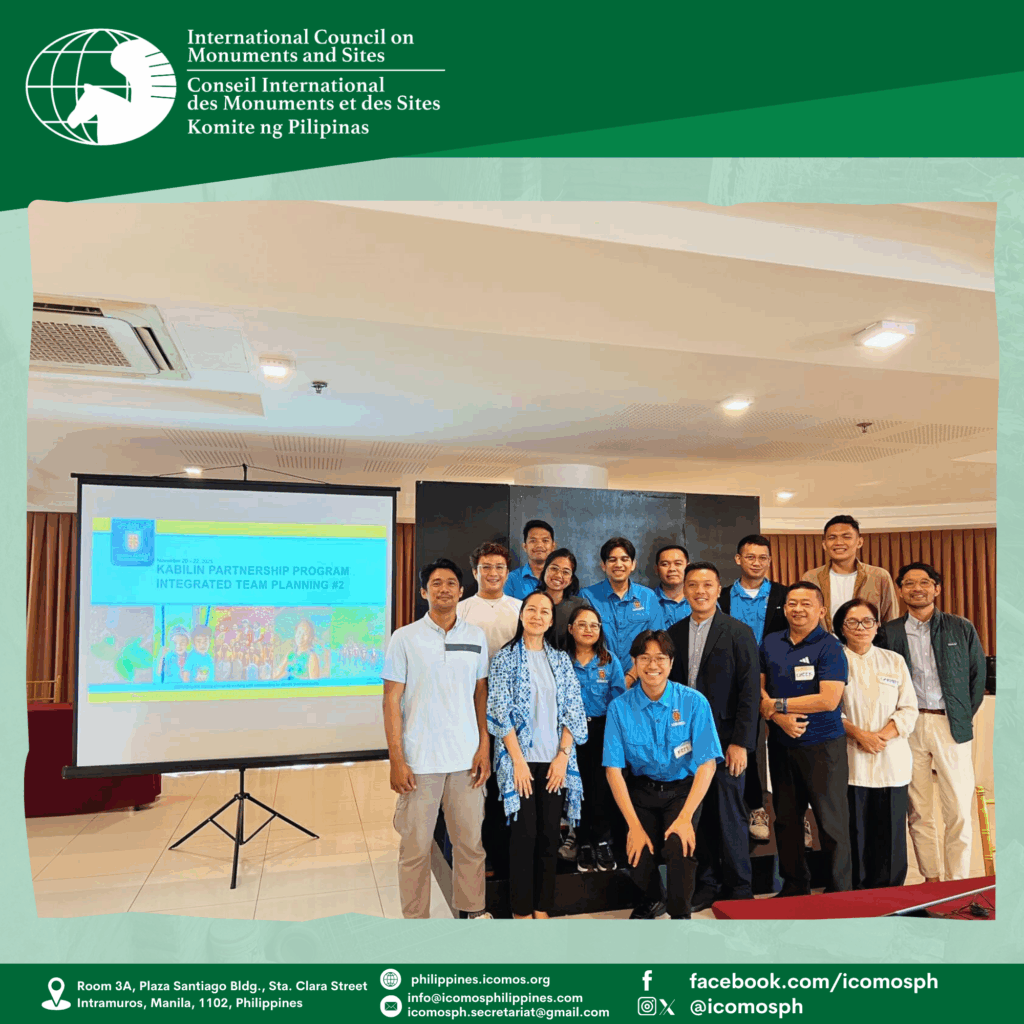
The Ramon Aboitiz Foundation Inc. (RAFI), together with ICOMOS Philippines, successfully concluded the Kabilin Partnership Program (KPP) Team Planning Sessions held from November 20 to 22, 2025 at One Central Hotel, Cebu City. The three-day planning activity brought together project directors, leads, technical specialists, and program staff to align priorities, finalize milestone calendars, and strengthen coordination across all KPP heritage initiatives for 2026–2029.
The sessions brought together program team members from both ICOMOS Philippines and RAFI. The ICOMOS Philippines delegation was led by Dr. Cheek Fadriquela, President, along with the Project Directors—Dr. Laya Gonzales for the Safeguarding of the Intangible Cultural Heritage of the Santo Niño Devotion (ICHSN); LAr. Gabriel Victor Caballero for PAMANA 2030’s Philippine Policy Guidance for Heritage and the Sustainable Development Goals (MPHSD); and Mr. JH Corpus, MHSP for the National Training Course on Disaster Risk Management of Cultural Heritage (DRMCH). They were joined by Mr. Abdulbasir Endong, Heritage Affairs Officer; Ms. Chelsea Kaye Cabahug, ICHSN Local Research Assistant; and Ar. Carmencita Solis, Cebu-based member and Ped Expert for DRMCH.
From RAFI, attendees included Marie Sol D. Gonzalvo, Executive Director for the North and Central Portfolio; Ar. Kenneth Tua, PhD, Kabilin Chief Project Officer; Ador Vincent Mayol, MPHSD Project Lead; King Rosales, DRMCH Project Lead; John Wesley Rocha, ICHSN Project Lead; Joworski Alipon; John Russel Bragat; Chelsea Kaye Cabahug, Local Research Assistant; Abigail Eugenio; John Russel Bragat; Marthel Jay Ubas; and Lhance Caratao.
The planning sessions formally opened with an orientation on the Kabilin Integrated Project Teams, focusing on changes to program initiation requirements, manpower updates, required planning outputs, and updated grants management procedures. Discussions ensured that all teams were aligned with improved processes for project charter preparation, disbursement protocols, and efficient budget utilization—key mechanisms supporting program implementation.
Participants then worked on refining the Work Breakdown Structures (WBS) of each project in relation to both the RAFI and ICOMOS Philippines calendars, producing a consolidated milestone roadmap covering 2026 to 2029, along with a detailed Year 2 (2026) implementation schedule. This allowed project teams from DRMCH, MPHSD, and ICHSN to synchronize their targets and identify strategic dependencies across initiatives.
A significant portion of the sessions was dedicated to reviewing and approving the summarized PIP–WBS–Milestones of each project cluster. Each team presented its four-year and Year 2 plans for validation, resolution, and approval, ensuring that all activities align with program goals, resource availability, and organizational priorities for heritage conservation and capacity-building.
The workshop continued with an in-depth planning session focused on crafting 2026 Activity Proposals, where teams underwent guided proposal development, internal discussions, and cross-team consultations. These proposals, once consolidated, will serve as the foundation for year-round implementation and interdepartmental coordination.
The Core Project Management Team also held specialized meetings to address year-specific planning, activity sequencing, and plotting of scheduled tasks into the unified MS Excel master calendar. Final presentations of the Activity Proposals for DRMCH, MPHSD, and ICHSN were conducted, followed by resolutions and approval motions to proceed with implementation preparations for 2026.
The planning concluded with a joint meeting between the Core Project Management and Grants Teams, focusing on validating aggregated disbursement requirements, clarifying budget utilization guidelines, and strengthening support mechanisms for the program’s expanding portfolio of heritage initiatives.
The Kabilin Partnership Program Team Planning Sessions reaffirmed the strong collaboration between RAFI and ICOMOS Philippines in advancing heritage conservation in the Visayas through aligned strategies, strengthened systems, and coordinated organizational direction. The outputs of the three-day activity will guide the next cycle of heritage programs and ensure that project teams remain equipped to deliver sustainable, community-centered, and well-coordinated heritage interventions.
CEBU CITY, Philippines — The Ramon Aboitiz Foundation Inc. (RAFI), in collaboration with ICOMOS Philippines, successfully conducted the Conservation Management Plan (CMP) Workshop on November 18–19, 2025 at Summit Galleria Cebu. The two-day workshop convened heritage practitioners, planners, and partner institutions to strengthen technical and institutional capacities in the preparation and implementation of Conservation Management Plans for significant cultural properties across the country.
Throughout the workshop, participants engaged in in-depth discussions on cultural significance assessments, architectural documentation, structural analysis, archaeology, material studies, and the development of informed conservation strategies tailored to heritage sites. The program also emphasized the practical integration of CMP principles into organizational policies and decision-making processes, promoting a sustainable and evidence-based approach to heritage management.
The workshop was enriched by a distinguished panel of experts from the fields of architecture, conservation, archaeology, and heritage science. Ar. Kenneth Javier Tua, PhD—an economic scientist and heritage conservation specialist with advanced degrees in cultural landscapes, diplomacy, and agricultural science— presented the Workshop Guidelines and Outline and explained the Conservation Management Plan (CMP) framework, highlighting its role in guiding stakeholders through a structured process of understanding, assessing, and managing heritage sites. He emphasized how the CMP supports national heritage laws, aligns with regional practices, strengthens UNESCO-related commitments, and fosters transparency, accountability, and collaboration among agencies, experts, and communities.
Ar. Caryn Paredes-Santillan, PhD, an expert in architectural theory, modern Asian architecture, and conservation planning with doctoral credentials from the University of Tokyo, discussed the role of comparative studies in establishing cultural significance. Her wide-ranging work on CMPs for major Philippine heritage sites such as Intramuros, San Sebastian Basilica, the Manila Central Post Office, and the Cultural Center of the Philippines offered participants a strong foundation in methodological approaches to heritage evaluation.
Architectural conservator Mr. JH Corpus, MHSP, who specializes in stone conservation, disaster risk management, and heritage policy, contributed his extensive experience from both Philippine and international institutions, including his work with the Metropolitan Museum of Art’s Cloisters and the NYC Landmarks Preservation Commission. His leadership in heritage recovery efforts following major disasters in the Philippines provided participants with grounded, practical perspectives on structural assessment and conservation planning.
Cheek S. Fadriquela, PhD – an Assistant Professor at the University of Santo Tomas Graduate School and Associate Professor at the University of the Philippines Los Baños, shared his expertise in the conservation of wooden built heritage. through the lens of the 7Ms of documentation. He is the current President of ICOMOS Philippines.
Archaeologist Dante Ricardo N. Manipon from the UP School of Archaeology expanded the discussion by introducing participants to the fundamentals of archaeology within development contexts. With ongoing research on Spanish-era forts and churches across the Philippines and experience in public archaeology, he guided participants in recognizing archaeological materials and understanding how discoveries can influence responsible project planning.
Ar. Carmencita Solis, a Cebuano expert in architecture, urban planning, and community-based conservation with graduate studies from the Asian Institute of Technology, discussed the critical role of architectural conditions assessment in the success of any conservation process. As a lecturer at the University of San Carlos and an active member of ICOMOS Philippines’ ICORP (International Committee on Risk Preparedness), she offered valuable insights into documentation methods and the importance of understanding a structure’s past, present, and future conditions.
Together, these experts provided an interdisciplinary and comprehensive learning experience that deepened participants’ understanding of heritage values, conservation processes, and management strategies. The collaborative effort between RAFI, ICOMOS Philippines, and the workshop participants marks a significant step toward strengthening heritage stewardship in the Visayas. The success of the workshop reinforces a shared commitment to preserving the cultural, historical, and architectural legacy of Philippine communities and highlights the importance of capacity-building in ensuring that heritage conservation remains informed, sustainable, and community-centered.
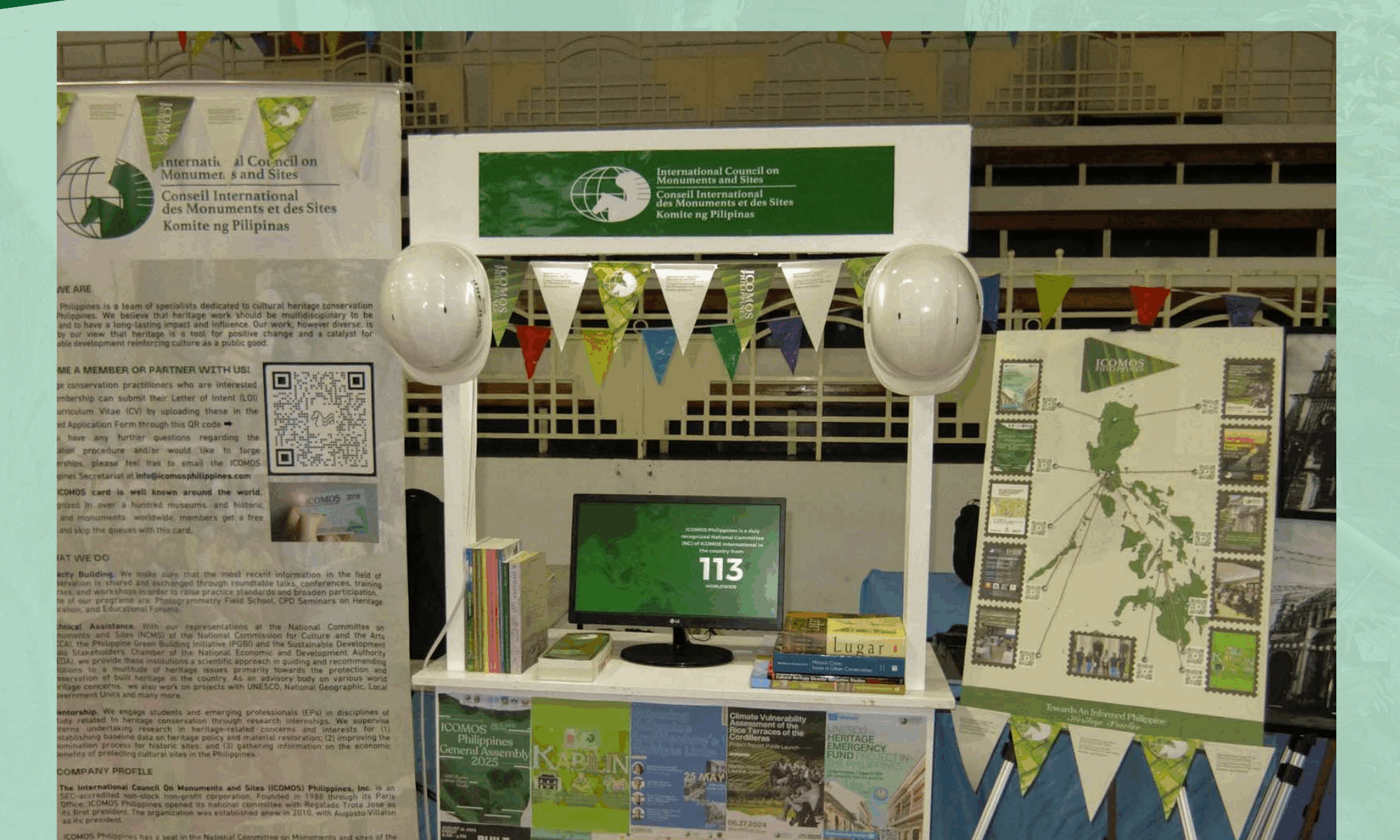
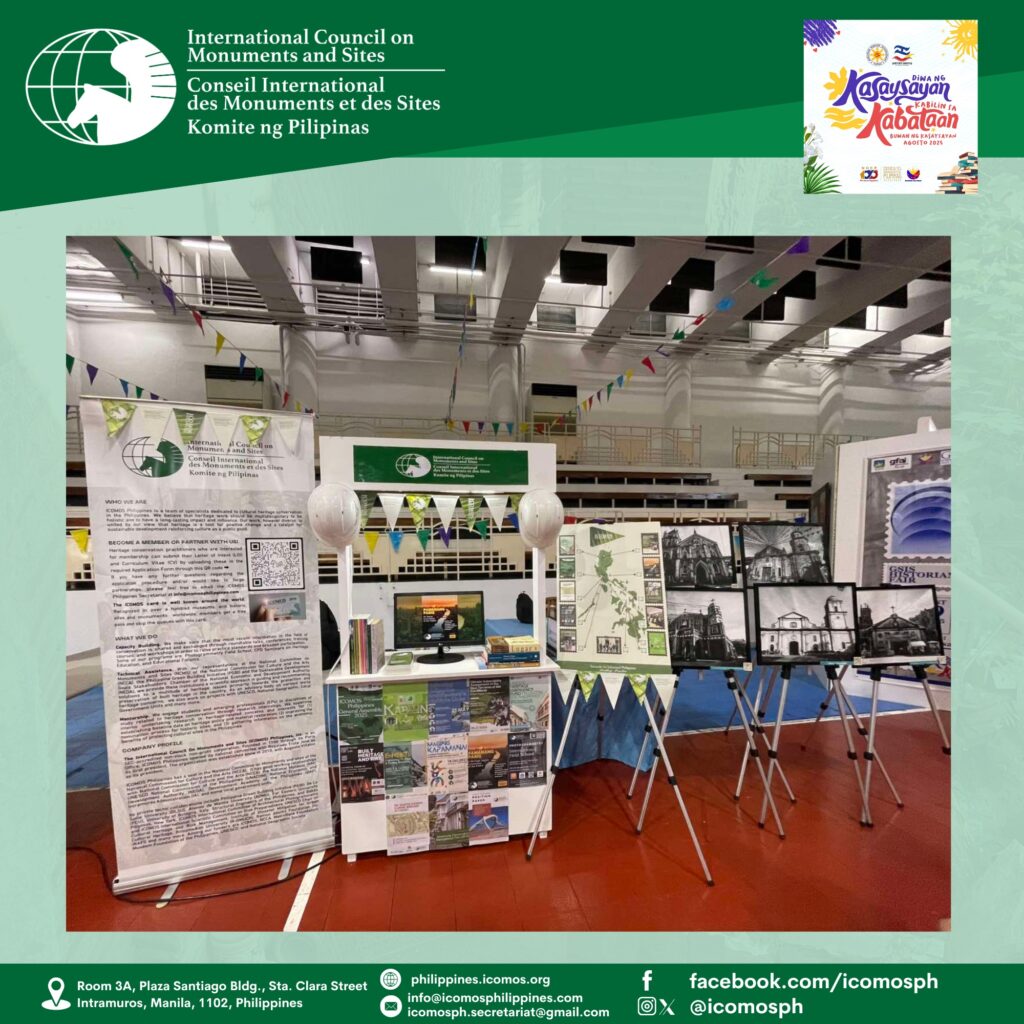
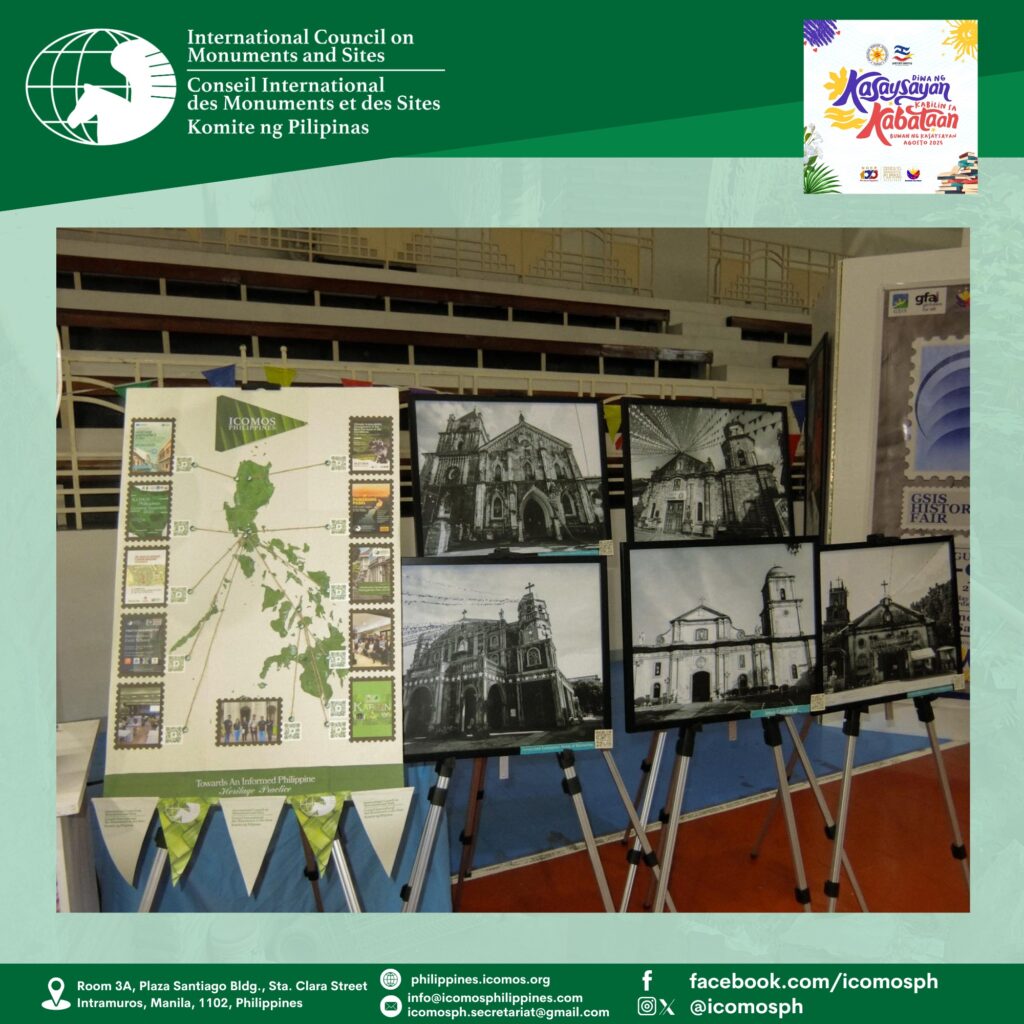
Pasay, Philippines — ICOMOS Philippines was proud to participate in the 2nd GSIS Historians’ Fair, held from August 7 to 9 at the GSIS Gymnasium in Pasay City, as a part of the nationwide celebration of History Month. Through exhibits, interactive booths, and lectures from various historians, historical institutions, and organizations in both the public and private sectors, they shared a singular objective, which is to celebrate the history and cultural heritage of the Filipinos.
As visitors entered the venue, they were welcomed by a vibrant atmosphere brimming with engaging displays and lively music coming from different exhibitors. The ICOMOS Philippines booth attracted visitors, students, researchers, and history enthusiasts eager to explore the organization’s efforts in preserving the nation’s material and cultural heritage. During the fair, ICOMOS Philippines expressed its commitment through a booth display in safeguarding cultural heritage for future generations while also showcasing a selection of the organization’s projects from past years.
The ICOMOS PH exhibition offers an interactive map that enables visitors to conveniently scan the embedded QR code to explore the latest projects by ICOMOS Philippines. Provided also are pamphlets to offer further context about the organization. Furthermore, ICOMOS Philippines displayed five framed photographs of churches in Cavite, taken by Mr. Phillip Medina, which enhance the informative aspect of the overall booth.
In addition to the booths, the fair also features a special lecture by Prof. Ambeth Ocampo titled “Zooming in History: God is in the Details” on August 8. There is also a panel discussion on “Trajectories of Public History in the Philippines: Efforts of Professionals, Enthusiasts, and Advocates,” led by Prof. Lars Ubaldo, PhD, Prof. Ian Alfonso, PhD, and Mr. Stephen Pamorada. On Day 3 of the fair, August 9, Prof. Jose Victor Torres, PhD, presents “Knowing Aguinaldo: A Look into an Unknown Side of an Unknown Past.” The event concludes with a lecture by Ms. Mona Magno-Veluz, also known as Mighty Magulang, who addresses “How the Catálogo Alfabético de Apellidos Shaped Filipino Identity.”
Throughout the three-day event, the booth became a meeting place for ideas, where curious minds asked about the protection of historic sites, the importance of cultural conservation, and the role of communities in keeping the heritage alive. Beyond information, the booth offered an experience. Visitors were encouraged to reflect on the theme “Diwa ng Kasaysayan, Kabilin sa Kabataan”; it inspired the visitors to think about history not just as the record of what happened but as a living spirit passed down to future generations as a legacy. Young people who participated in the fair connected with this message, and many of them felt empowered to continue being involved in sustaining and preserving their local heritage after leaving the fair.
The 2nd GSIS Historians’ Fair 2025 transcended a mere exhibition of remembrance; it served as a vibrant celebration of our collective memory and shared identity. This event provided ICOMOS Philippines with an opportunity to engage actively with the community and foster awareness about heritage conservation. Additionally, it served as a reminder that the responsibility of protecting history lies with each of us.
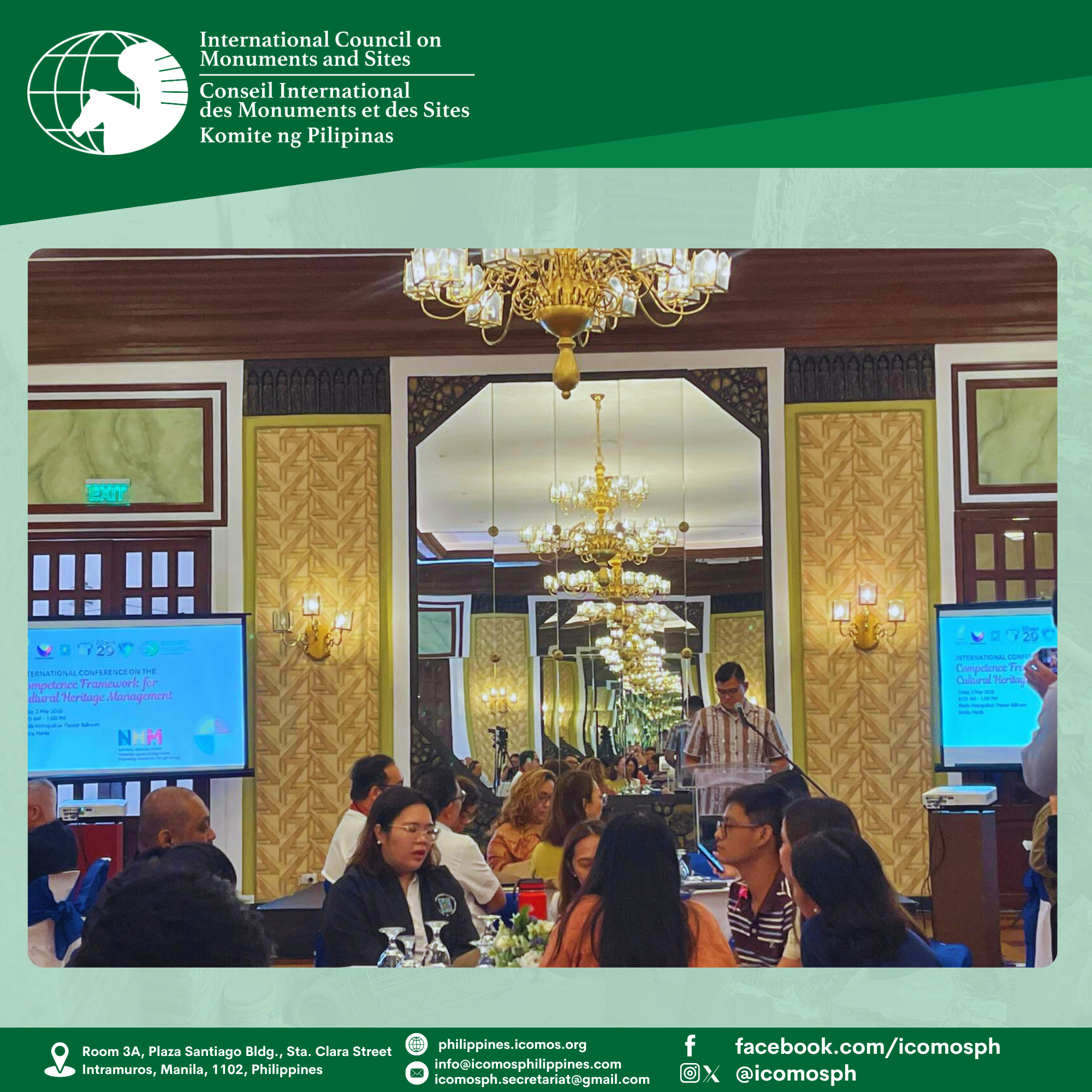
Manila, Philippines – May 2, 2025 — As part of its continuing efforts to professionalize and strengthen the cultural heritage sector, the National Commission for Culture and the Arts (NCCA) successfully hosted the International Conference on the Competency Framework for Cultural Heritage Management on May 2, 2025. The event, held at the Manila Metropolitan Theater Ballroom in Ermita, Manila, brought together experts, practitioners, and stakeholders in heritage conservation from across the country. This conference is in line with the month-long celebration of Heritage Month 2025, further highlighting the importance of advancing cultural heritage management in the Philippines.
Organized in partnership with the University of Santo Tomas Graduate School – Center for Conservation of Cultural Property and Environment in the Tropics (USTGS-CCCPET) and the International Council on Monuments and Sites Philippines (ICOMOS Philippines), the conference served as a significant platform for advancing the discussion on building a national competency framework aligned with global heritage management standards.
The event commenced with a warm welcome from Mr. Joseph Patrick V. Lee, Chief of the Cultural Properties Regulation Division at NCCA, who recognized all of the participating heritage workers coming from different agencies, organizations, and universities. This was followed by Ms. Beverly Macayan-Bautista, MAEd, Officer-in-Charge of USTGS-CCCPET, who articulated the rationale of the conference. She underscored the need for structured competency-based training programs that reflect the evolving demands of heritage work, especially in the face of climate change, urbanization, and cultural globalization.
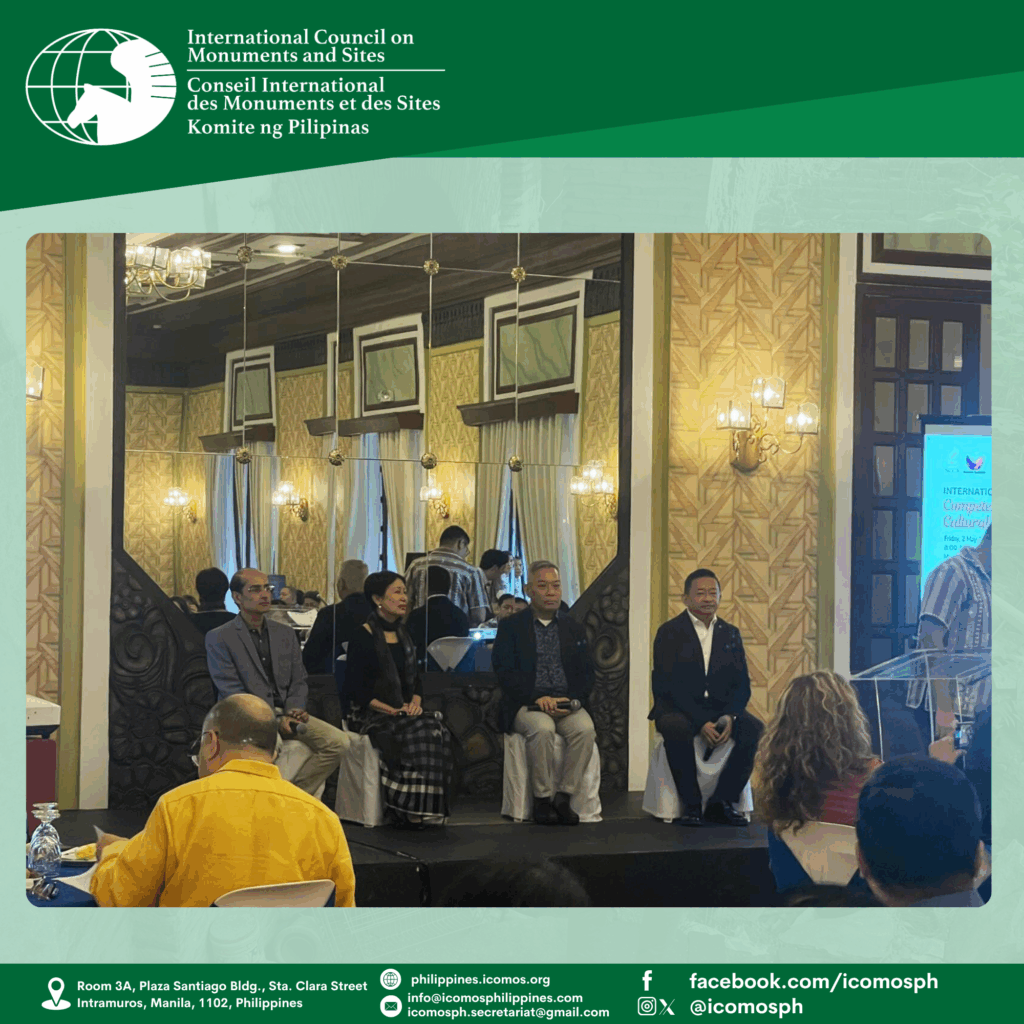
The conference featured an esteemed lineup of speakers who shared global and local perspectives on cultural heritage management:
Ms. Felicia Sta. Maria, an independent writer and researcher, delivered a compelling talk on Early Initiatives to Guide Cultural Workers in the Philippines, offering a historical overview of past capacity-building initiatives and highlighting the longstanding need for a unified professional framework in the field.
Prof. Neel Kamal Chapagain, PhD, a respected academic from Ahmedabad University, India, discussed Developing the Competency Framework for Cultural Heritage Management. He drew from his international experience and UNESCO-led frameworks to propose a structured skill set model that includes knowledge, abilities, and ethical values vital to safeguarding cultural heritage.
Assoc. Prof. Eric Babar Zerrudo, PhD, Executive Director of NCCA, presented Aligning Cultural Heritage Education in the Philippines to the UNESCO Competency Framework: The UST Graduate School Program Experience. His talk highlighted the importance of integrating heritage education into academic institutions and aligning curricula with global standards such as UNESCO’s “Competence Framework for Cultural Heritage Management” to ensure sustainability and excellence in the field.
Assoc. Prof. Cheek S. Fadriquela, PhD, President of ICOMOS Philippines, spoke on ICOMOS Philippines as a Driver of Informed Heritage Conservation Practice. He outlined the role of ICOMOS as an advocacy and technical body that bridges policy, research, and community-based conservation in the Philippine context.
An open forum followed the presentations, providing an opportunity for participants to engage directly with the speakers. Attendees raised valuable questions and shared their experiences from the field, enriching the discourse on localized application of competency-based heritage management practices.
To formally conclude the conference, NCCA Chairman Victorino Mapa Manalo shared closing remarks, acknowledging the importance of collective and sustained action in elevating the standards of cultural heritage management in the country.
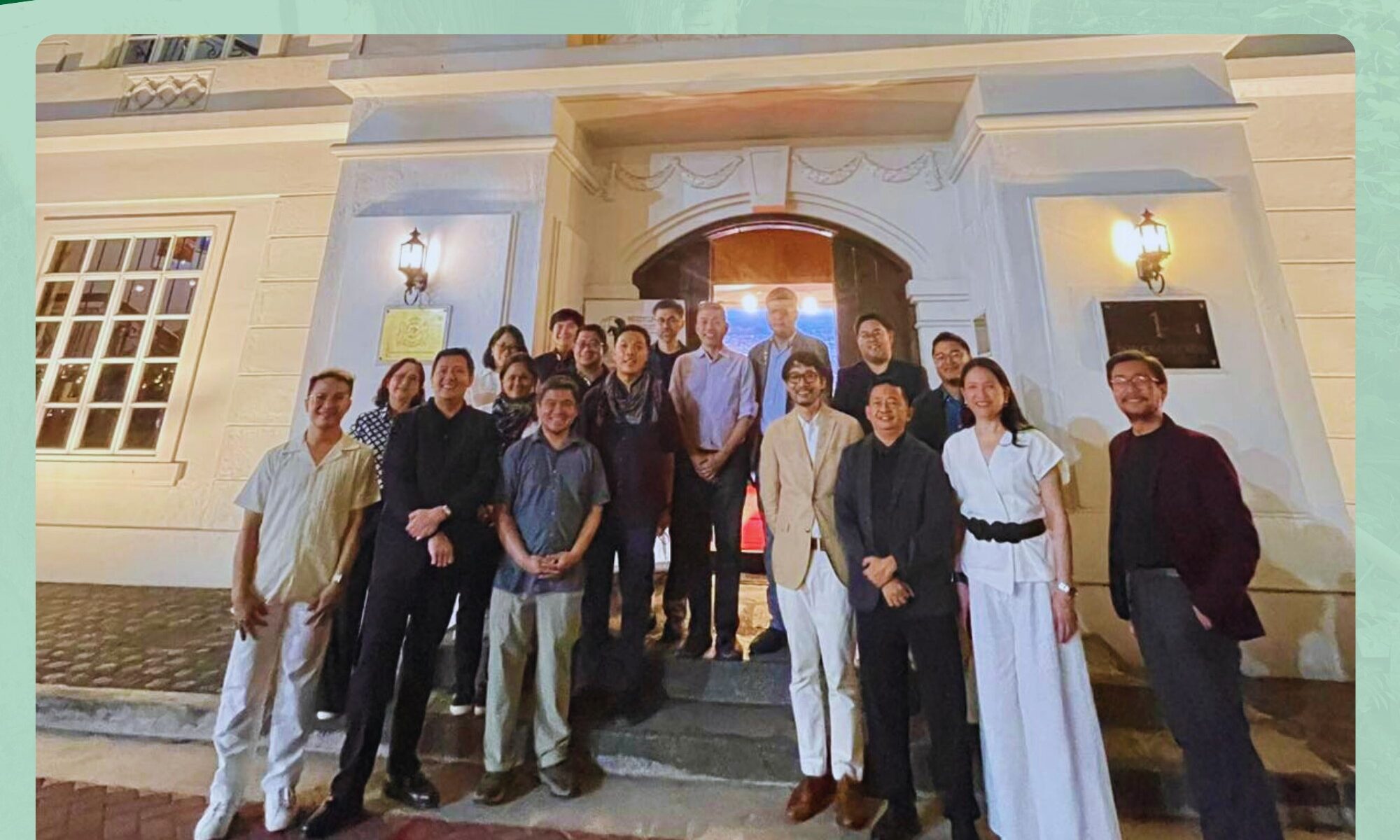
INTRAMUROS, MANILA — In a landmark step toward protecting the nation’s cultural heritage in the face of increasing climate and disaster risks, the International Council on Monuments and Sites (ICOMOS) Philippines officially launched its local chapter of the International Scientific Committee on Risk Preparedness (ICORP) on April 30, 2025. The hybrid event, held at the Honorary Consul of Georgia in Intramuros, Manila, convened stakeholders from the fields of heritage conservation, disaster risk reduction, climate action, and urban planning hosted by a Heritage Specialist, Mr. Ivan Man Dy.
ICORP, established in 1990, is one of ICOMOS’ core scientific committees, focusing on advancing global efforts to safeguard cultural heritage from natural and human-induced hazards. The Philippine chapter’s launch reinforces the country’s commitment to proactive, science-based, and community-driven approaches to disaster preparedness—particularly for its rich yet vulnerable built heritage.
In her Opening Remarks, Dr. Zeynep Gul Unal, President of ICOMOS-ICORP, warmly welcomed the new chapter and emphasized the power of regional and local collaboration in safeguarding heritage assets:
“It’s truly encouraging to see the establishment of the National Committee in the Philippines—this is a significant and welcome step. I warmly invite you to engage with us, share your knowledge, participate in joint training programs, and help ensure that our cultural heritage is protected for generations to come.”
Dr. Cheek S. Fadriquela, President of ICOMOS Philippines, delivered the Welcoming Address, outlining how the country’s recent experiences with disasters underscored the need for structured heritage risk governance:
“The devastation brought by Typhoon Odette in 2021 reignited our sense of urgency. It led us to launch Tabang Bohol, mobilizing structural engineers and a conservation architect to assess the damages on the ancestral houses and churches in Bohol.”
“The Abra earthquake the following year further highlighted the importance of preparedness. With support from UNESCO Jakarta, we began post-earthquake assessments in Vigan, which culminated in the Philippines’ first implementation of the UNESCO Heritage Emergency Fund in 2023.”
Dr. Fadriquela also spotlighted the organization’s climate-focused initiatives:
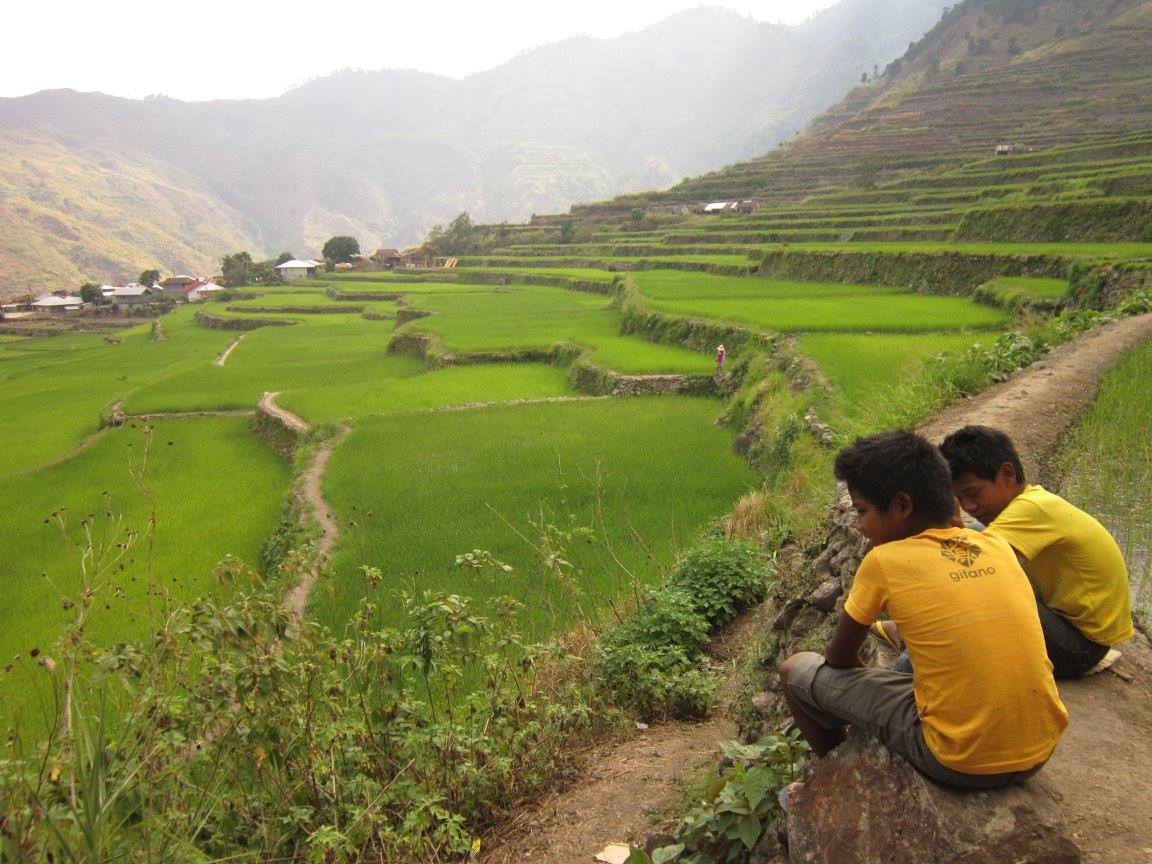
“Our 2023 collaboration with Preserving Legacies, supported by National Geographic and Manulife, evaluated the climate vulnerability of the Rice Terraces of the Philippine Cordilleras—an effort that aligns with the ICOMOS Scientific Plan on Cultural Heritage and Climate Action.”
The formation of ICORP-Philippines was formally introduced by Mr. JH Corpus, the country’s voting member to ICORP, through his keynote address, Fragile Foundations: Protecting the Philippines’ Built Heritage in Times of Disaster. He called attention to critical gaps in heritage protection within current national frameworks:
“Despite the presence of Republic Act 10066 and DRRM laws, there is still no integrated national strategy that embeds heritage protection into disaster response systems.”
He underscored the chapter’s purpose with a clear vision:
“Our goal is simple yet urgent—a Handa at Ligtas na Pamana: a heritage that is ready and safe. Our ICORP logo represents this mission, inspired by indigenous scripts and our shared responsibility to preserve memory and identity.”
The launch event also featured timely and expert-led presentations that bridged cultural heritage and emergency response where Ms. Emily Dy Ramos, International Disaster Risk Management Consultant, shared frameworks on urban cultural risk management. Jefferson Chua, Climate and Energy Campaigner from Greenpeace Southeast Asia, presented Heritage Practice in a Changing Climate, examining the intersections of heritage, climate justice, and ecological sustainability. Philip Norbert Ahmad L. Medina, historian and heritage advocate, presented a Risk Assessment for Cavite Churches, offering a case study in community-based, localized heritage protection.
The event highlighted ongoing efforts from across the archipelago, as regional focal persons shared updates on hazards, risk mapping, and response efforts in their localities. Ar. Carmen Solis presented on behalf of Cebu and Bohol, Ar. Aris Go represented the Cordilleras, Ar. Giuseppe Alonzo reported on Northern Luzon, and Mr. Ruhullah Al-Hussieni Javier Alonto delivered insights from Northern Mindanao. Additional appointed regional representatives were also introduced, affirming ICOMOS Philippines’ commitment to decentralization and inclusive heritage resilience: Ar. Sy Valientes for Batanes, Ar. Michael Tabao for Cagayan Valley, Mr. Philip Medina for Calabarzon, and Ms. Kinna Kwan for Samar-Leyte.
Dean Ar./EnP. Sylvester Shaun D. Seño, National Chair of Green Architecture Advocacy and Vice President of the Philippine Architecture Schools Association, delivered the event’s resolution.
The event concluded with a symbolic cutting of ribbon and the opening of an exhibit featuring risk assessments and heritage documentation of churches in Cavite—representing transparency, renewal, and protection.
In his final message, Dr. Fadriquela said: “This formal launch of a national scientific committee is a milestone in the history of ICOMOS Philippines. Lahat ng ito ay para sa handa at ligtas na pamana—Halina’t ipaglaban natin ito. Halipa!”
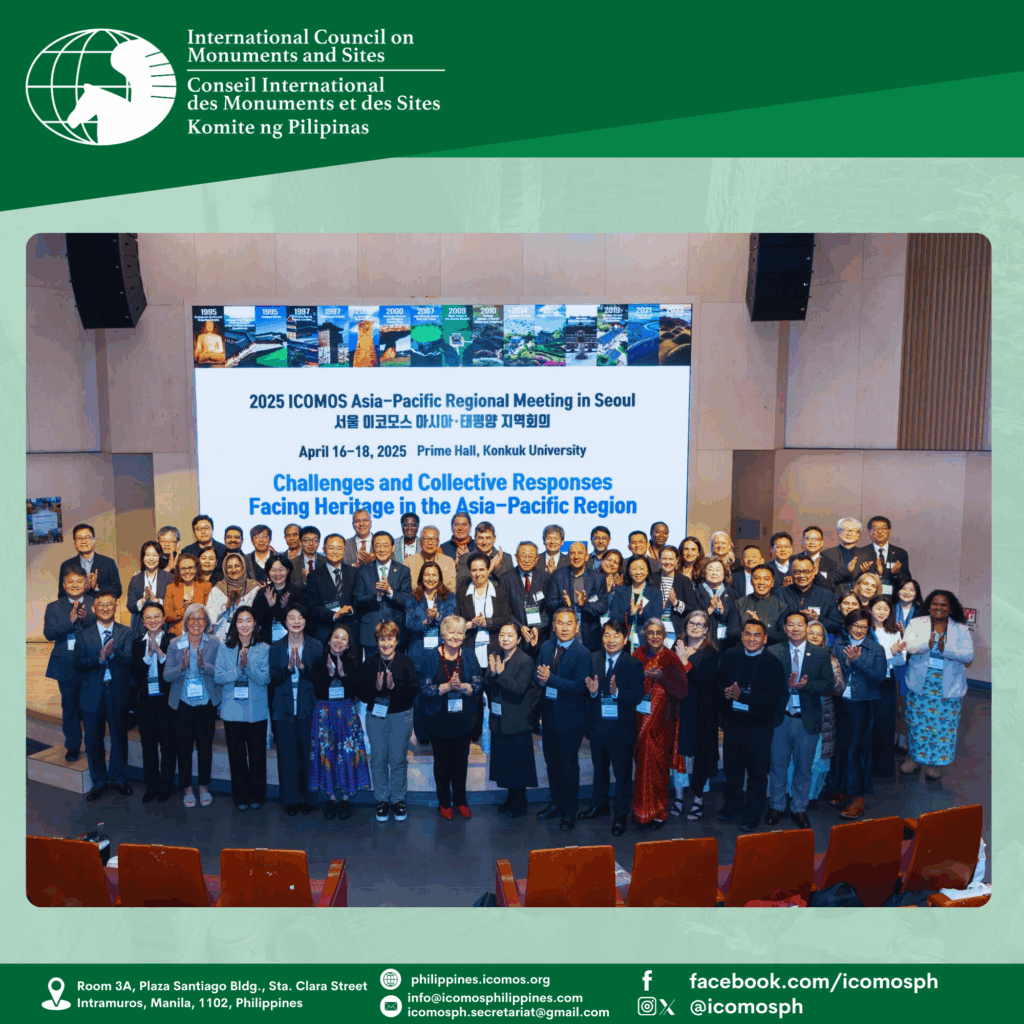
Seoul, Republic of Korea – April 18, 2025 — In a significant gathering of heritage professionals from across the region, the International Council on Monuments and Sites (ICOMOS) held its Asia-Pacific Regional Meeting in Seoul from April 16 to 18, 2025. With the overarching theme, “Challenges and Collaborative Responses for Heritage in the Asia-Pacific Region,” the event served as both a commemoration of the 60th anniversary of ICOMOS and a vital forum to confront the increasingly complex challenges facing cultural heritage in a rapidly changing world.
The meeting brought together delegates from national committees, international organizations, cultural institutions, and academia to engage in knowledge sharing, collaborative planning, and policy dialogue. Against the backdrop of post-pandemic recovery and the intensifying impacts of climate change, the conference emphasized the urgency of creating sustainable, inclusive, and locally rooted approaches to safeguarding heritage across the region.
Representing ICOMOS Philippines were President Dr. Cheek S. Fadriquela, Past President Ms. Tina Paterno, and LAr. Gabriel Caballero. Their presence reinforced the Philippines’ active role in addressing climate-induced risks, promoting community-based heritage management, and advancing transdisciplinary research.
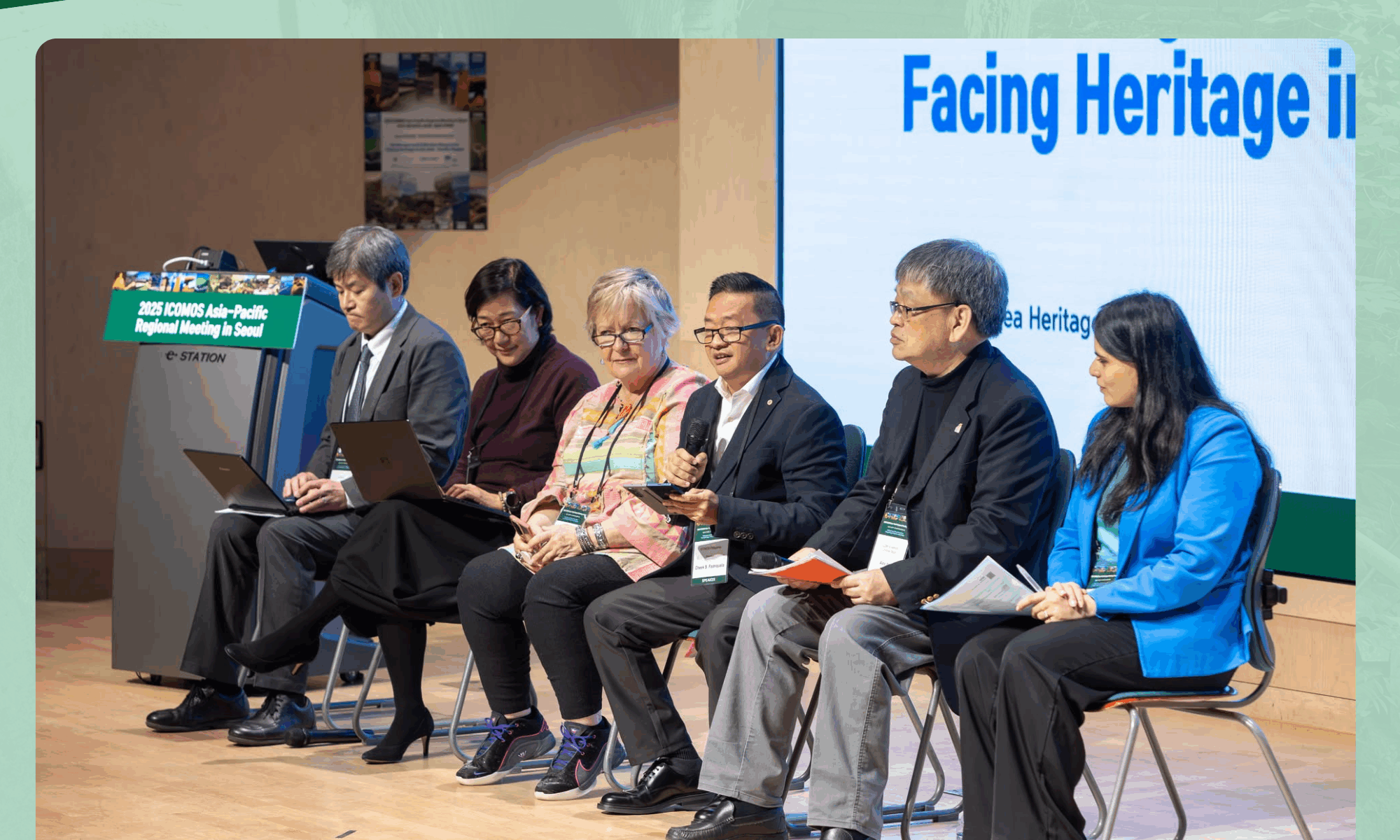
In his panel discussion on “Climate Change + Heritage,” Dr. Fadriquela gave a poignant account of personal and professional encounters with natural disasters in the Philippines. He described a harrowing flight through a super typhoon in Taiwan en route to the ICOMOS Annual General Assembly in Ouru Preto, Brazil, linking his experience to the broader reality of increasingly extreme weather patterns in the Philippines — where six typhoons struck within just two months in 2024, including three categorized as super typhoons. The province of Batanes, renowned for its stone vernacular architecture, was particularly hard-hit. Due to its designation as a protected area, traditional stone-quarrying practices have been banned, forcing communities to build with less resilient materials.
Dr. Fadriquela also outlined ICOMOS Philippines’ growing engagement in Disaster Risk Management (DRM). Following the devastation of Bohol by Typhoon Odette and the earthquake in Vigan in 2022, ICOMOS Philippines mobilized expert teams to assess damages and recommend preservation measures. These actions catalyzed broader institutional developments, including a UNESCO Jakarta grant for post-disaster assessment, participation in DRM training courses at Ritsumeikan University in Japan, and the formal creation of a National Scientific Committee on Risk Preparedness (ICORP) — officially launching on April 30, 2025. During the Seoul meeting, Dr. Zeynep Unal, President of ICORP, Dr.. Teresa Patrício, President of ICOMOS, Dr. Takeyuki Okubo of ICCROM-ITC DMUCH, Dr. Kai Weise, Secretary General of ICORP, and Dr. Alex Yen, Vice President of ICORP extended their congratulatory messages for the said launch
Ms. Paterno contributed to the session on “Climate Change + Heritage,” where she presented the ongoing “Preserving Legacies” project. This initiative conducts vulnerability assessments on cultural sites affected by climate change, particularly focusing on the Ifugao Rice Terraces. A collaborative effort with local communities, the initiative combines traditional ecological knowledge with scientific methods to develop site-specific adaptation strategies. “By learning from the past and empowering local stewards, we can co-create solutions that are both resilient and respectful of cultural identity,” she noted.
LAr. Gabriel Caballero, ICOMOS Philippines’ Focal Point to the Sustainable Development Goals Working Group, delivered a thought-provoking presentation titled “Developing an Approach for a Collaborative Definition of Outstanding Universal Value (OUV) in the Philippines.” He emphasized the importance of participatory frameworks in determining what is deemed “universal” about heritage, challenging top-down models of inscription and instead advocating for the voices of local and Indigenous communities.
Beyond technical presentations, the meeting served as a platform to strengthen regional collaboration among Asia-Pacific National Committees of ICOMOS. Sessions focused on Heritage Impact Assessment (HIA), Disaster Management, Interpretation, and the development of comprehensive heritage management frameworks that are adaptive to climate, political, and socioeconomic changes. Delegates recognized the importance of transboundary cooperation, cross-disciplinary integration, and the institutionalization of Indigenous and community-based knowledge systems.
As countries in the Asia-Pacific region continue to grapple with urbanization, environmental degradation, and climate emergencies, ICOMOS Philippines reiterated its call for holistic approaches to heritage conservation — approaches that acknowledge vulnerability while embracing resilience and innovation. Through continued engagement with international networks and on-the-ground community partners, the organization aims to catalyze enduring impact.
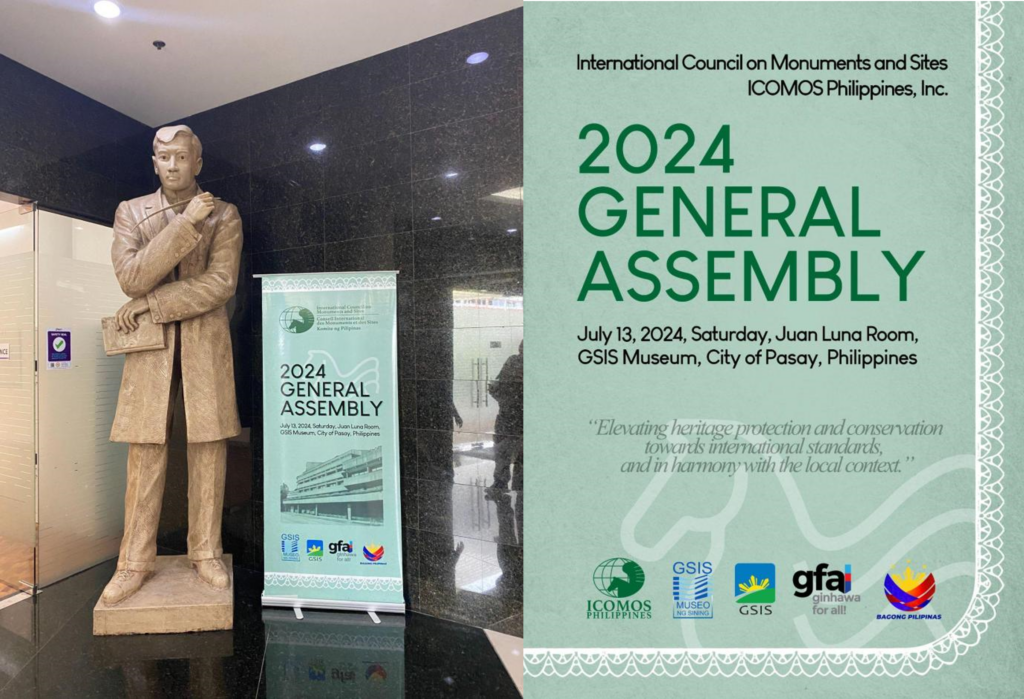
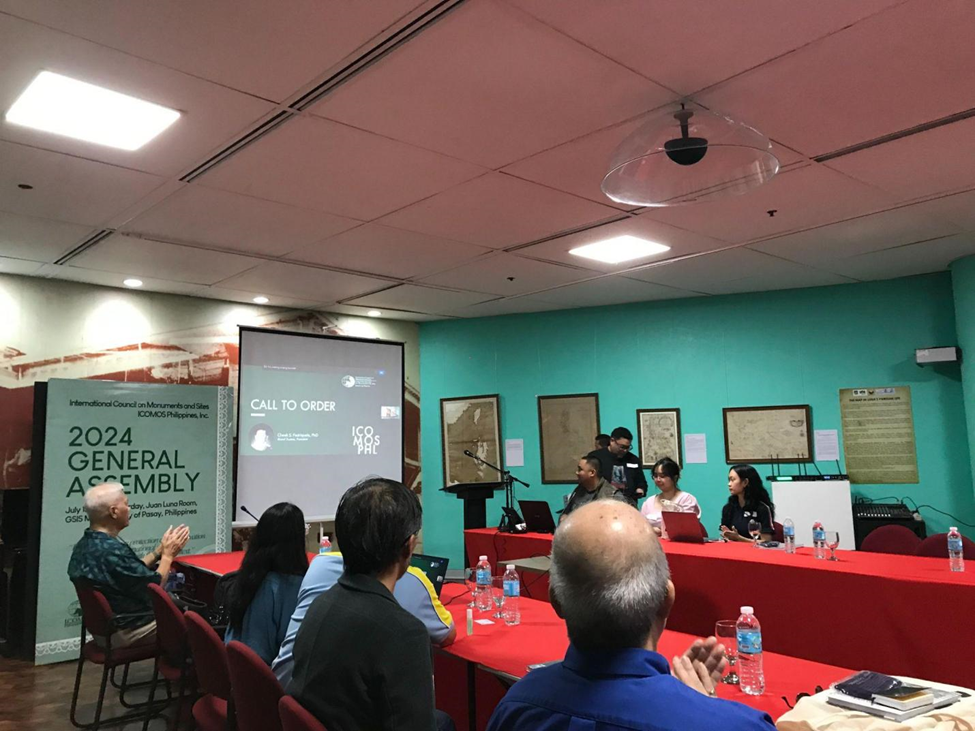
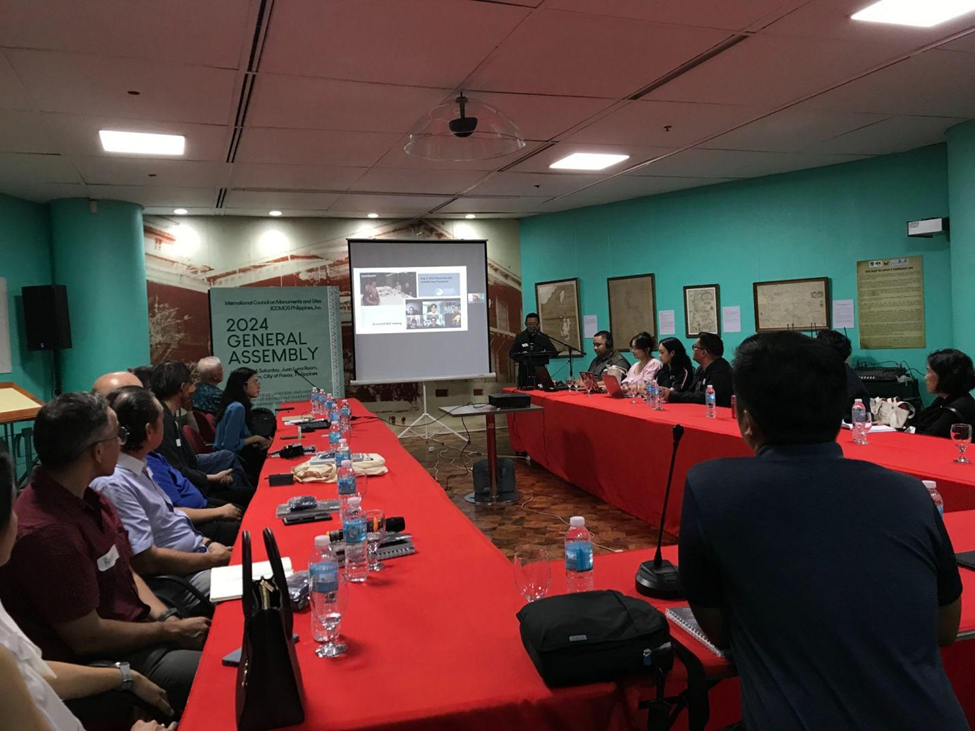
Pasay, Philippines – ICOMOS Philippines held its annual General Assembly [GA] on 13th July 2024 at the Government Service Insurance System (GSIS) Museo ng Sining. Every year in July, the Executive Officers, Committees and Officers, and ICOMOS Philippines membership gather to review the current and previous year’s activities, understand the organization’s operational, organizational, and financial health, and vote on institutional proposals for the coming year and beyond.
2024 General Assembly ICOMOS Philippines at Government Service Insurance System Museum
With a quorum of 64, the GA was called to order followed by the President’s Report by Dr. Cheek Fadriquela who spoke about major themes that drove activities throughout the past year. continuity, celebration, commitment, and compliance. Together, these concepts speak of a thriving organization that continues to grow each year. Some of these activities that engage members are: voting on issues and electing its Board of Trustee members, pursuing organizational compliance with government agencies, celebrating milestones and achievements, offering its members and the general public a chance to attend webinars, lectures, and capacity building workshops, and, most importantly, engaging its members to participate as volunteers for ICOMOS initiatives.
President and Chairman Dr. Cheek Fadriquela opens the Meeting with a Call to Order
Vice President Ar. Kenneth Javier Tua, delivered the Vice President’s Report, focusing on operational aspects internally and externally. Major themes from the presentation were the streamlining of decisions and approvals by the Board of Trustees [BOT] due to regularized bi-monthly meetings, membership and stakeholder involvement which reached 63% participation, 15% higher than the previous year, visibility as an organization through medial alliances, social media reach and in print which doubled the frequency of impressions, and development of stronger ties with the national government cultural agencies.
Two major projects were at the center of the reporting. First, the UNESCO Heritage Emergency Fund [HEF] project in the Philippines which was also presented by Ar. Tua. the Country Project Director. The first of its kind in the country to aid in the recovery of a World Heritage Site, the Historic CIty of Vigan. At two selected pilot houses, the scope was to enhance technical standards for the conservation of heritage houses and structures by various technical disciplines who performed investigations, testing, shared observations, and recommended conservation interventions.
Immediate Past President Maria Christina Paterno presented as Project Director the milestones of the second major project of the previous fiscal year, Preserving Legacies Initiative [PLI]. She worked closely with ICOMOS Philippines member and COO of the Save the Ifugao Terraces Movement (SITMo) Marlon Martin who led the onsite focus group discussion. The exercise of assessment through focus discussion groups revealed the negative impacts of climate change on Ifugao livelihoods and traditions.
More reports were shared by the BOT. Treasurer Ar. Harvey Vasquez pointed to the 66% growth of the asset base from 2023-2024 with a reduction of liabilities by 39%. A large part of the revenue was due to donations and grants [HEF], and expenditures were mainly project-related. Corporate Secretary Ms. Liliane “Tats” Rejante Manahan in her report informed the organization’s up-to-date compliance and related to the requirements to file with the SEC every year, to submit quarterly and annual financial reports with the BIR, and maintain Barangay Business Clearance and Mayor’s Permits.
Committee Officers also gave updates to the membership. Membership Officer Ar. Giuseppe “Gio” Luigi H. Abcede showed membership growth year after a year and shared the impacts of membership calls, the involvement with the International Scientific Committees [ISCs], and the different Working Groups [WG]. John Ray Ramos, the Secretariat and Heritage Affairs Officer [HAO], shared his involvement with the administration of the ICOMOS Philippines office and membership. Communications Officer JH. Corpus shared metrics on the organization’s visibility and public outreach on various social media platforms, its growth over the past year, and the impact of contributing articles to national broadsheets.
Works of WG over the past year were presented by HAO Ramos . Ar. Claudia Isabelle V. Montero, EPWG National Representative, showcased her work involving collaboration with emerging professionals, signing MOUs with three Universities (DLSU, ADMU & FEU), and mentoring interns on impact-driven activities and initiatives. Kristine Kate A. Lim, CCHWG National Representative related long-term plans by the CCHWG with culture as the driver in the face of climate change. Ar. Anjelika A. Orui, SDGWG National Representative informed the membership the WG’s consistent involvement with NEDA to implement the Sustainable Development Goals and the addition of four ICOMOS members based in Cebu for an upcoming project.
President Cheek Fadriquela discusses the Major Themes of Last Year’s Activities
Institutional initiatives were presented and voted upon at the last part of the program. The Policy for the Disaster Risk Management of Cultural Heritage (DRMCH) which will form a funded committee on DRMCH that will respond to disruption, hazard, and loss on Philippine’s cultural heritage anchored on the ICOMOS International Scientific Committee on Risk Preparedness [ICORP] was adapted by the membership. Guidelines for the Institutional Membership did not garner enough votes to be passed and accordingly, it shall then be subject for further review of the membership.
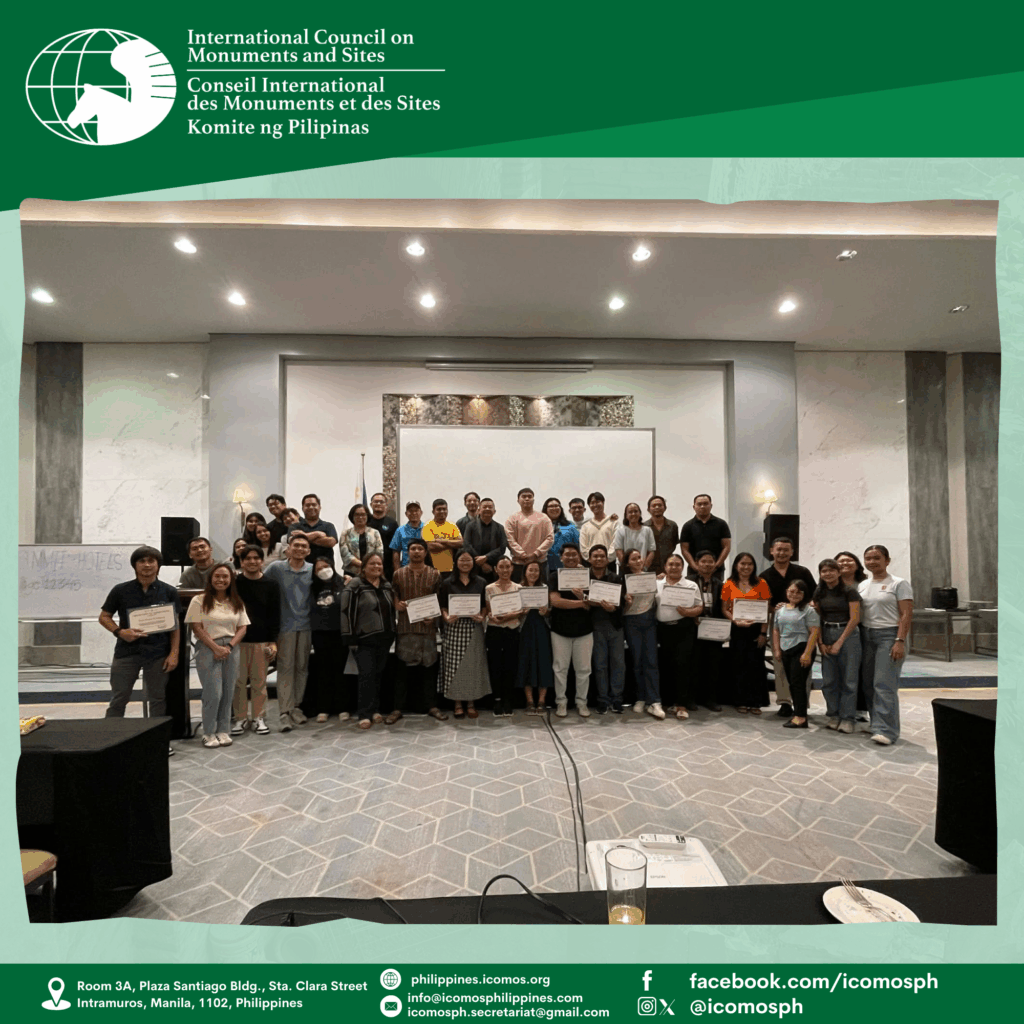
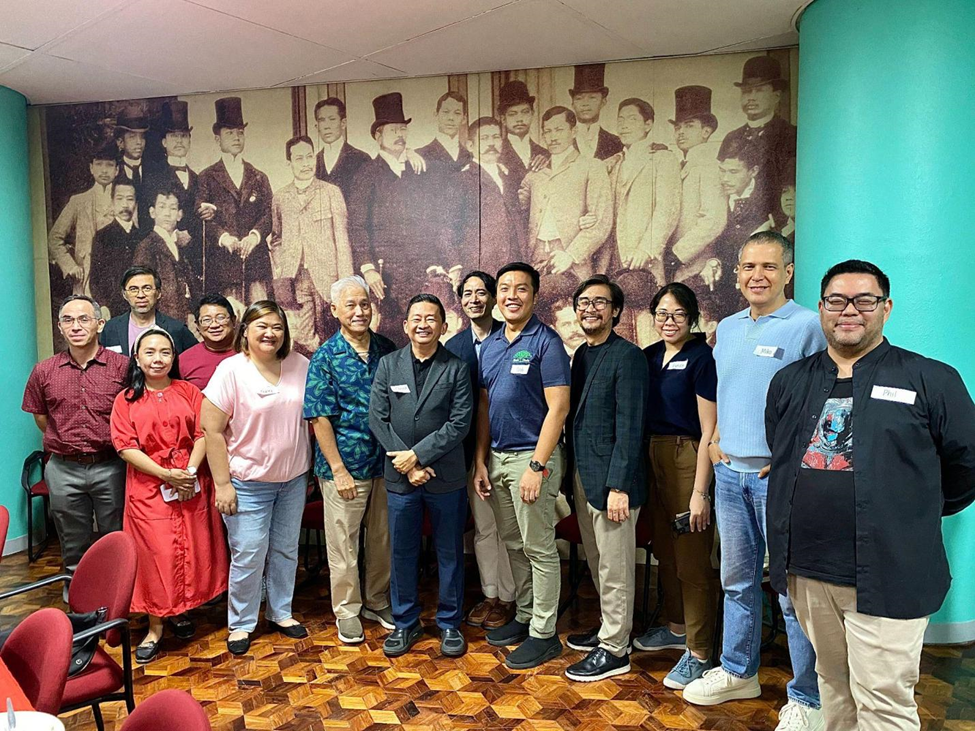
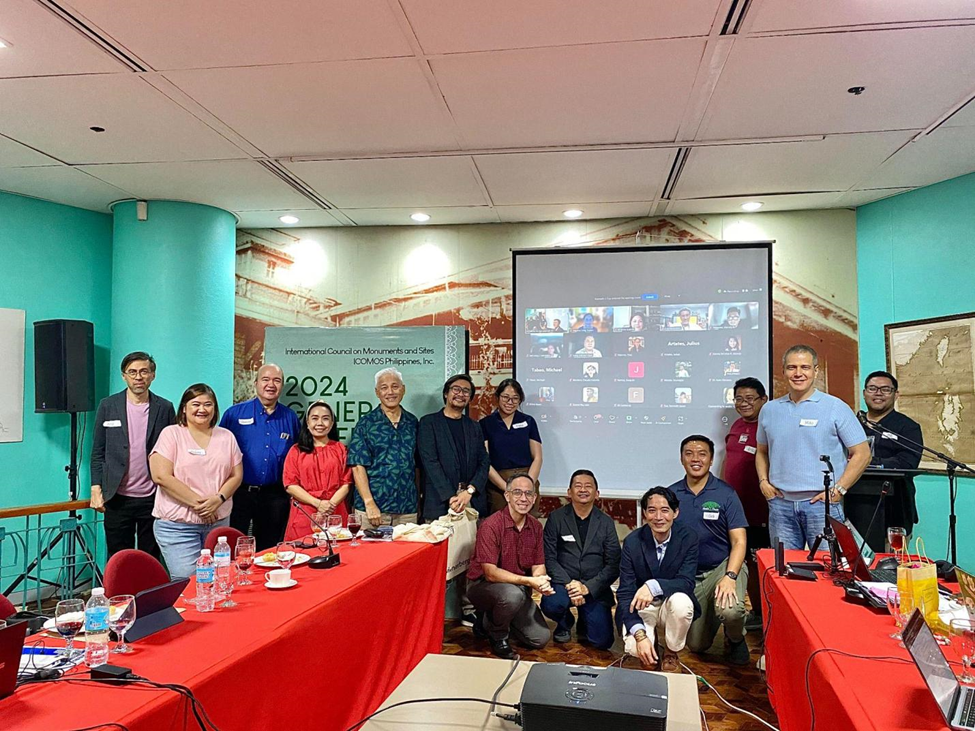
Onsite Attendees of the 2024 ICOMOS Philippines General AssemblyOn and off-site members gather for a group photo after the 2024 ICOMOS Philippines General Assembly
The 2024 General Assembly signifies the continued commitment of ICOMOS Philippines to discuss and promote the conservation, protection, use, and enhancement of cultural heritage sites. The assembly serves as a platform for members to exchange knowledge, share best practices, develop and adopt policies, and set the direction for future initiatives in heritage conservation.
(EPWG: Emerging Professionals Working Group, SDGWG: Sustainable Development Goals Working Group, CCHWG: Climate Change and Heritage Working Group. All National Representatives are also Coordinators)