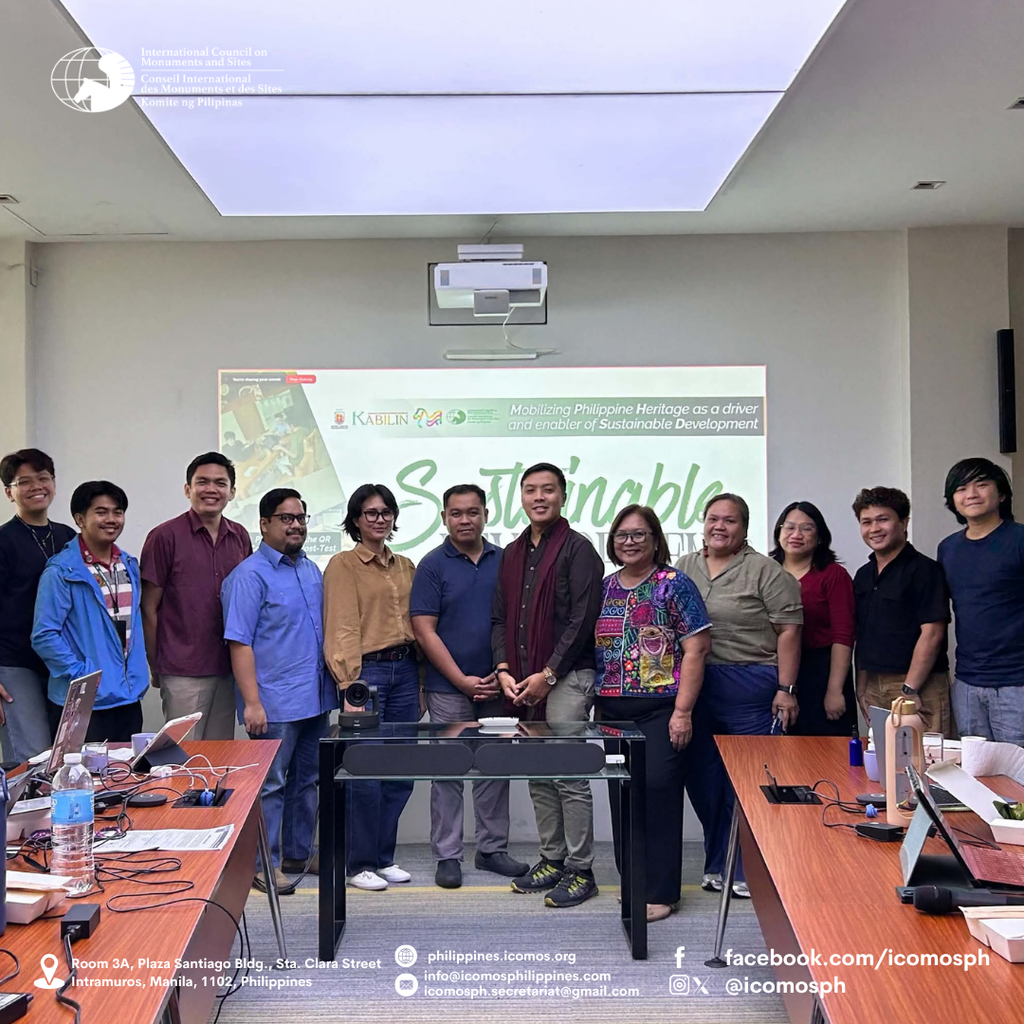
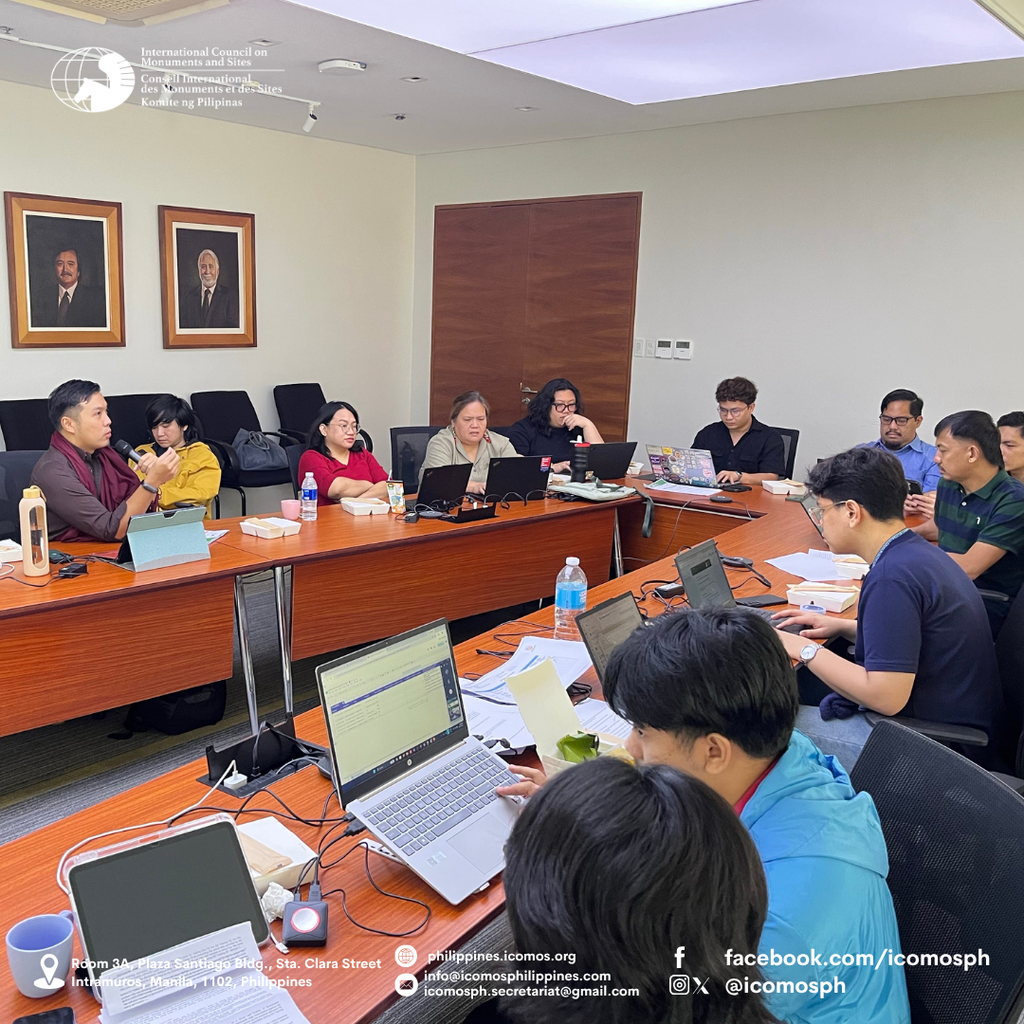
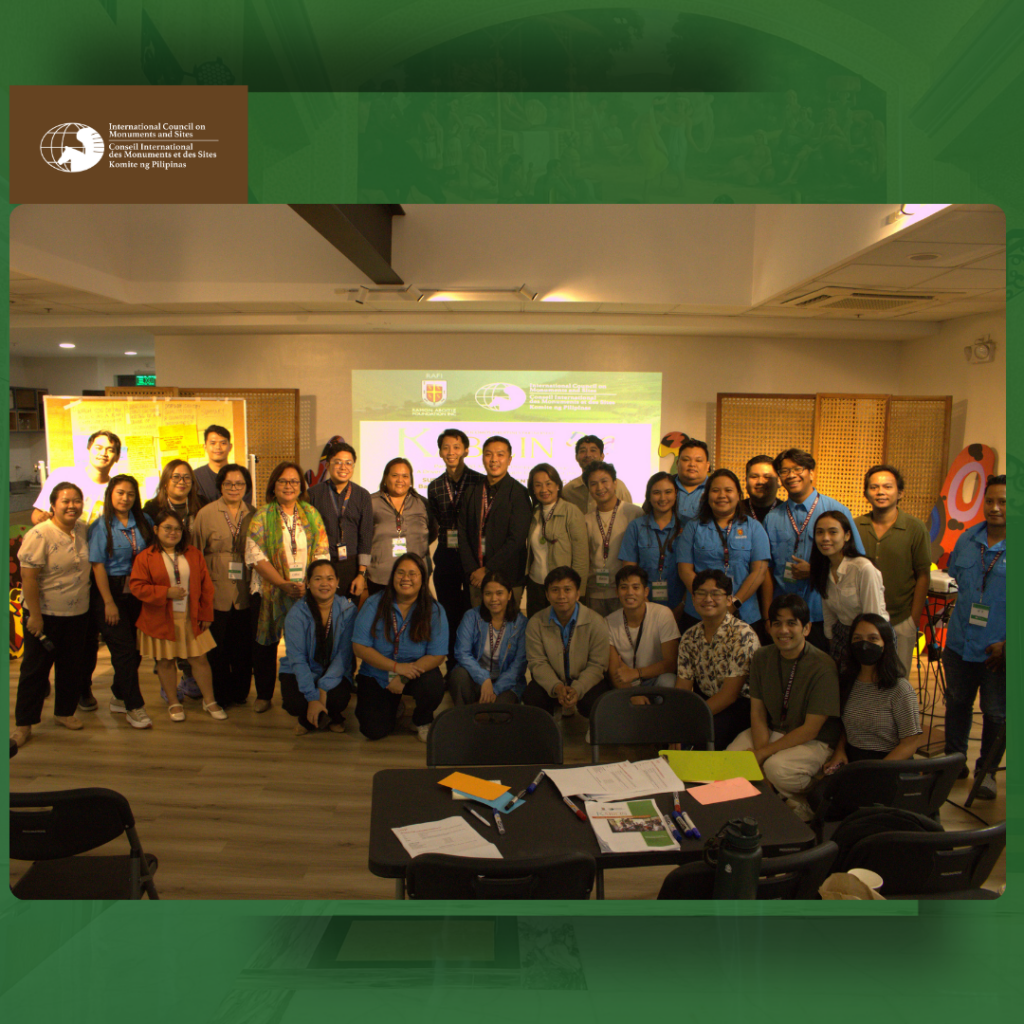
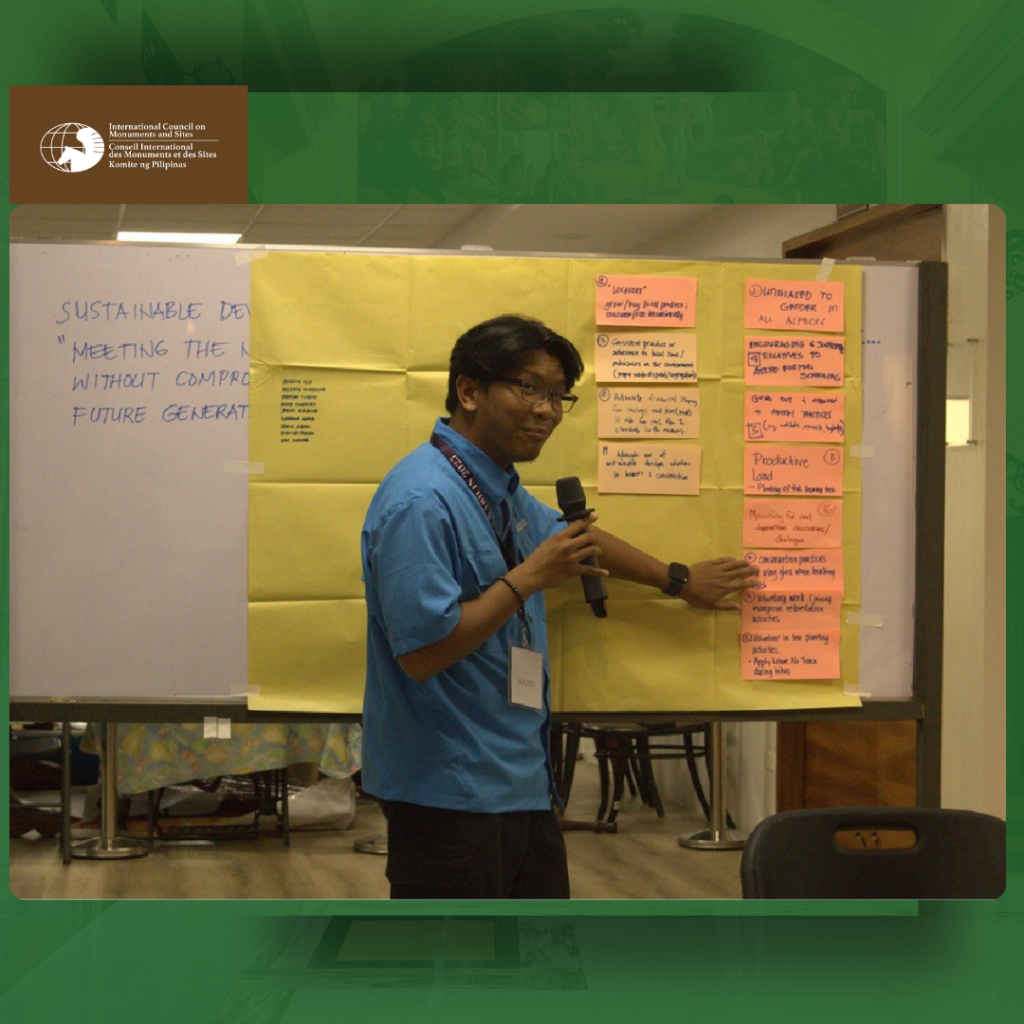
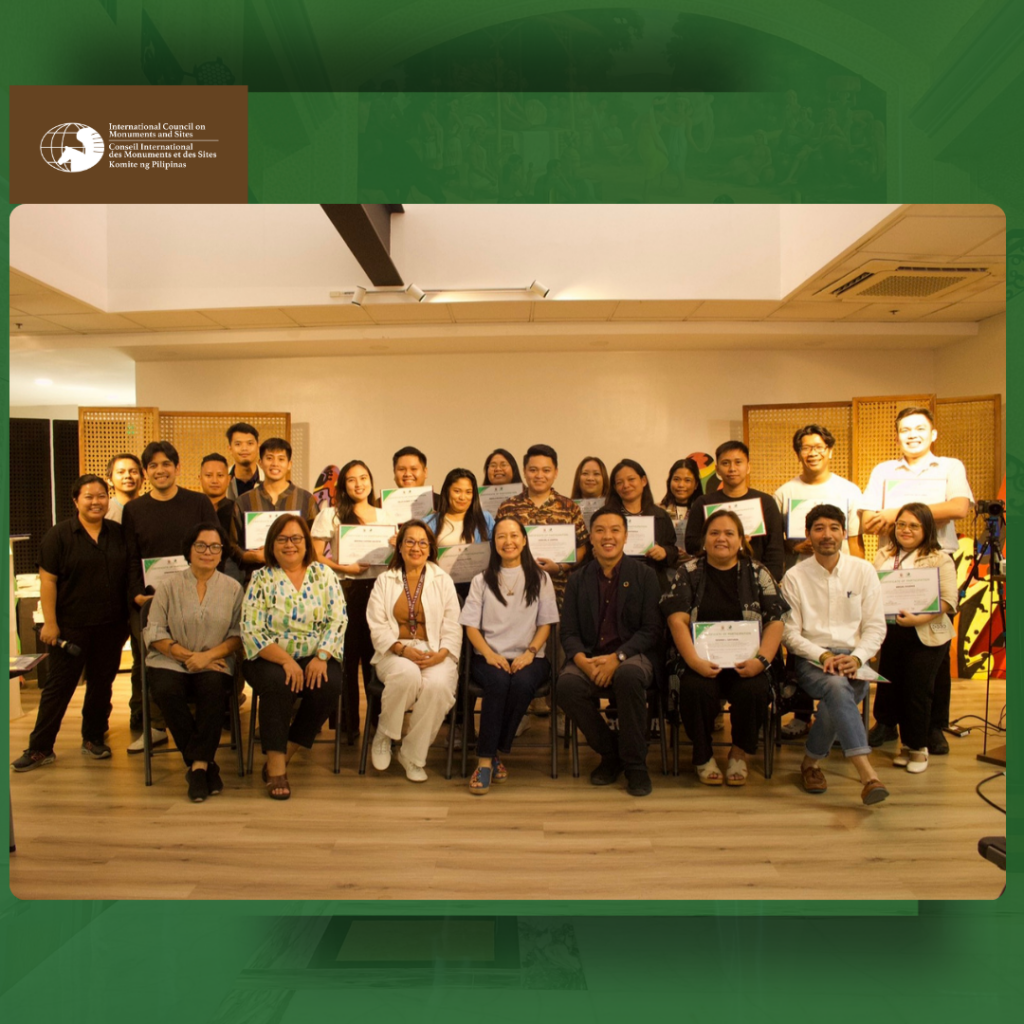
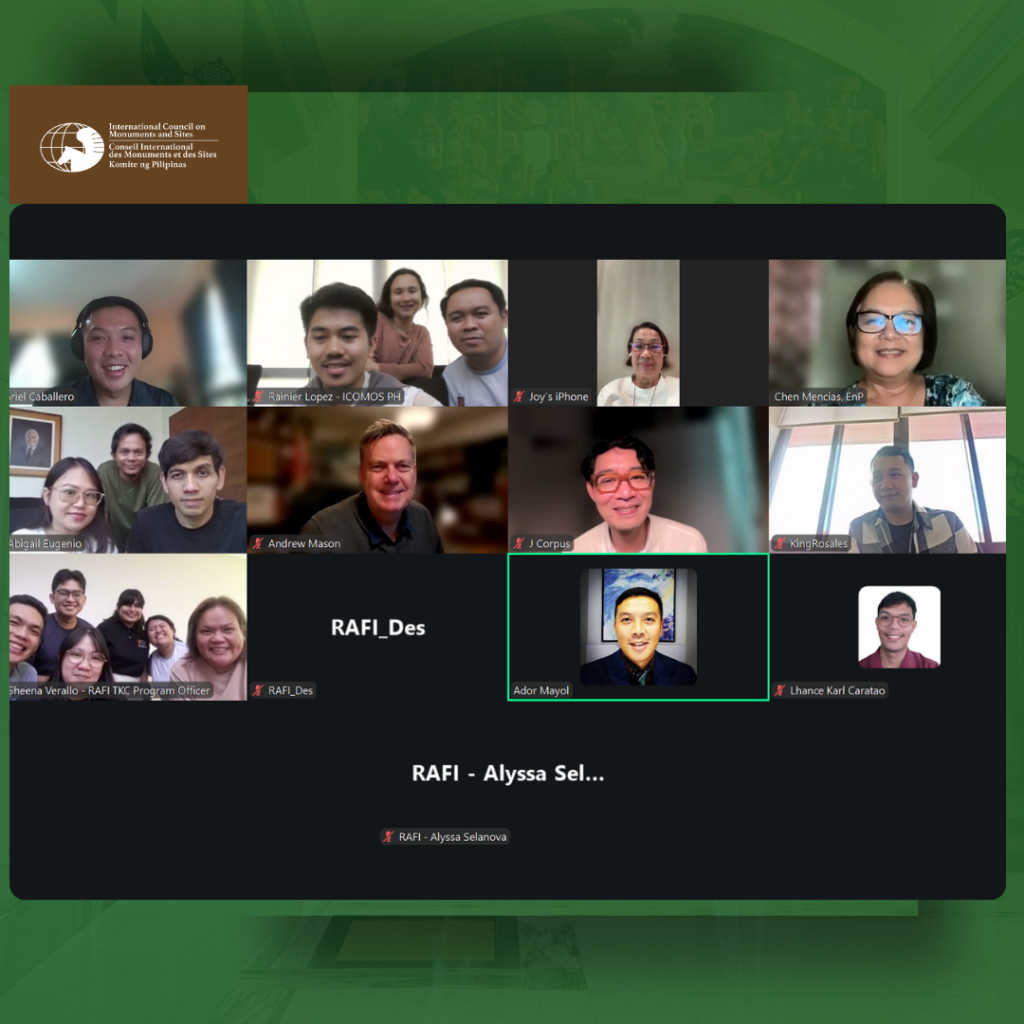
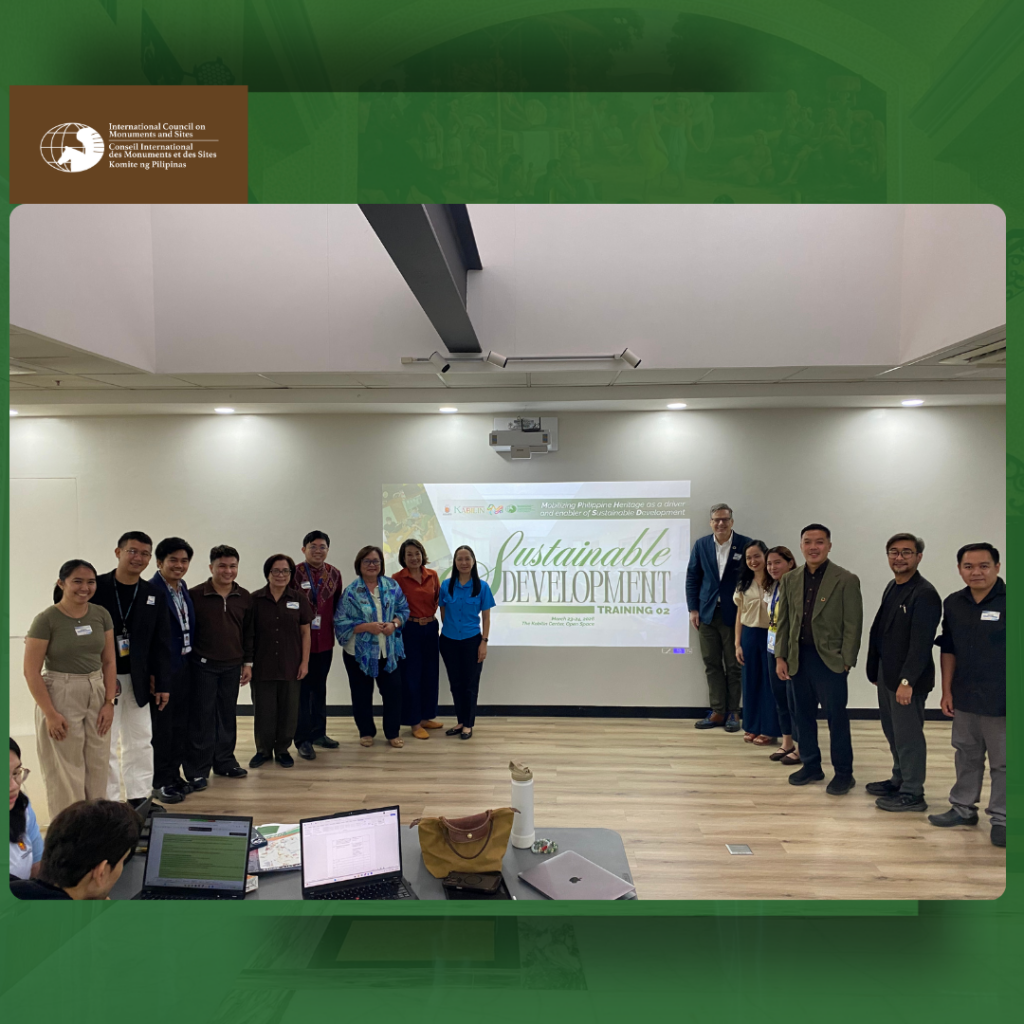
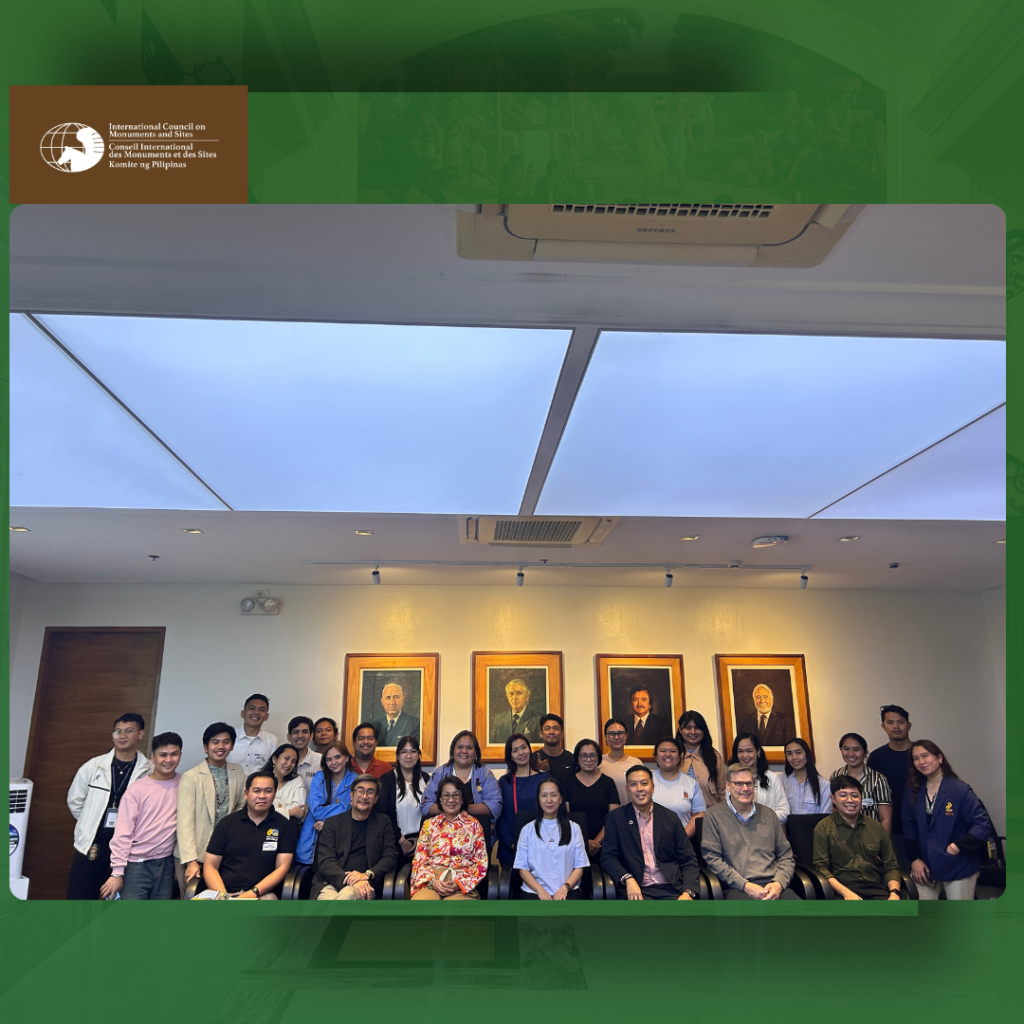
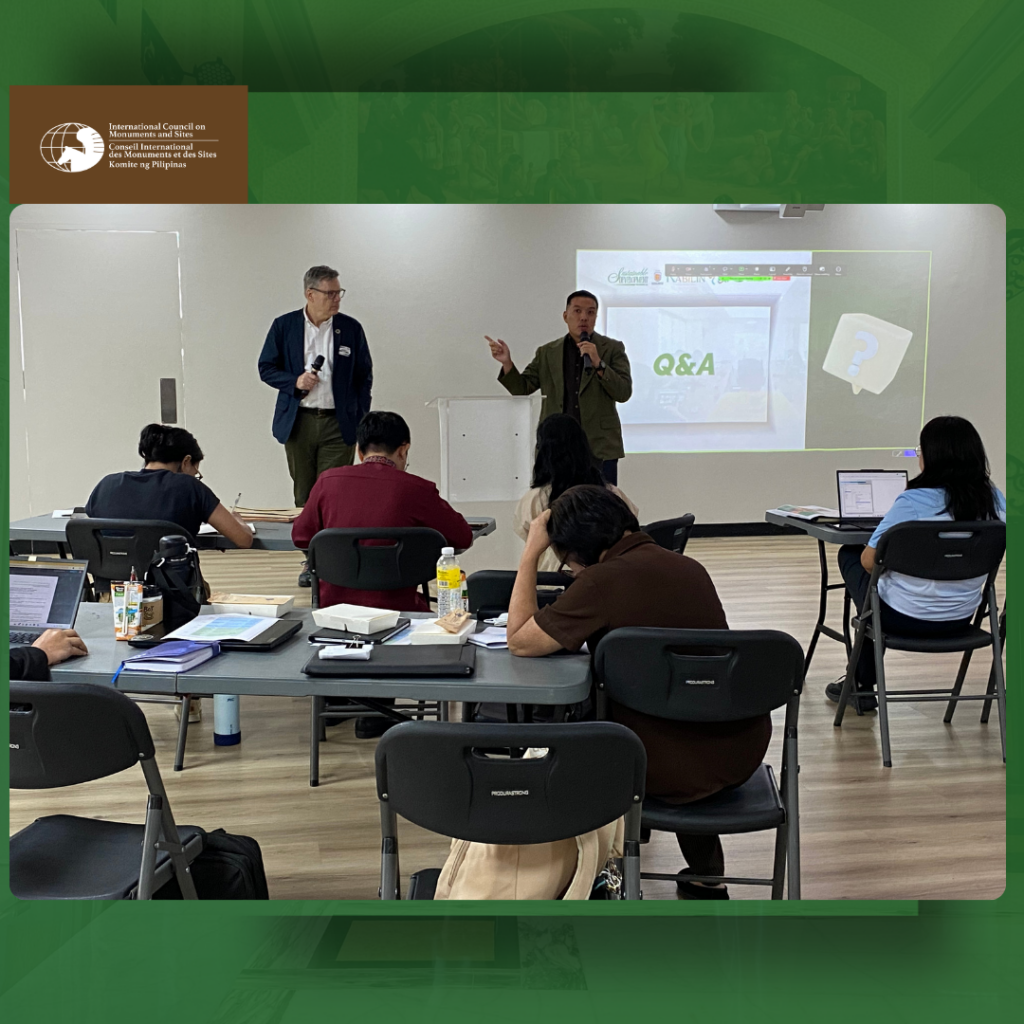
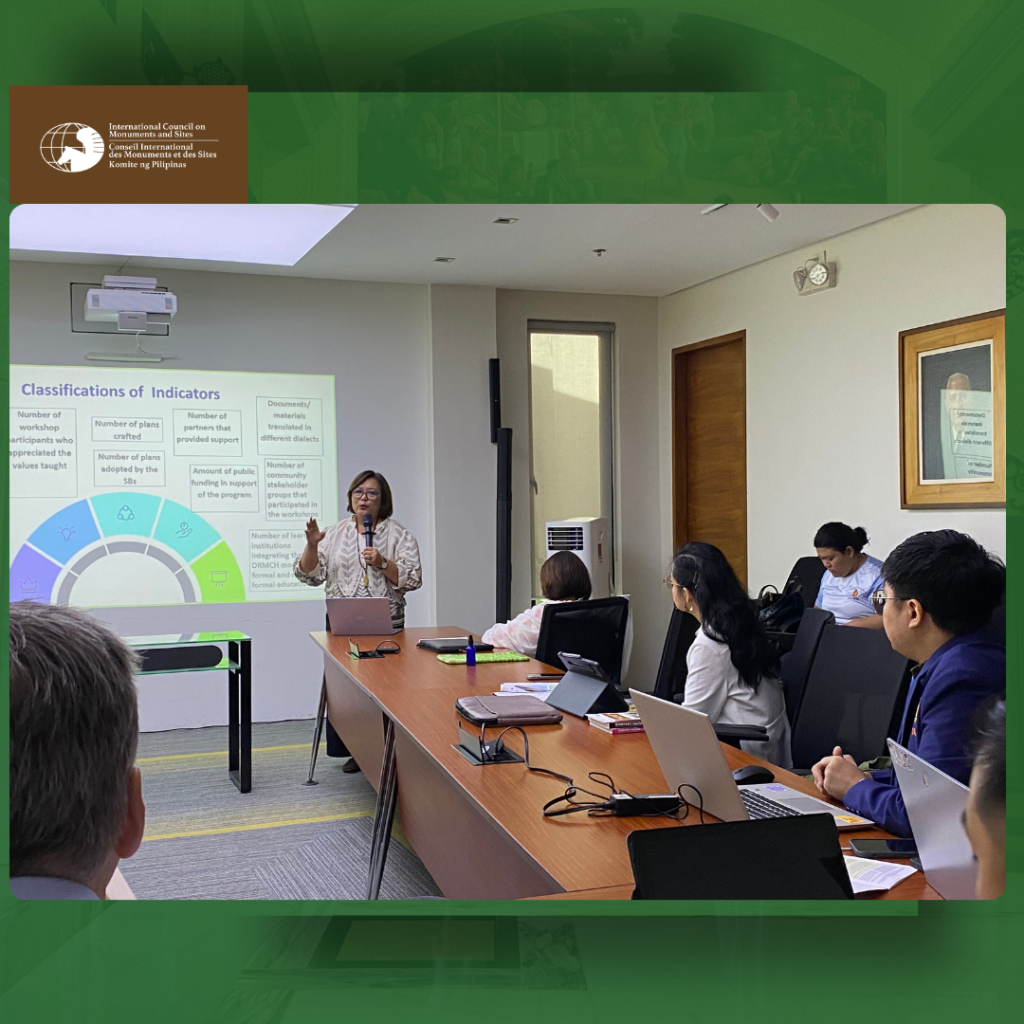
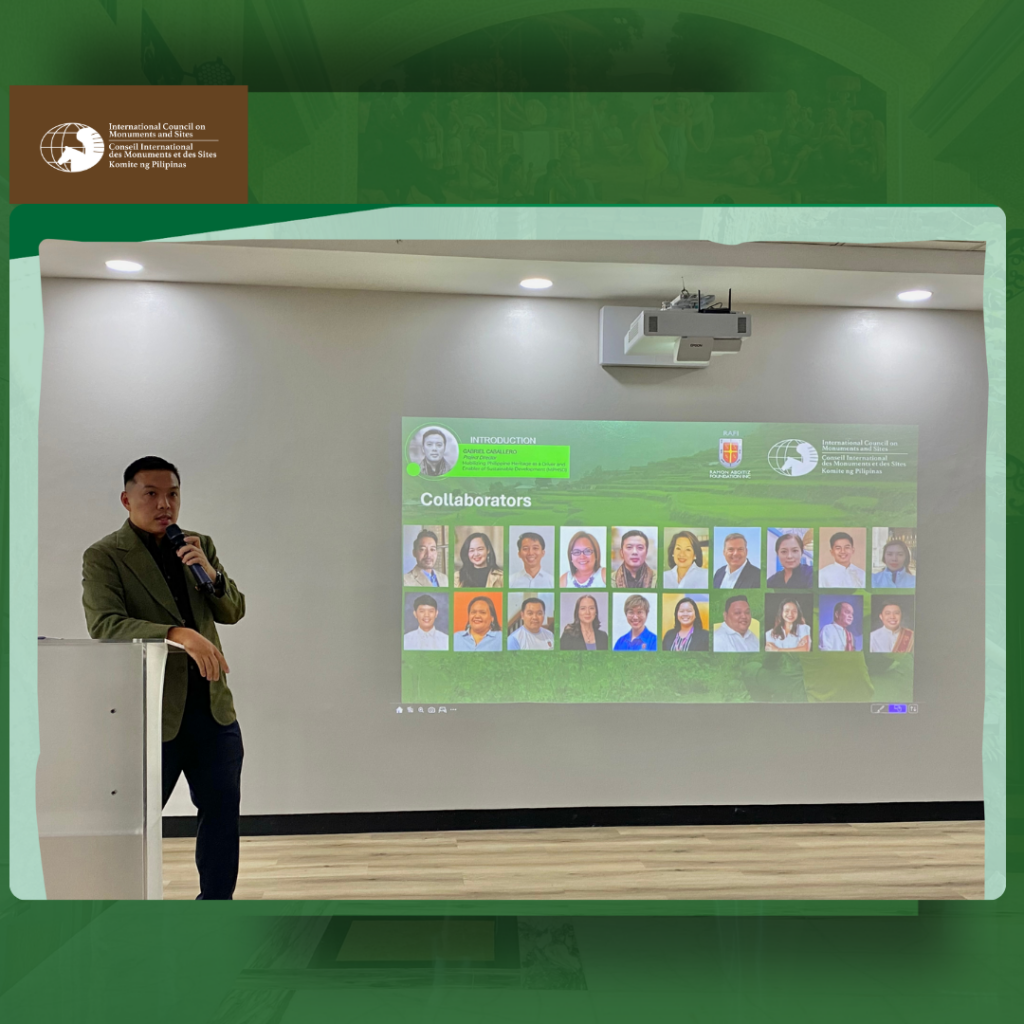
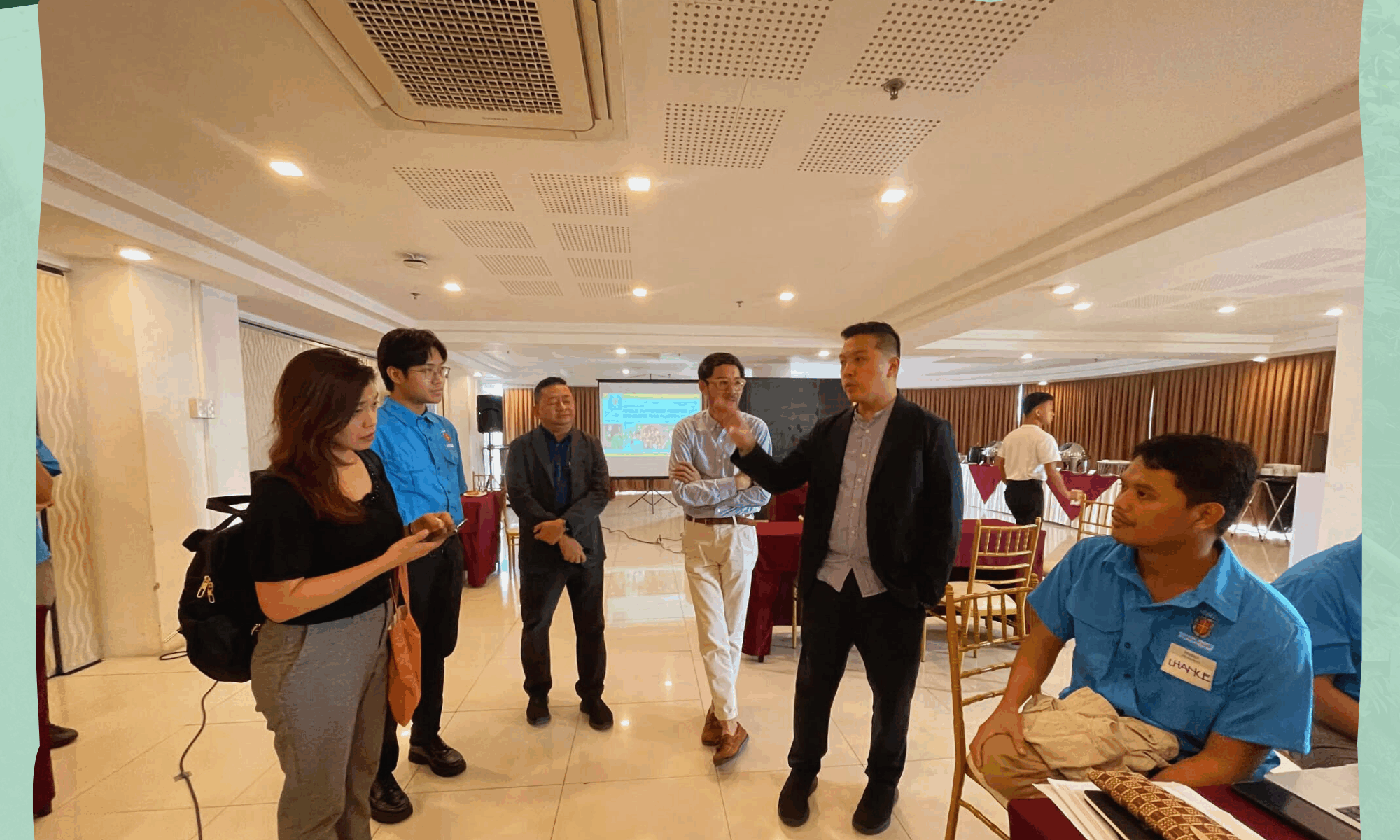
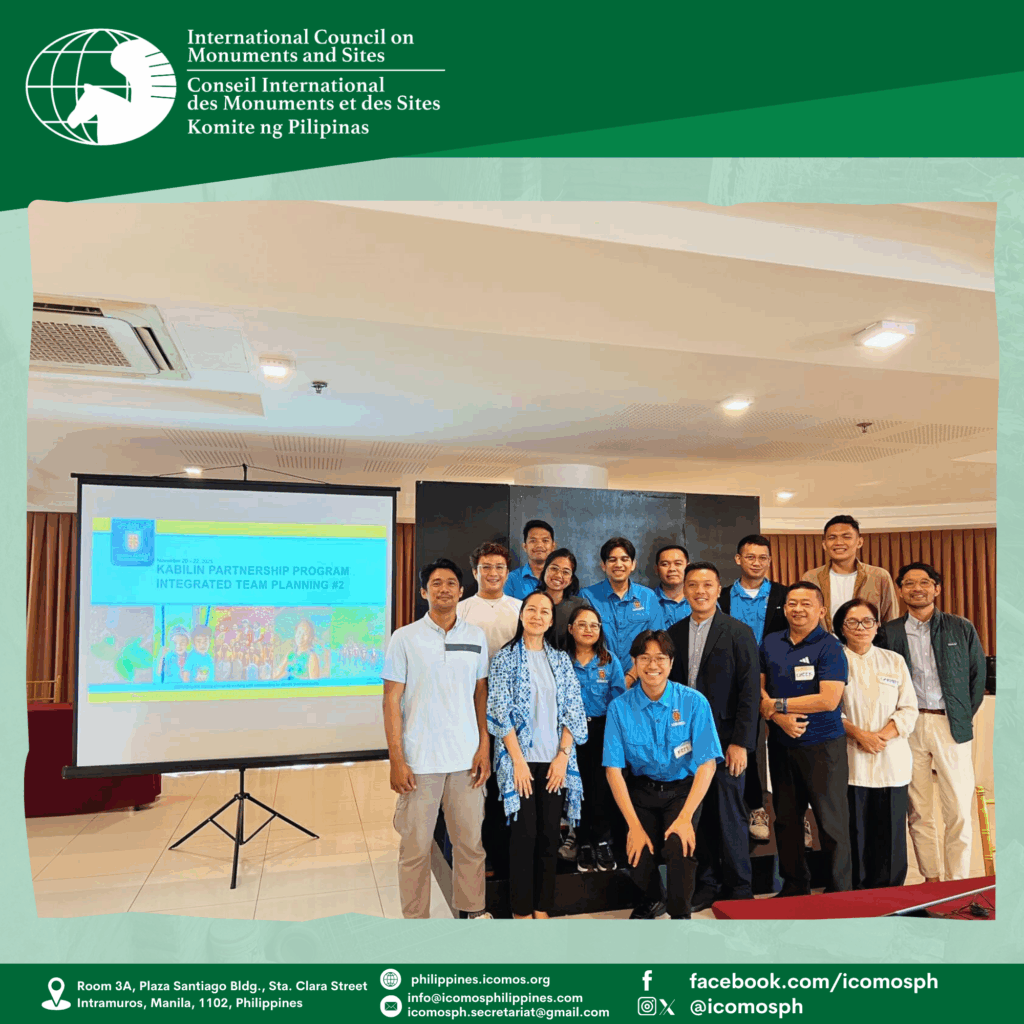
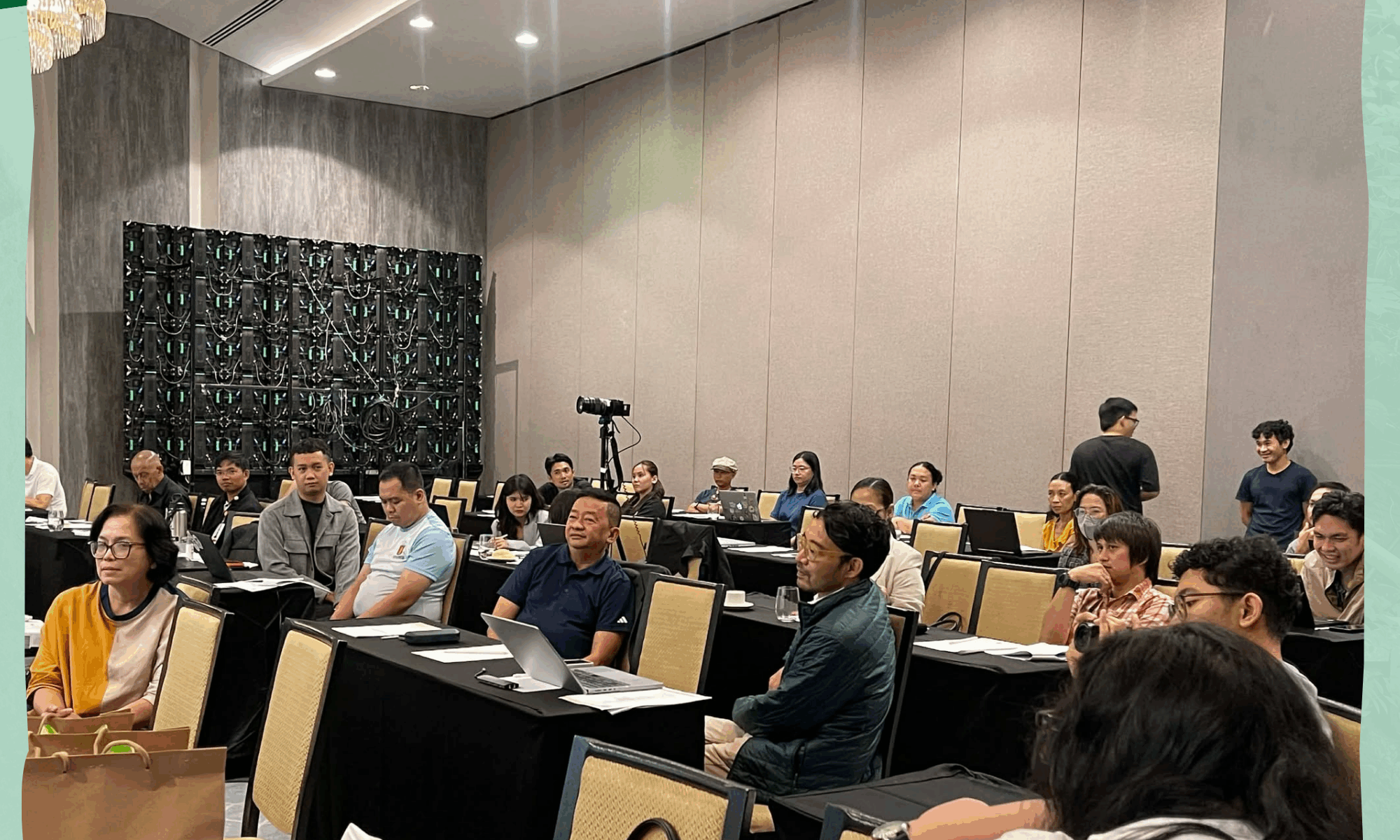
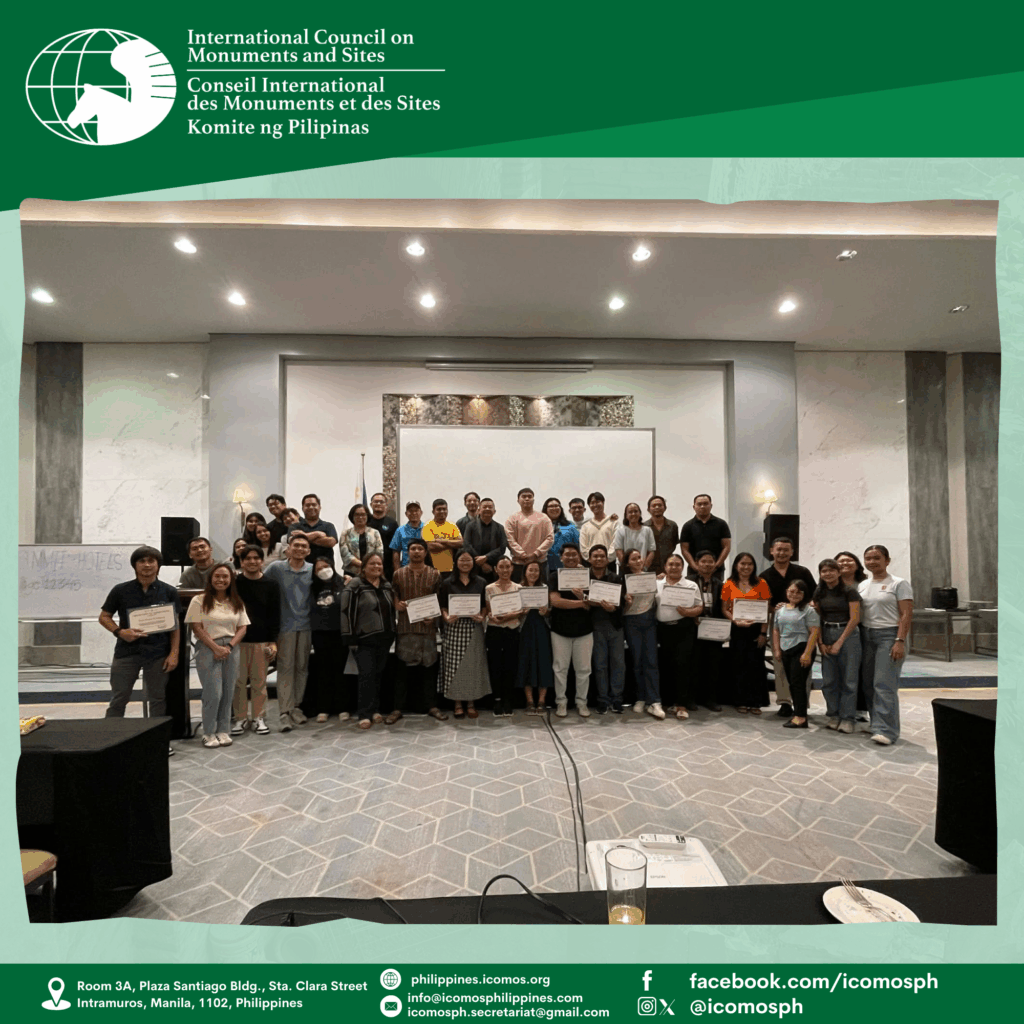
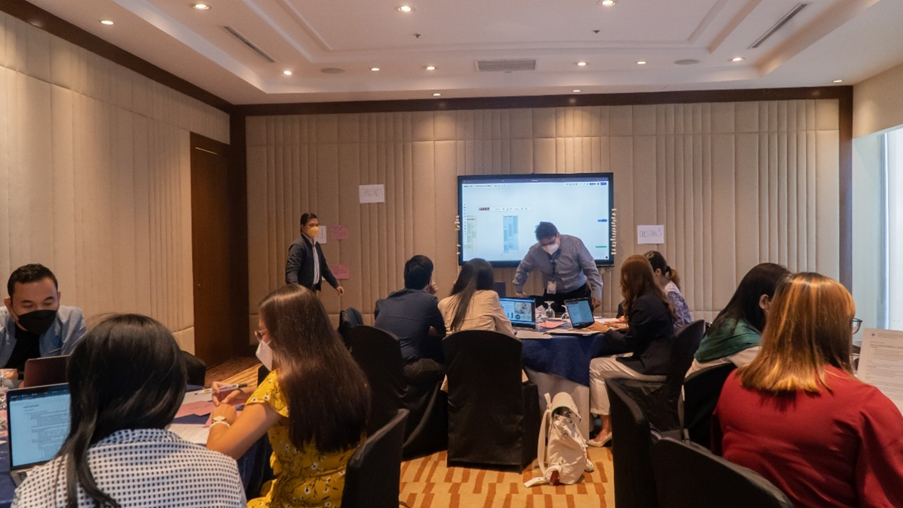
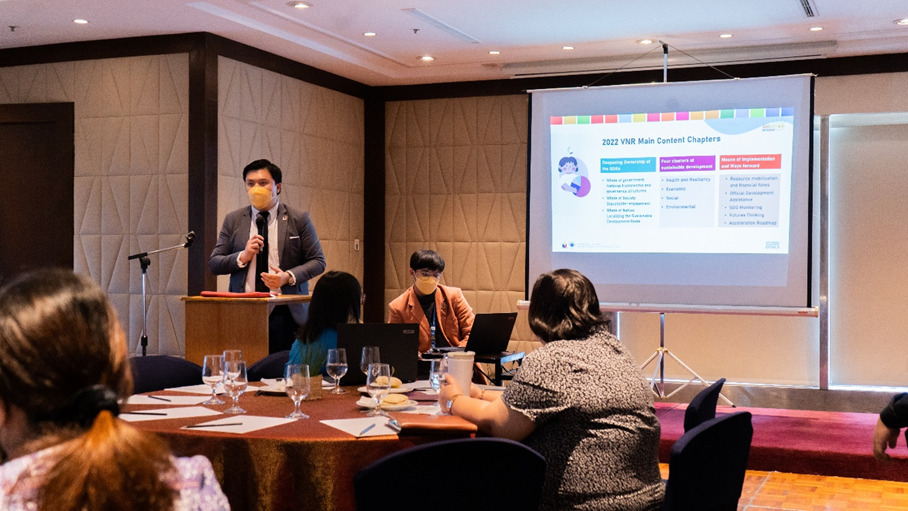
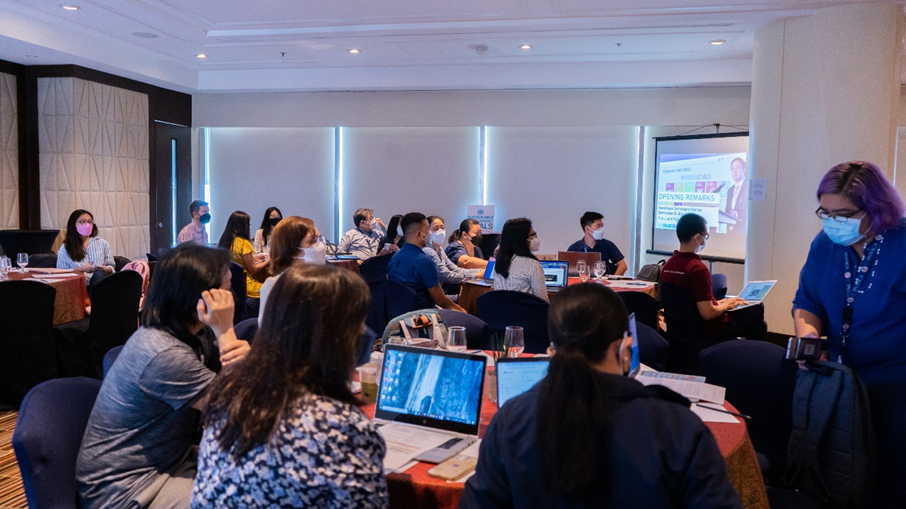
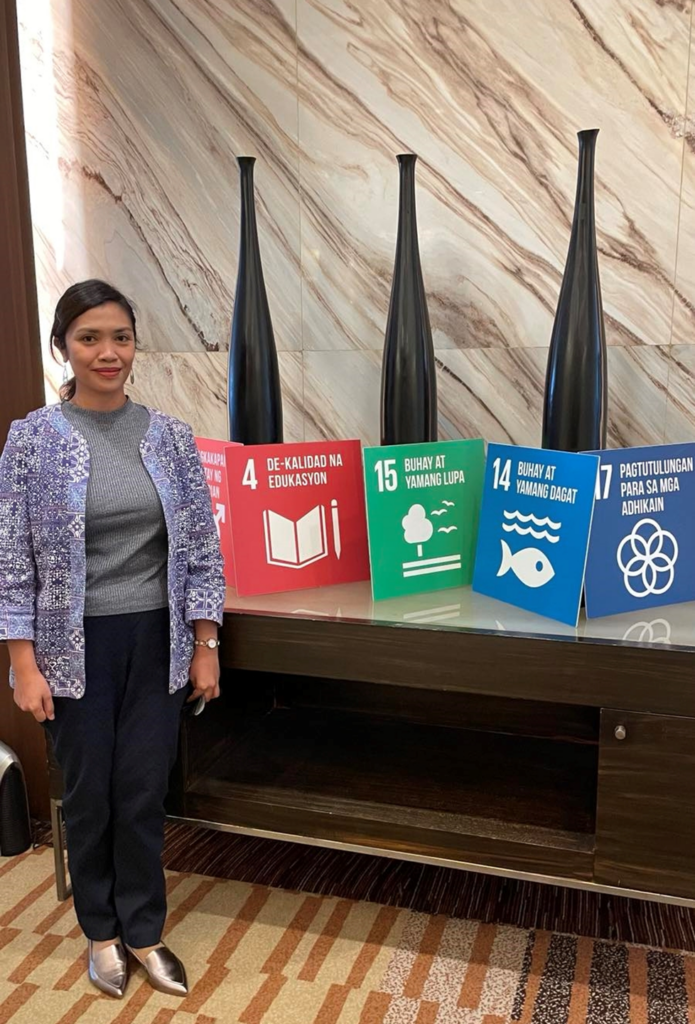
CEBU CITY–ICOMOS Philippines and the Ramon Aboitiz Foundation Inc. (RAFI), through the Kabilin Partnership, conducted Sustainable Development Training 03: Integrating MEAL Plans with the PAMANA 2030 Indicators Framework on September 17 and 18, 2026 at The Kabilin Center in Cebu City.
The two-day training marked another step in the Mobilizing Philippine Heritage as a Driver and Enabler of Sustainable Development (MPHSD) initiative. Building on the earlier trainings on heritage, sustainable development, and indicator development, SD Training 03 focused on putting the framework into actual project use by connecting RAFI’s Monitoring, Evaluation, Accountability, and Learning or MEAL Plans with the PAMANA 2030 Cultural Heritage Assessment and Reporting Tool (CHART). Rather than holding one large plenary session, the training was organized into focused technical working sessions for four heritage initiatives: Casa Gorordo Museum (CGM), The Kabilin Center (TKC), the National Training Course on Disaster Risk Management of Cultural Heritage (DRMCH), and the Safeguarding of the Intangible Cultural Heritage of the Santo Niño Devotion (ICHSN). This allowed each project team to look closely at its existing indicators, available data, and monitoring practices.
During the sessions, participants reviewed how project activities and key performance indicators could contribute to CHART and support wider reporting under the Philippine Development Plan for Culture and the Arts and the UNESCO Culture 2030 Indicators. Discussions also looked at practical questions such as what information needs to be collected, how often data should be gathered, how evidence can be validated, and how these processes can fit into the teams’ regular work rather than becoming a separate reporting requirement. A sample analysis of data from the Batobalani Safeguarding Workshop was also used to show how project-level information can be translated into evidence for sustainable development reporting. From there, the teams worked on matching their respective MEAL indicators with CHART and identifying areas where their monitoring systems could be strengthened.
The training also helped shape the next stage of MPHSD implementation. Participants discussed an implementation runway covering 2026 to 2029, including how data from the four projects can be consolidated and used for future assessment, learning, and reporting. Inputs from the sessions will also contribute to the development of the first PAMANA 2030 publication, “Heritage as a Driver and Enabler of Sustainable Development in the Philippines, Volume 1: Concepts, Policy and Methodology.”
Through SD Training 03, the MPHSD initiative moved beyond developing indicators toward testing how they can work within existing institutional systems. The activity provided the four project teams with space to examine their own data and processes while working toward a shared approach for showing how heritage programs contribute to sustainable development.
Key resource persons and facilitators included:
Gabriel Victor Caballero, MPHSD Project Director
Chen Mencias, ICOMOS Philippines Sustainable Development Goals Working Group Member and Subject Matter Expert
Ador Vincent Mayol, MPHSD Project Lead
Gabrielle Sebastianne “Elle” Bacalso, MPHSD Local Research Assistant
John Rainier Lopez, Kabilin Partnership Project Officer
Michael Alvin Labendia, MEAL Officer
Timothy Augustus Ong, ICOMOS Philippines Board Member
Representatives from RAFI and the Kabilin Partnership Program, who supported the technical working sessions for Casa Gorordo Museum (CGM), The Kabilin Center (TKC), the National Training Course on Disaster Risk Management of Cultural Heritage (DRMCH), and the Safeguarding of the Intangible Cultural Heritage of the Santo Niño Devotion (ICHSN).
SD Training 01: Basics of Heritage and Sustainable Development
13 to 15 August 2025 | The Kabilin Center, Cebu City
ICOMOS Philippines and the Ramon Aboitiz Foundation Inc. conducted the first Sustainable Development Training under the Pamana 2030: Mobilizing Philippine Heritage as a Driver and Enabler of Sustainable Development initiative. Held at The Kabilin Center in Cebu City, the training brought together RAFI teams, ICOMOS Philippines, heritage workers, and development partners to build a common understanding of how cultural heritage can support sustainable development.
The sessions introduced participants to the wider role of culture and heritage in development work. Discussions looked at how heritage is connected to social inclusion, local economies, environmental care, community resilience, and identity. Participants also engaged with national and international frameworks, including the Sustainable Development Goals, the Philippine Development Plan, inputs from the National Commission for Culture and the Arts, and the UNESCO Culture 2030 Indicators.
Through lectures, case studies, and group discussions, the training helped show that heritage is not only something to protect or preserve. It can also help communities respond to present needs and plan for the future. Examples from tourism, community mapping, disaster risk management, and heritage management showed how culture can be linked to practical concerns on the ground.
This first training laid the groundwork for the succeeding MPHSD activities. It helped participants move from a general understanding of heritage and sustainability toward a clearer view of how heritage work can be documented, measured, and connected to planning. It also helped establish the shared direction that would later guide the development of indicators and assessment tools under Pamana 2030.
Supporting agencies and representatives:
DepDev / national development planning input: Lester Owen Go, Chief Economic Development Specialist, DepDev Development Research Division
NCCA: Jesuben Angel S. Bongolan, Head of the Regional Coordination Unit, NCCA Planning and Policy Office
CIT-U: Engr. Erlyn Ivy O. Rago, Head of the Student Success Office, Cebu Institute of Technology – University
RAFI: Christian Anuta, Director, Program Excellence Group
SMEs / resource persons / facilitators:
Andrew Mason, WSP Canada Inc., ICOMOS SDGWG Member (Canada), Task Team on Heritage Evaluation Criteria and Indicators
Chen Mencias, ICOMOS Philippines SDGWG Member and former NEDA Stakeholders Chamber Representative for ICOMOS Philippines
Maria Lourdes ‘Joy’ Martinez Onozawa, ICOMOS Philippines SDGWG Member and Subject Matter Expert
Gabriel Caballero, MPHSD Project Director
Carmencita Solis, ICOMOS Philippines SDGWG Member and Facilitator
SD Training 02 Module 1: Designing Indicators and MOVs
22 and 29 January 2026 | Online and In-Person Sessions
Sustainable Development Training 02 Module 1 moved the discussion from general concepts of heritage and sustainable development toward the practical design of indicators and Means of Verification. Held through online and in-person sessions, the module focused on how RAFI’s heritage-related projects could be connected to national cultural policy priorities, especially the Philippine Development Plan for Culture and the Arts 2024-2029.
The sessions helped participants look at how each project could identify relevant indicators, available data sources, and possible evidence that can show culture’s contribution to sustainable development using the framework set by the National Commission for Culture and the Arts. The module introduced the idea that heritage projects need clear measures and documentation so that their social, cultural, economic, and governance contributions can be better understood over time.
Participants worked through the four RAFI project components, namely Casa Gorordo Museum, The Kabilin Center, the National Training Course on Disaster Risk Management of Cultural Heritage, and the Safeguarding of the Intangible Cultural Heritage of the Santo Nino Devotion. Through these discussions, project teams began matching their work with PDP-CA outcomes and identifying what kinds of data could realistically be collected from ongoing project activities.
This module became an important bridge between the first training and the later work on the UNESCO Culture 2030 Indicators. It helped prepare the teams for deeper indicator development by clarifying what can be measured, what evidence is available, and what still needs to be strengthened in the projects’ monitoring and documentation systems.
Supporting agencies and representatives:
NCCA: Jesuben Angel S. Bongolan, Head of the Regional Coordination Unit, NCCA Planning and Policy Office
SMEs / resource persons / facilitators:
Andrew Mason, WSP Canada Inc., ICOMOS SDGWG Member (Canada), Task Team on Heritage Evaluation Criteria and Indicators
Chen Mencias, ICOMOS Philippines SDGWG Member and former NEDA Stakeholders Chamber Representative for ICOMOS Philippines
Chanelle Mesjena Custorio, ICOMOS Philippines Member and Facilitator
Maria Lourdes ‘Joy’ Martinez Onozawa, ICOMOS Philippines SDGWG Member and Subject Matter Expert
Project perspective inputs included Joselito Corpuz for DRMCH, and Ador Vincent Mayol as MPHSD Project Lead
SD Training 02 Module 2: Building the Indicator Foundation
23 February and 5 March 2026 | Online and In-Person Sessions
Following the earlier discussions on heritage and sustainable development, Sustainable Development Training 02 Module 2 focused on building the indicator foundation for the MPHSD initiative. The module helped connect wider cultural monitoring frameworks with the ongoing work of RAFI, the Kabilin Partnership, and CEBloom Operations.
The sessions introduced the UNESCO Culture 2030 Indicators and explored how these could be applied to RAFI’s heritage-related projects. Building on previous discussions, participants looked at how international frameworks could help guide the process of measuring culture’s contribution to sustainable development.
One important part of the module was the discussion on Baguio City’s experience with the Culture 2030 Indicators. This example helped participants see how cultural data and heritage indicators can be used in an actual local applications. Participants also worked through RAFI’s own project data from four initiatives: Casa Gorordo Museum, The Kabilin Center, the National Training Course on Disaster Risk Management of Cultural Heritage, and the Safeguarding of the Intangible Cultural Heritage of the Santo Niño Devotion.
Through breakout sessions, participants identified possible indicators, reviewed available data sources, and reflected on how each project contributes to broader development outcomes. This module marked an important step in moving from broad ideas into more practical indicator work. It helped prepare the ground for a common assessment framework that can support reporting, learning, and planning across the Kabilin Partnership.
Supporting agencies and representatives:
Baguio Culture 2030 Indicators experience: Dr. Raymond Rovillos, College President III of Pangasinan Polytechnic College and former Chancellor of the University of the Philippines Baguio
SMEs / resource persons / facilitators:
Andrew Mason, WSP Canada Inc., ICOMOS SDGWG Member (Canada), Task Team on Heritage Evaluation Criteria and Indicators
Chen Mencias, ICOMOS Philippines SDGWG Member and former NEDA Stakeholders Chamber Representative for ICOMOS Philippines
Chanelle Mesjena Custorio, ICOMOS Philippines Member and Facilitator
Maria Lourdes ‘Joy’ Martinez Onozawa, ICOMOS Philippines SDGWG Member and Subject Matter Expert
Project perspective inputs included Joselito Corpuz for DRMCH, Dr. Laya Boquiren-Gonzales for ICHSN, and Ador Vincent Mayol as MPHSD Project Lead
SD Training 02 Module 3: Consolidating and Institutionalizing the Framework
23 to 24 March 2026 | The Kabilin Center, Cebu City
Sustainable Development Training 02 Module 3 brought together the work developed in the earlier sessions and focused on consolidating the MPHSD indicator framework. Held in person at The Kabilin Center, the module gathered participants from the Kabilin Partnership, RAFI, CEBloom Operations, and ICOMOS Philippines to refine how heritage-related project outcomes could be linked to monitoring, evaluation, accountability, and learning.
The session focused on making the methodology more practical for long-term use. Using the inputs from the earlier modules, participants worked toward a common framework that connected local project outcomes with RAFI’s MEAL plans, while also aligning with the Philippine Development Plan for Culture and the Arts and the UNESCO Culture 2030 Indicators. This helped show how local heritage work can contribute to wider national and international development conversations.
The module also included discussions on impact scoring, policy alignment, and the updated Cultural Heritage Assessment Methodology. Case examples from the four RAFI projects helped participants test how the framework could apply to different types of heritage work, including museums, cultural facilities, training programs, and intangible cultural heritage initiatives. These discussions helped clarify how indicators could be prioritized, scored, and used for reporting and decision-making.
By the end of the module, the MPHSD work had moved closer to a working system for tracking how heritage contributes to sustainable development. The session also helped prepare the direction for the first MPHSD publication, which will continue the process of documenting, reviewing, and refining the knowledge produced through the trainings. Through this module, the Kabilin Partnership continued to show that heritage is not only cultural work, but also development work.
NCCA: Jesuben Angel S. Bongolan, Head of the Regional Coordination Unit, NCCA Planning and Policy Office and Rhea Lyn H. Dela Cruz, Culture and Arts Officer, Regional Exchange Unit
SMEs / resource persons / facilitators:
Andrew Mason, WSP Canada Inc., ICOMOS SDGWG Member (Canada), Task Team on Heritage Evaluation Criteria and Indicators
Chen Mencias, ICOMOS Philippines SDGWG Member and former NEDA Stakeholders Chamber Representative for ICOMOS Philippines
Maria Lourdes ‘Joy’ Martinez Onozawa, ICOMOS Philippines SDGWG Member and Subject Matter Expert
Chanelle Mesjena Custorio, ICOMOS Philippines Member and Facilitator
Gabriel Caballero, MPHSD Project Director
Project perspective inputs included Joselito Corpuz for DRMCH, Dr. Laya Boquiren-Gonzales for ICHSN, and Ador Vincent Mayol as MPHSD Project Lead
The Ramon Aboitiz Foundation Inc. (RAFI), together with ICOMOS Philippines, successfully concluded the Kabilin Partnership Program (KPP) Team Planning Sessions held from November 20 to 22, 2025 at One Central Hotel, Cebu City. The three-day planning activity brought together project directors, leads, technical specialists, and program staff to align priorities, finalize milestone calendars, and strengthen coordination across all KPP heritage initiatives for 2026–2029.
The sessions brought together program team members from both ICOMOS Philippines and RAFI. The ICOMOS Philippines delegation was led by Dr. Cheek Fadriquela, President, along with the Project Directors—Dr. Laya Gonzales for the Safeguarding of the Intangible Cultural Heritage of the Santo Niño Devotion (ICHSN); LAr. Gabriel Victor Caballero for PAMANA 2030’s Philippine Policy Guidance for Heritage and the Sustainable Development Goals (MPHSD); and Mr. JH Corpus, MHSP for the National Training Course on Disaster Risk Management of Cultural Heritage (DRMCH). They were joined by Mr. Abdulbasir Endong, Heritage Affairs Officer; Ms. Chelsea Kaye Cabahug, ICHSN Local Research Assistant; and Ar. Carmencita Solis, Cebu-based member and Ped Expert for DRMCH.
From RAFI, attendees included Marie Sol D. Gonzalvo, Executive Director for the North and Central Portfolio; Ar. Kenneth Tua, PhD, Kabilin Chief Project Officer; Ador Vincent Mayol, MPHSD Project Lead; King Rosales, DRMCH Project Lead; John Wesley Rocha, ICHSN Project Lead; Joworski Alipon; John Russel Bragat; Chelsea Kaye Cabahug, Local Research Assistant; Abigail Eugenio; John Russel Bragat; Marthel Jay Ubas; and Lhance Caratao.
The planning sessions formally opened with an orientation on the Kabilin Integrated Project Teams, focusing on changes to program initiation requirements, manpower updates, required planning outputs, and updated grants management procedures. Discussions ensured that all teams were aligned with improved processes for project charter preparation, disbursement protocols, and efficient budget utilization—key mechanisms supporting program implementation.
Participants then worked on refining the Work Breakdown Structures (WBS) of each project in relation to both the RAFI and ICOMOS Philippines calendars, producing a consolidated milestone roadmap covering 2026 to 2029, along with a detailed Year 2 (2026) implementation schedule. This allowed project teams from DRMCH, MPHSD, and ICHSN to synchronize their targets and identify strategic dependencies across initiatives.
A significant portion of the sessions was dedicated to reviewing and approving the summarized PIP–WBS–Milestones of each project cluster. Each team presented its four-year and Year 2 plans for validation, resolution, and approval, ensuring that all activities align with program goals, resource availability, and organizational priorities for heritage conservation and capacity-building.
The workshop continued with an in-depth planning session focused on crafting 2026 Activity Proposals, where teams underwent guided proposal development, internal discussions, and cross-team consultations. These proposals, once consolidated, will serve as the foundation for year-round implementation and interdepartmental coordination.
The Core Project Management Team also held specialized meetings to address year-specific planning, activity sequencing, and plotting of scheduled tasks into the unified MS Excel master calendar. Final presentations of the Activity Proposals for DRMCH, MPHSD, and ICHSN were conducted, followed by resolutions and approval motions to proceed with implementation preparations for 2026.
The planning concluded with a joint meeting between the Core Project Management and Grants Teams, focusing on validating aggregated disbursement requirements, clarifying budget utilization guidelines, and strengthening support mechanisms for the program’s expanding portfolio of heritage initiatives.
The Kabilin Partnership Program Team Planning Sessions reaffirmed the strong collaboration between RAFI and ICOMOS Philippines in advancing heritage conservation in the Visayas through aligned strategies, strengthened systems, and coordinated organizational direction. The outputs of the three-day activity will guide the next cycle of heritage programs and ensure that project teams remain equipped to deliver sustainable, community-centered, and well-coordinated heritage interventions.
CEBU CITY, Philippines — The Ramon Aboitiz Foundation Inc. (RAFI), in collaboration with ICOMOS Philippines, successfully conducted the Conservation Management Plan (CMP) Workshop on November 18–19, 2025 at Summit Galleria Cebu. The two-day workshop convened heritage practitioners, planners, and partner institutions to strengthen technical and institutional capacities in the preparation and implementation of Conservation Management Plans for significant cultural properties across the country.
Throughout the workshop, participants engaged in in-depth discussions on cultural significance assessments, architectural documentation, structural analysis, archaeology, material studies, and the development of informed conservation strategies tailored to heritage sites. The program also emphasized the practical integration of CMP principles into organizational policies and decision-making processes, promoting a sustainable and evidence-based approach to heritage management.
The workshop was enriched by a distinguished panel of experts from the fields of architecture, conservation, archaeology, and heritage science. Ar. Kenneth Javier Tua, PhD—an economic scientist and heritage conservation specialist with advanced degrees in cultural landscapes, diplomacy, and agricultural science— presented the Workshop Guidelines and Outline and explained the Conservation Management Plan (CMP) framework, highlighting its role in guiding stakeholders through a structured process of understanding, assessing, and managing heritage sites. He emphasized how the CMP supports national heritage laws, aligns with regional practices, strengthens UNESCO-related commitments, and fosters transparency, accountability, and collaboration among agencies, experts, and communities.
Ar. Caryn Paredes-Santillan, PhD, an expert in architectural theory, modern Asian architecture, and conservation planning with doctoral credentials from the University of Tokyo, discussed the role of comparative studies in establishing cultural significance. Her wide-ranging work on CMPs for major Philippine heritage sites such as Intramuros, San Sebastian Basilica, the Manila Central Post Office, and the Cultural Center of the Philippines offered participants a strong foundation in methodological approaches to heritage evaluation.
Architectural conservator Mr. JH Corpus, MHSP, who specializes in stone conservation, disaster risk management, and heritage policy, contributed his extensive experience from both Philippine and international institutions, including his work with the Metropolitan Museum of Art’s Cloisters and the NYC Landmarks Preservation Commission. His leadership in heritage recovery efforts following major disasters in the Philippines provided participants with grounded, practical perspectives on structural assessment and conservation planning.
Cheek S. Fadriquela, PhD – an Assistant Professor at the University of Santo Tomas Graduate School and Associate Professor at the University of the Philippines Los Baños, shared his expertise in the conservation of wooden built heritage. through the lens of the 7Ms of documentation. He is the current President of ICOMOS Philippines.
Archaeologist Dante Ricardo N. Manipon from the UP School of Archaeology expanded the discussion by introducing participants to the fundamentals of archaeology within development contexts. With ongoing research on Spanish-era forts and churches across the Philippines and experience in public archaeology, he guided participants in recognizing archaeological materials and understanding how discoveries can influence responsible project planning.
Ar. Carmencita Solis, a Cebuano expert in architecture, urban planning, and community-based conservation with graduate studies from the Asian Institute of Technology, discussed the critical role of architectural conditions assessment in the success of any conservation process. As a lecturer at the University of San Carlos and an active member of ICOMOS Philippines’ ICORP (International Committee on Risk Preparedness), she offered valuable insights into documentation methods and the importance of understanding a structure’s past, present, and future conditions.
Together, these experts provided an interdisciplinary and comprehensive learning experience that deepened participants’ understanding of heritage values, conservation processes, and management strategies. The collaborative effort between RAFI, ICOMOS Philippines, and the workshop participants marks a significant step toward strengthening heritage stewardship in the Visayas. The success of the workshop reinforces a shared commitment to preserving the cultural, historical, and architectural legacy of Philippine communities and highlights the importance of capacity-building in ensuring that heritage conservation remains informed, sustainable, and community-centered.
Dr. Laya Boquiren-Gonzales stirred the discussion with onsite participants. She moderated the open forum of the panel taking in questions from the diverse audience composed of other cultural workers and local heritage advocates.
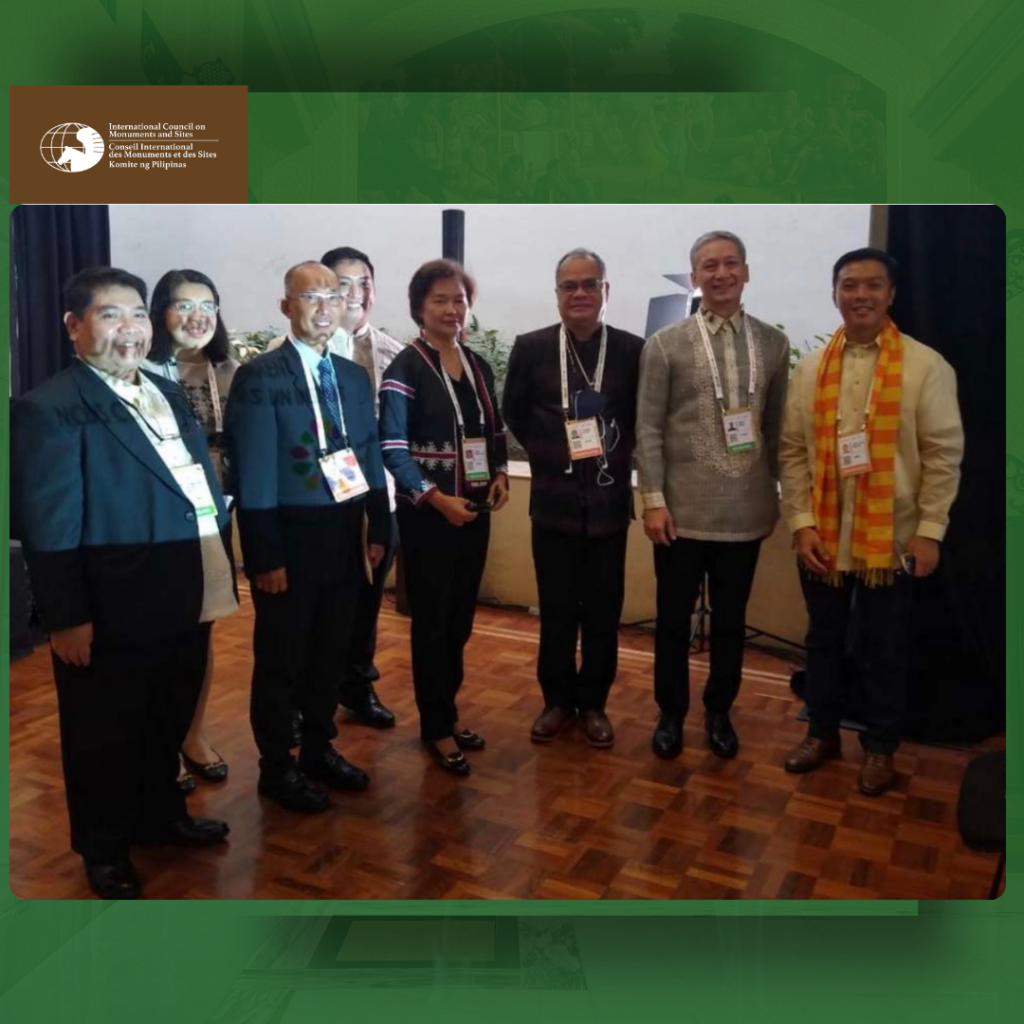
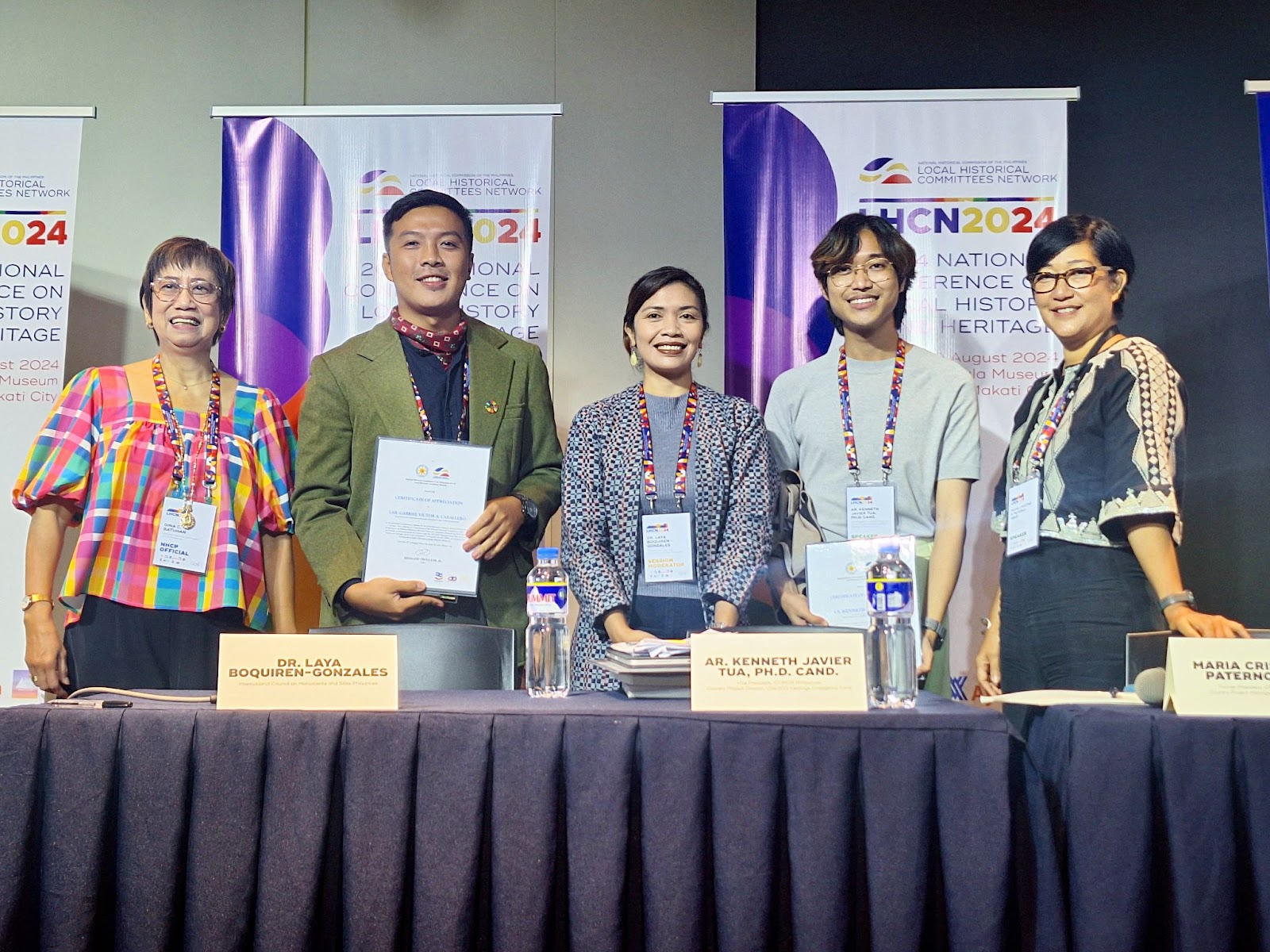
ICOMOS Philippines led a panel discussion at the 2024 National Conference on Local History and Heritage (NCLHH) last August 29, 2024, in the Ayala Museum, Makati City. The panel with the title Heritage Conservation Practices in the Philippines was chaired and moderated by Dr. Laya Boquiren-Gonzales, PhD, and was composed of Ms. Maria Cristina Paterno, Ar. Kenneth Javier Tua, and LAr. Gabriel Caballero.
Ms. Maria Cristina P. Paterno, Immediate Past President of ICOMOS Philippines and Projects Manager of Preserving Legacies presented “Climate Vulnerability Assessment of the Ifugao Rice Terraces: Preserving Legacies, A Future for Our Past.” She shared the findings and experience of the recently published study that looked into the values of the terraces for the local communities and how these values, rooted in Indigenous knowledge, are impacted by climate change, as well as contribute to strengthening resilience and adaptive capacity as they try to preserve and protect their cultural heritage by integrating modern climate science.
Ar. Kenneth Javier Tua, Vice President of ICOMOS Philippines and Country Director of the UNESCO-Heritage Emergency Fund project for the Historic City of Vigan presented “Saluad-Tawid: Conserving and Protecting Heritage Houses and Structures in the Historic City of Vigan After the 2022 Earthquake.” The recently concluded project provided valuable lessons for disaster risk management for cultural heritage and working in a multi-stakeholder environment.
LAr. Gabriel Victor A. Caballero, Focal Point for the United Nation’s Sustainable Development Goals (SDGs) of ICOMOS International presented “Pamana 2030: Local Case Profiles on Philippine Heritage and Sustainable Development Goals.” He presented selected efforts by the ICOMOS Sustainable Development Goals Working Group (SDGWG) to document heritage initiatives that intersect with SDGs.
Laya Boquiren-Gonzales, PhD, gave a short presentation about the upcoming initiative to document and safeguard the heritage of the devotion to the Santo Niño de Cebú in partnership with Ramon Aboitiz Foundation Inc. (RAFI), one of the three landmark projects under the ‘Kabilin Partnership’ with ICOMOS Philippines.
Dr. Laya Boquiren-Gonzales stirred the discussion with onsite participants. She moderated the open forum of the panel taking in questions from the diverse audience composed of other cultural workers and local heritage advocates.
We in ICOMOS Philippines express our sincere gratitude and congratulations to the National Historical Commission of the Philippines, the organizers of the conference for the opportunity to share our work and on-ground experience towards a respected heritage profession in the country, and Philippine heritage that is conserved to the highest standards. We look forward to taking part again in the next NCLHH Conference.
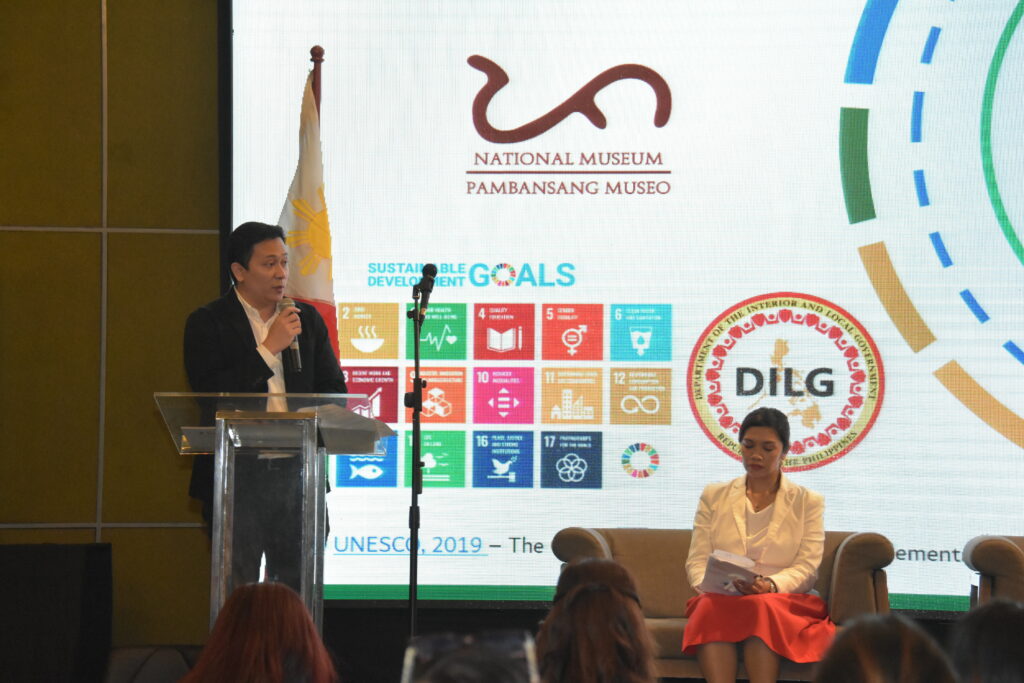
ICOMOS Philippines, the only heritage professional organization included in the National Economic Development Authority (NEDA) Stakeholder’s Chamber, led the discussion on heritage conservation as a driver for genuine and sustainable societal transformation during the agency’s 1st Sustainable Development Goal (SDG) Summit held on November 22 to 23, 2022.
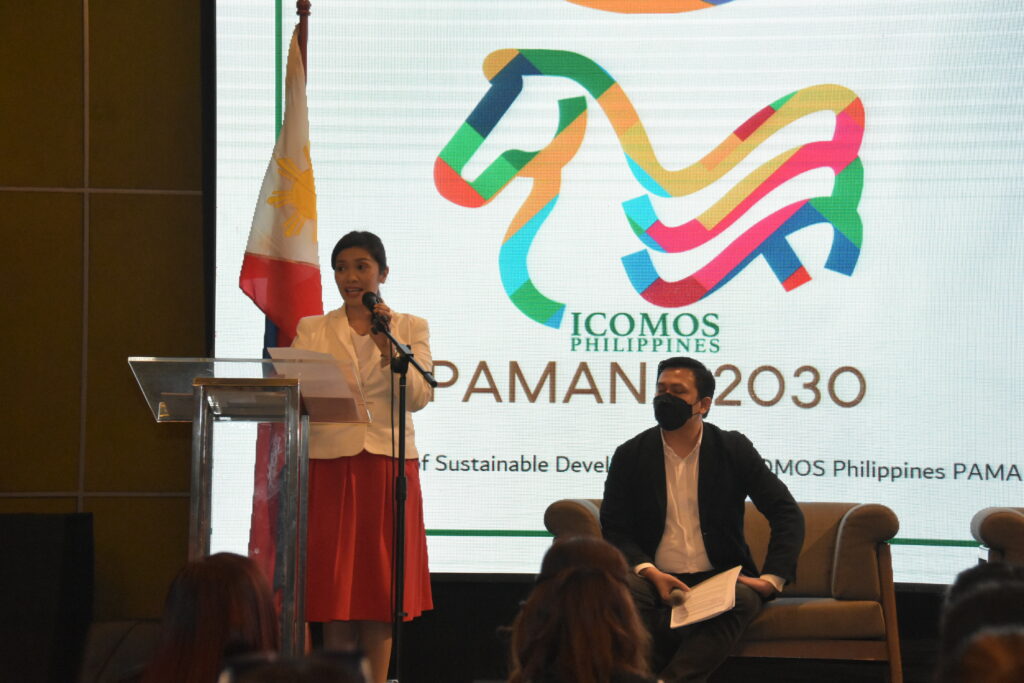
Dr. Laya Boquiren-Gonzales presenting ICOMOS Philippines’ PAMANA 2030 Project
Dr. Laya Boquiren-Gonzales presented ICOMOS Philippines’ PAMANA (Heritage) 2030 Project led by the organization’s SDG Working Group. With only 8 years left to achieve the SDGs by 2030, references to heritage in the global collective aspiration remain alarmingly scarce as evident in the insufficient discussions and practices by local and national government agencies related to heritage promotion and protection.
To bridge this gap, the Pamana (Heritage) 2030 Project of ICOMOS Philippines launched in 2021 aims to further accomplish the following in the near future:
Release a call for case profiles and will produce a policy guidance document with relevant stakeholders;
Gather key local government solutions in addressing societal concerns of inclusive social development, holistic economic development, environmental sustainability, peace and security, and key partnerships within their local realities; and
Provide timely baseline data and policy recommendations focused on the intersection of heritage and the SDGs in various parts of the country.
Ar. Harvey Vasquez presents the findings of the ICOMOS Philippines’ emergency assessment on the earthquake’s damage to some heritage structures in Vigan City
Meanwhile, Ar. Harvey Vasquez zoomed in on the importance of efficient pre-disaster recovery planning and concise post-disaster methodological actions in conserving heritage sites through the case of the World Heritage City of Vigan, impacted by a magnitude 7.0 earthquake in Northwestern Luzon in July this year.
ICOMOS Philippines joined the City Government of Vigan and the multi-sectoral Vigan Conservation Council in the rapid assessment of the damage, made possible by funding from UNESCO Jakarta.
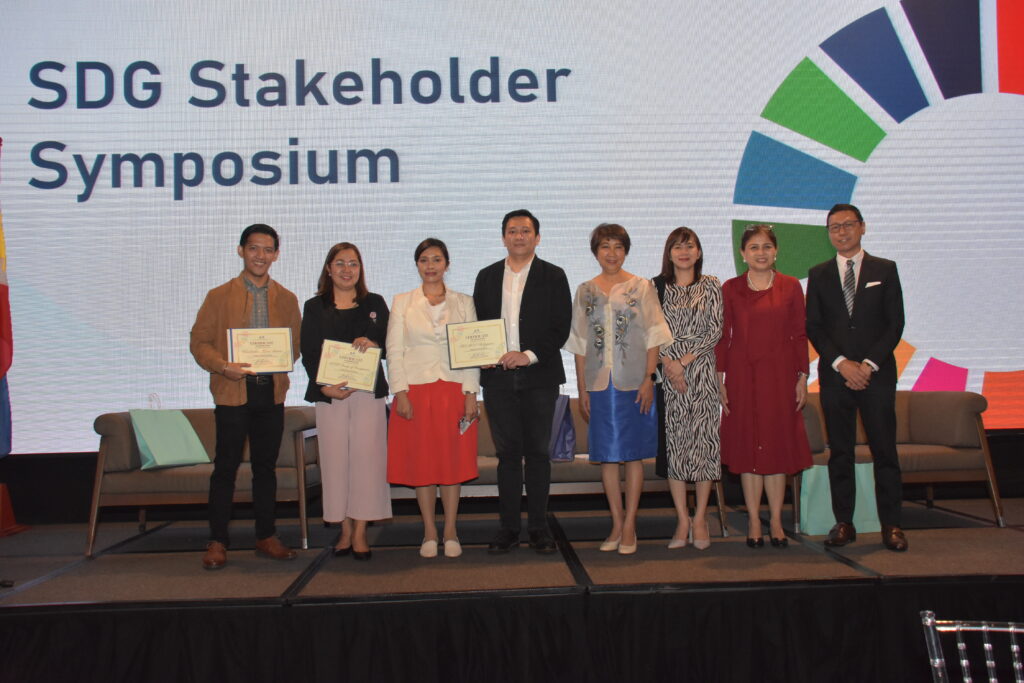
NEDA Undersecretary for National Development Policy and Planning Rosemarie Edillon awardsCertificate of Appreciation to ICOMOS Philippines
Through the summit, ICOMOS Philippines hopes that more individuals will become aware of the importance of heritage conservation in the present and future, and become involved in this encompassing, holistic, and transformative movement.
To provide how management and conservation of heritage places can give a dynamic and mutually beneficial role in society today and long into the future, the People-Nature-Culture (PNC) World Heritage Leadership (WHLP), a capacity-building programme delivered by IUCN, ICCROM, UNESCO World Heritage Centre, and other organizations, with the support of the Norwegian Ministry of Climate and Environment and other partners, is established to equip heritage site managers worldwide.
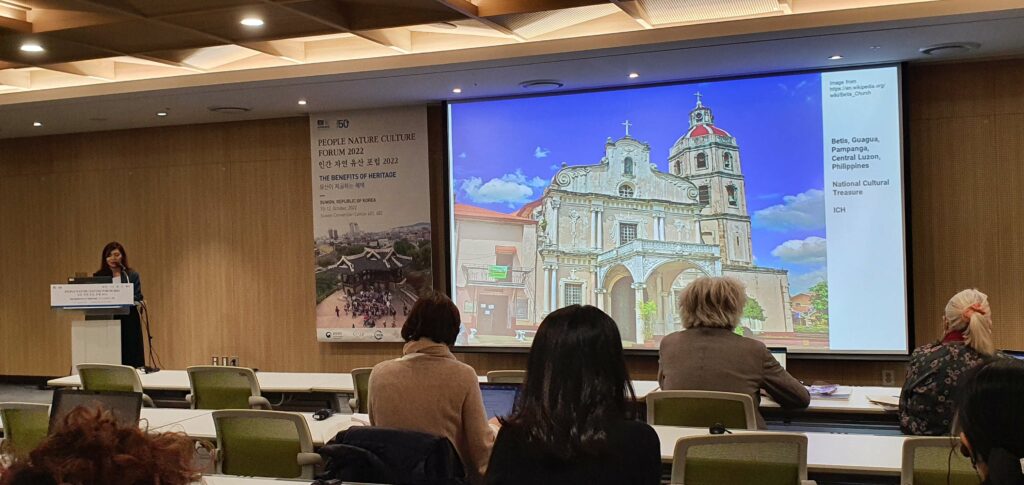
Among the fully-funded scholars is ICOMOS PH member Dr. Laya Boquiren Gonzales, who was invited to participate and present at the PNC Forum, which celebrated the conclusion of the 2017-2022 Korea-ICCROM Funds in Trust, the approaching completion of Phase I of the World Heritage Leadership Programme (WHLP) and the 50th anniversary of the World Heritage Convention. The event was held from October 10 – 12, 2022 in Suwon, Republic of Korea (ROK)
Dr. Boquiren – Gonzales presented “How can we establish good governance arrangements that ensure they benefit from the conservation of those places?” on Day 2 under the theme of Who benefits from heritage.
Dr. Laya Boquiren – Gonzales presents the case on the Interlinkages of Built Heritage and Intangible Cultural Heritage, and the C’s of Governance at the PNC Forum
Dr. Boquiren-Gonzales provided highlights on her presentation from the forum:
The conservation of the Santiago Apostol Parish in Betis, Guagua, Pampanga, a National Cultural Treasure, is an excellent case of community-based safeguarding of intangible cultural heritage (ICH) and application of the C’s of Governance, including the following:
collaboration of management actors;
concerted efforts of multiple stakeholders including local champions;
conservation anchored on a sense of collective devotion and pride and not only tourism as the sole motivation;
coordination among a consulting committee;
collaboration of local cooperatives for the safeguarding of ICH;
celebrations that dramatize the significance of traditions and honor collective memory;
contracting technical experts in the conservation of built heritage, a convergence of space of interests;
consensus and coalition-building;
cooperation strengthened by social relationships; and
collective pride rooted in one’s occupational identity and place affinity.
The claiming of public spaces (SDG 11.5 and SDG 11.7), originally intended for disaster mitigation, became an intergenerational significance collective skills formation anchored on place wisdom (the space is now an artisans’ haven and eco park).
Substantial impacts include the integration of woodcarving into the Technical and Vocational Education and Training (TVET) system by local champions and acknowledgment of the need to integrate heritage into basic educational pedagogy. Heritage, including intangible properties, provide livelihood (SDG 8) entrepreneurial opportunities beyond mere employment (SDG 10), a sense of well-being and contentment, pride, social cohesion, and place affinity. It is life itself.
The conservation of built heritage and safeguarding of craft production unfold in relationships forged over time across levels of the locality. Decisions are arrived at through consensus. Concerted efforts are the product of coalition-building.
Ideally, cooperation is institutionalized or formalized under the coordinated efforts of national government agencies and provincial and municipal governments. When the local government and national government agencies enter the picture, the conservation of built heritage and safeguarding of the intangibles must be achieved through efficient planning and mobilization of resources, and reflected in Key Performance Indicators (KPIs); implemented in Programs, Projects, and Activities (PPAS); and audited using the right monitoring and evaluation tools.
Conservation efforts are best protected by legislation and enshrined in the constitution. However, the strength of implementing the terms of such arrangements and the rule of legislation are just as potent as the combined aspirations of communities. Therefore, community empowerment and collective action must persist above all.
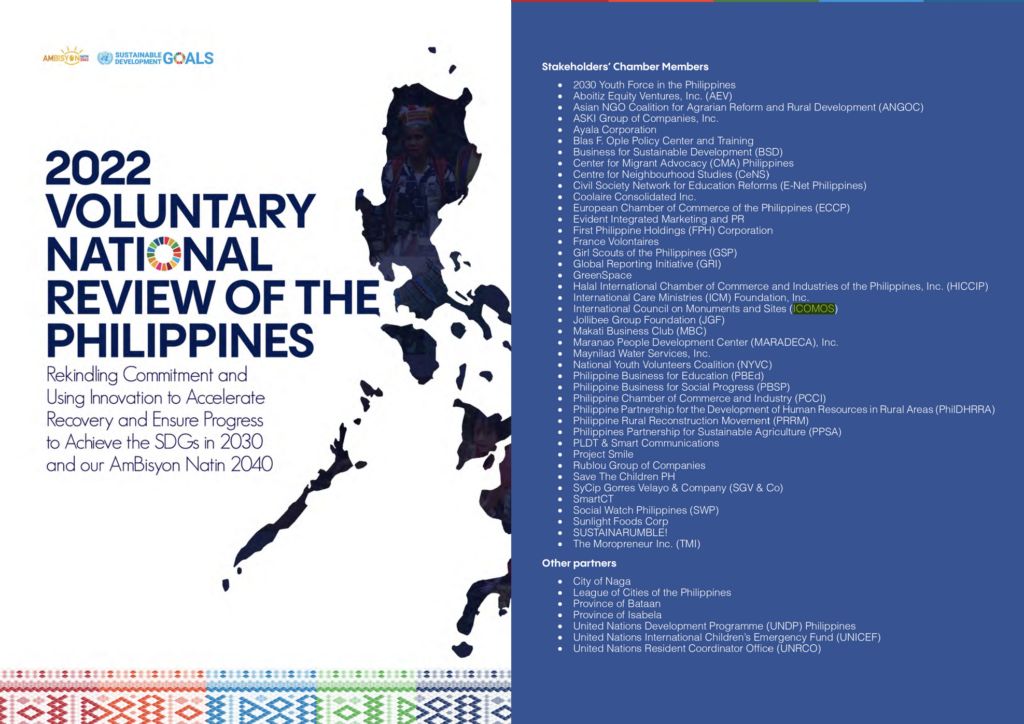
International Council on Monuments and Sites (ICOMOS) Philippines is a member of the NEDA’s Stakeholders Chamber on the Sustainable Development Goals (SDGs) for the 2022 Voluntary National Review (VNR).
The Voluntary National Review (VNR) is a process through which countries assess their efforts achieving the 17 Sustainable Development Goals (SDGs), with a view to accelerate their progress. Through peer-learning, case presentations of progress, the group surfaces gaps and good practices, so countries may gain a snapshot of their standing in SDG implementation and leverage partnerships in the group. By the VNR, partnerships are also mobilized National Economic and Development Authority (NEDA) recently published the 2022 VNR of the Philippines encapsulating ICOMOS Philippines and other Stakeholders’ Chamber members’ technical inputs in the two (2) previous Quarterly meetings.
Screenshot Photo of the VNR from National Economic and Development Authority (NEDA)
NEDA provided the main messages of the VNR summarizing the state of the country:
“No Filipino is poor; no one is hungry. Filipino families live together; there is work-life balance. Everyone feels secure over their entire lifetime.”
This is the AmBisyon Natin 2040 of the Philippines (AN 2040). A 2040 strategic vision that has guided the Philippine Development Plans (PDPs) on the country’s priorities in 6-year increments. The PDP 2017-2022 lays the foundation for inclusive growth, a high-trust and resilient society and a globally competitive knowledge economy. Realizing that the World We Want, as elaborated in the 2030 Agenda through the SDGs, aligns with the Life We Want, through AN 2040, the Philippines has mainstreamed the SDGs in the strategies of the PDP.
This is the Philippines’ third VNR. The first was a stock-taking of lessons learned from the implementation of the MDGs; the second reported on the progress in addressing these lessons. This year, we had hoped to report on more progress towards a whole-of-society implementation and further gains in SDG outcomes. COVID-19, unfortunately, reversed some gains and forced us to re-prioritize strategies. However, the inroads we have made on means of implementation remain. We are enhancing these institutional mechanisms to quickly recover and accelerate progress.
There are few Quarterly meetings left and ICOMOS Philippines’ membership to the Chamber is for FY 2022 – 2023 and is renewable.
International Council on Monuments and Sites (ICOMOS) Philippines’s representatives EnP. Chen Reyes – Mencias and Dr. Laya Boaquiren – Gonzales participated in the 2nd Quarterly Stakeholders’ Meeting on the Sustainable Development Goals (SDGs) in the Philippines for the 2022 Voluntary National Review (VNR).
The Voluntary National Review (VNR) is a process through which countries monitor and assess their own efforts in achieving the 17 Sustainable Development Goals (SDGs). By getting stakeholders together, countries identify gaps and good practices, mobilize partnerships and peer learning to further their progress.
This set the foundation for the mapping of the Stakeholders’ Chamber existing policies, activities, and programs on sustainable development. The expected outcome is as follows:
Member Stakeholders to be united on the flow of the 2022 VNR draft and the discussion of the VNR on stakeholder engagement.
An initial mapping of member stakeholders using the Non-Government SDG-PAPs Mapping tool. This will harmonize the targeted constituencies of member stakeholders, their programs and activities; and
Agreement to submit all inputs by June 3 for the Non-Government SDG-PAPs Mapping tool.
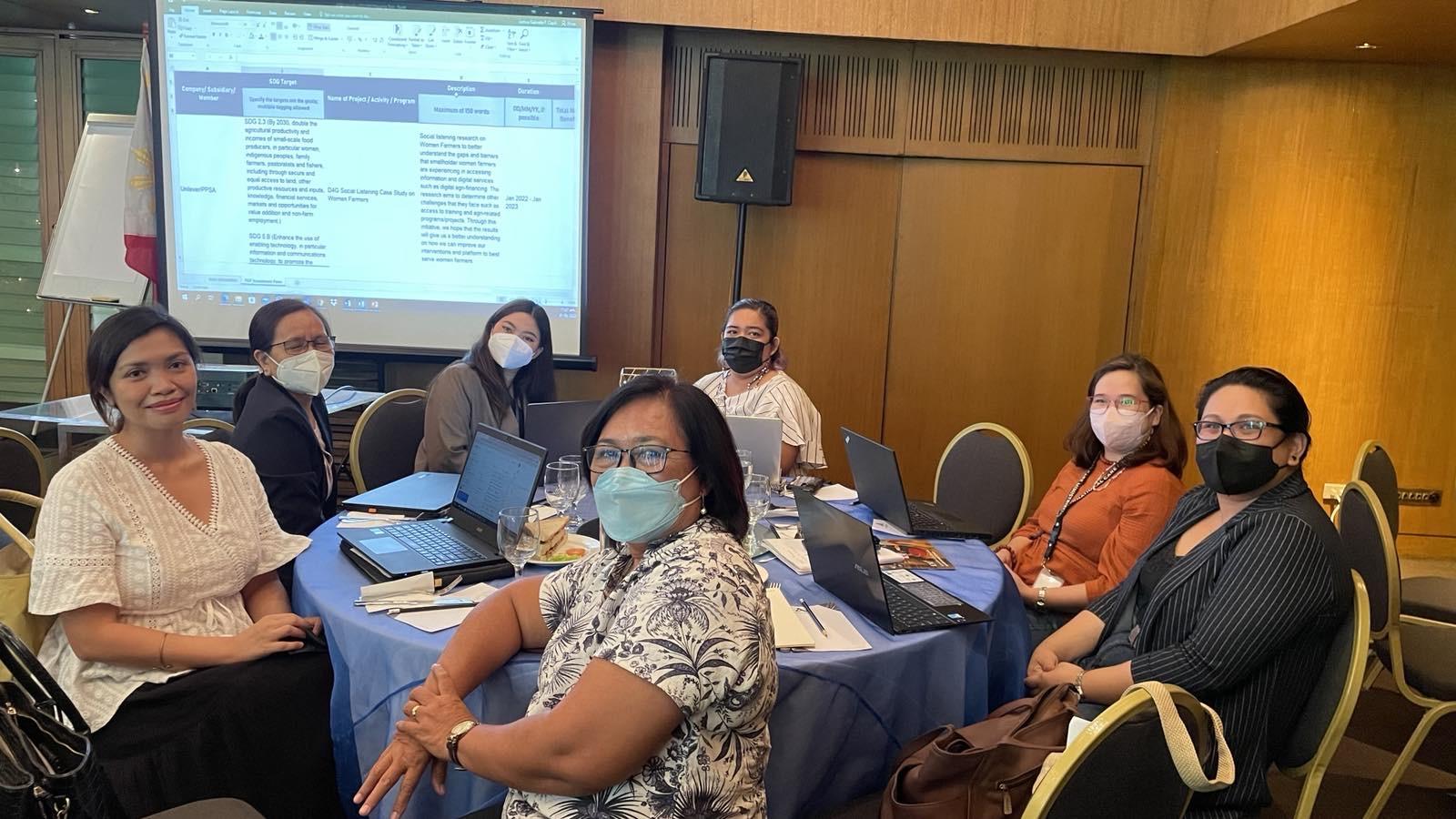
EnP. Mencias and Dr. Boquiren – Gonzales represented ICOMOS Philippines during the 2nd Quarterly meeting held last June 01, 2022, Wednesday, at Astoria Plaza, 15 J. Escriva Dr, Ortigas Business District, Pasig City.
Dr. Laya Boaquiren – Gonzales (left) and EnP. Chen Reyes – Mencias (right) with some of the representatives from some the 40 chosen Stakeholders’ Chamber members.
Photo from Dr. Laya Boquiren – Gonzales
Photo from EnP. Chen Reyes – Mencias
Other present Stakeholders’ Chamber members were Asian NGO Coalition for Agrarian Reform and Rural Development (ANGOC), Ayala Corporation, Global Reporting Initiative (GRI), Jollibee Group Foundation, Makati Business Club, etc.
To know more about NEDA’s initiative, kindly visit bit.ly/SDGChamber
International Council on Monuments and Sites (ICOMOS) Philippines’s representative Dr. Laya Boaquiren – Gonzales participated in the 1st day of the Consultation Workshop on the implementation of the Sustainable Development Goals (SDGs) in the Philippines for the 2022 Voluntary National Review (VNR).
The Voluntary National Review (VNR) is a process through which countries assess and present progress made in achieving the 17 Sustainable Development Goals (SDGs) and the pledge to leave no one behind. The purpose of VNRs is to present a snapshot of where the country stands in SDG implementation, with a view to help accelerate progress through experience sharing, peer-learning, identifying gaps and good practices, and mobilizing partnerships.
The 1st day of the Consultation Workshops captured how the Philippines responded to the demands and challenges of the pandemic in the areas of education, gender equality, and environmental sustainability particularly on the following aspects:
a. Resource Mobilization and Financing. Address financing gaps in SDG implementation, and integrate planning and budgeting to ensure that resources are optimized and allocated for SDG-related programs, activities, and policies;
b. Localization. Develop communications for more effective stakeholder engagement at the subnational level;
c. Monitoring. Enhance accountability mechanisms to ensure proper data monitoring and reporting of SDG progress; and
d. Stakeholder engagement. Development mechanisms to harmonize efforts from different actors on the SDGs
Through the abovementioned aspects, three (3) workshops were divided to tackle the following: Challenges, Best Practices, and Lessons learned / Ways forward / Recommendations.
Photo from National Economic and Development Authority (NEDA)
Photo from National Economic and Development Authority (NEDA)
Photo from National Economic and Development Authority (NEDA)
Photo from Dr. Laya Boquiren – Gonzales
Dr. Boquiren – Gonzales represented ICOMOS Philippines during the 1st day of the consultation workshops held last April 26, 2022, Tuesday, at Discovery Suites Ortigas, 25 ADB Avenue, Ortigas Center, Pasig City.
Dr. Laya Boquiren – Gonzales provided highlights of the 1st workshop:
“I joined the breakout session for non-government actors, where we highlighted our organization’s programs and projects on heritage education and capacity building. ICOMOS Philippines provides heritage education, continuing professional development, and internships — all with access to a network of international, national, and local specialists in heritage. Partnerships with organizations for skills-based training in heritage conservation, documentation, and restoration work (for job generation and poverty reduction) were also mentioned. That ICOMOS has a seat in NCMS makes it strategically positioned to contribute to collective efforts in attaining the SDGs.”
“The non-government actors of civil society organizations (CSOs) recommended that NEDA produce an AI-enabled platform to map out the efforts and beneficiaries of the CSOs that will be critical in monitoring the SDGs and helping one another streamline efforts in education for nation-building. We were also asked to identify challenges in resource mobilization and financing. We also recommended that since the government is duty-bound as an enabler, it should dedicate human resources to gather and consolidate data and reach out to government actors so that the resource mobilization issues we have identified will be appropriately communicated.”
Other present Stakeholders’ Chamber members were Philippine Partnership for the Development of Human Resources in Rural Areas (PhilDHRRA), Aboitiz Equity Ventures Inc., First Philippine Holdings Corporation, European Chamber of Commerce of the Philippines (ECCP) etc.
To know more about NEDA’s initiative, kindly visit bit.ly/SDGChamber
For more information on ICOMOS Philippines and SDGWG ➡️ (https://tinyurl.com/2sj8k3sb)