
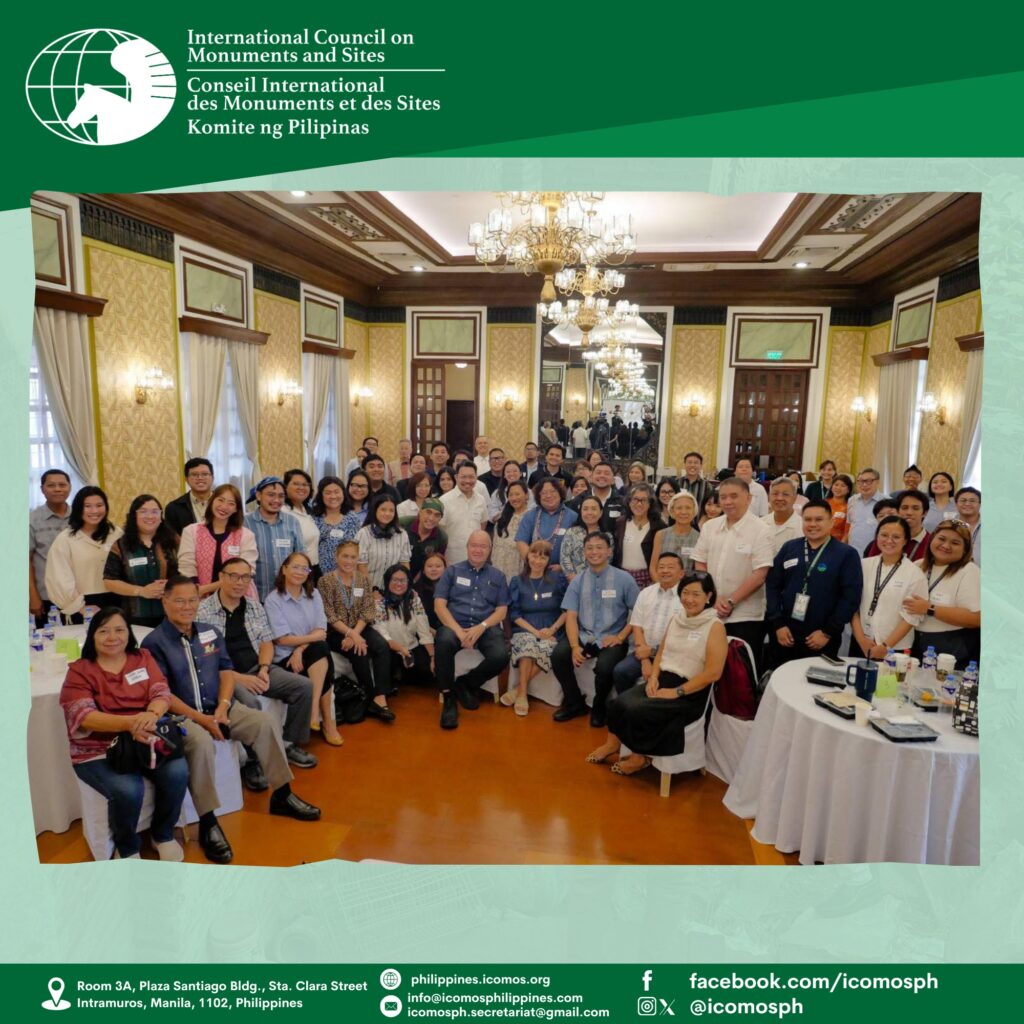
Manila, Philippines — Building on the National Commission for Culture and the Arts (NCCA)’s Petition to Declare the Pasig River as a National Cultural Treasure and the earlier Focus Group Discussion and Preliminary Stakeholders Meeting held on April 8, 2026, a Stakeholders Consultation was convened on May 25, 2026 at the Manila Metropolitan Theater Grand Ballroom, bringing together a broad spectrum of heritage advocates, local government representatives, academic institutions, business groups, conservation organizations, and cultural stakeholders.
Organized by ICOMOS Philippines and the Heritage Conservation Society (HCS), the consultation served as a key platform for advancing the discourse on the Pasig River’s declaration as a National Cultural Treasure (NCT), underscoring its role as a heritage corridor central to Philippine history, identity, and urban development.
In his opening remarks, ICOMOS Philippines President Dr. Cheek S. Fadriquela emphasized the Pasig River as a vital cultural and historical landscape that shaped the growth of Manila and the nation. Describing it as the “builder of Manila,” he highlighted its historic function as a center of trade, movement, and community life. He stressed that while ongoing rehabilitation and development remain essential, equal priority must be given to recognizing the river’s cultural and heritage value as a living repository of memory, identity, and shared history.
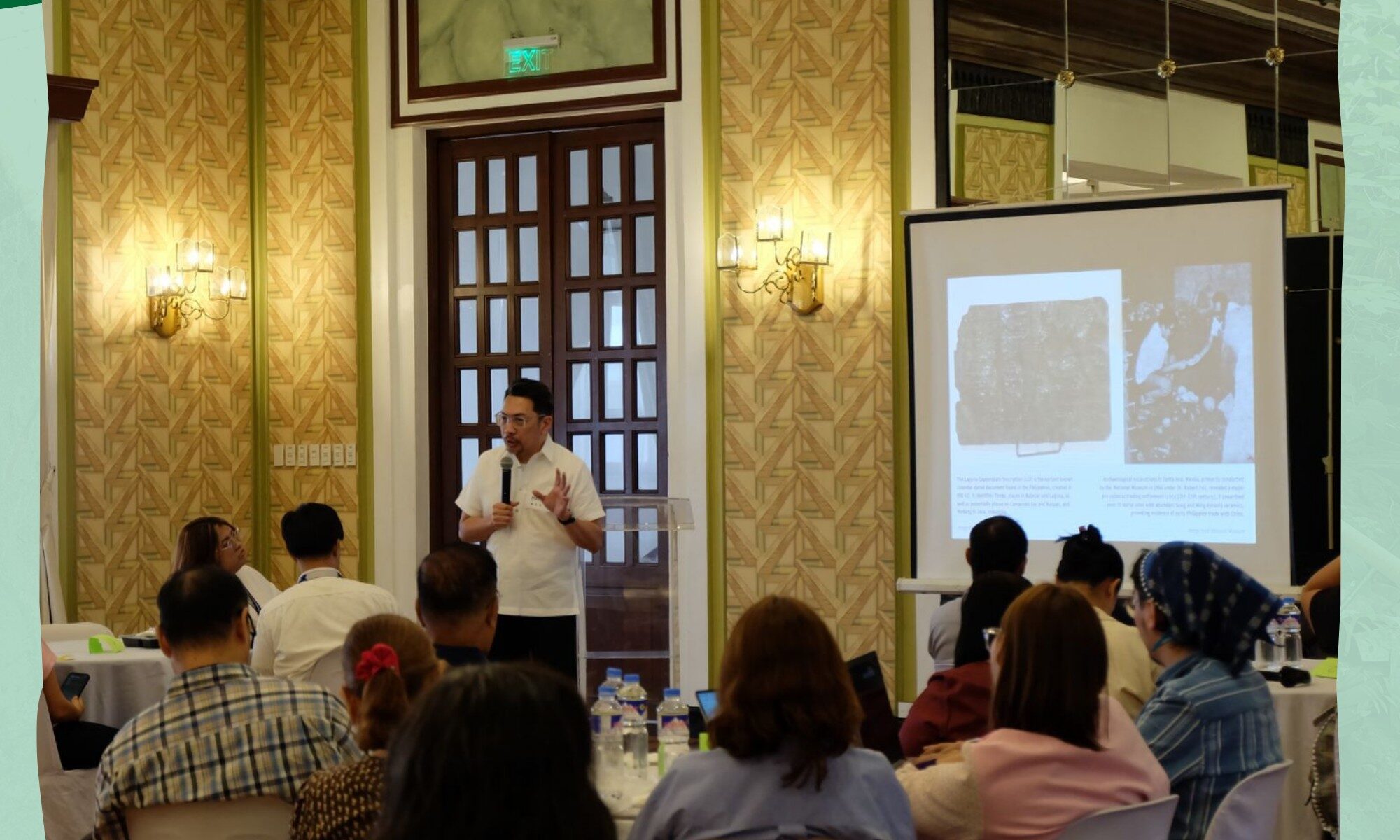
One of the convenors, Atty. Mark Evidente then presented the research foundation of the petition, outlining the river’s historical, architectural, spiritual, cultural, and social significance. He underscored its connection to early Philippine history, including its association with the Laguna Copperplate Inscription, and its role in the development of early commerce in Manila. Framing the river as a multidimensional cultural landscape, he emphasized its intersections with urbanism, spirituality, transportation, commerce, and community life, and articulated four key arguments supporting its declaration as an NCT: its foundational role in national history, its influence on urban form and civic architecture, its cultural and social significance in shaping identity, and its outstanding cultural value warranting formal recognition.
A structured stakeholder feedback session followed, allowing participants to reflect on their personal and institutional connections to the river, raise concerns about the petition, and articulate hopes for its future. Common themes emerged across sectors, including improved public access to the river, biodiversity restoration, revival of water-based transportation, stronger heritage protection frameworks, and cautious scrutiny of infrastructure projects perceived to threaten the river’s ecological and cultural integrity.
Representatives from the Philippine Coastal Storage & Pipeline Corporation highlighted the Pasig River’s historic role as a transportation and logistics artery connecting key urban landmarks such as Jones Bridge and McArthur Bridge. They stressed that any restoration effort must go beyond heritage appreciation and include urgent attention to sanitation, sewage management, waste control, and human settlement issues, noting that improved water quality would directly enhance the quality of life for surrounding communities.
Discussions further emphasized ecological restoration, with stakeholders advocating for the reintroduction of mangroves, aquatic vegetation, and biodiversity-supportive interventions inspired by successful river rehabilitation models abroad. Participants noted that such efforts could contribute to flood mitigation, enhance public green spaces, and strengthen community engagement with the river. The dialogue also revisited the river’s historic role in connecting settlements such as Santa Ana, Manila and Taytay, with calls for improved and sustainable water-based transport systems to reduce congestion and restore navigability.
Maritime heritage was also highlighted through the intervention of Art Valdez, who discussed the Voyage of the Balangay initiative and its goal of reviving Filipino maritime consciousness. He emphasized that Philippine waterways once functioned as essential national highways for trade and mobility, and noted that despite modern navigational challenges, river journeys continue to demonstrate the Pasig River’s enduring cultural and historical relevance. Participants further suggested that direct river experiences for local leaders could deepen appreciation of its condition and potential.
The consultation also addressed governance and policy directions, with Atty. Evidente acknowledged the complexities of translating the petition into law. He emphasized the need for adequate resources, political will, and coordinated implementation across national and local governments, supported by zoning plans, ordinances, and context-specific heritage policies. He clarified common misconceptions about heritage conservation, noting that it does not imply rigid preservation but rather adaptive planning approaches such as heritage zoning, buffer zones, and integrated urban development strategies that allow local government units to define the river’s significance within their own contexts.
Further discussions explored heritage districts, archaeological potential, adaptive reuse, and urban identity, with participants identifying historical settlements, civic centers, churches, plazas, and institutional structures linked to the river. An archaeologist Mr. Arturo Joseph Tablan III from the Intramuros Administration underscored the importance of archaeological research in heritage interpretation, a point supported by Atty. Evidente, who noted that significant portions of Philippine riverine history remain underexplored and warrant systematic study.
Concerns over large-scale infrastructure proposals, including PAREX, were strongly raised, with stakeholders urging that any development affecting the river be evaluated not only for mobility outcomes but also for its ecological, hydrological, and heritage impacts, including effects on tributaries and esteros.
The consultation concluded with remarks from Ar. Giuseppe Luigi Abcede, HCS President who emphasized that Philippine history cannot be separated from the Pasig River. He stressed that the river is deeply intertwined with the nation’s art, culture, heritage practice, urban planning, and mobility, and underscored that the initiative to declare it a National Cultural Treasure represents a broader national effort to recognize and protect its enduring role in shaping Filipino identity and collective memory.