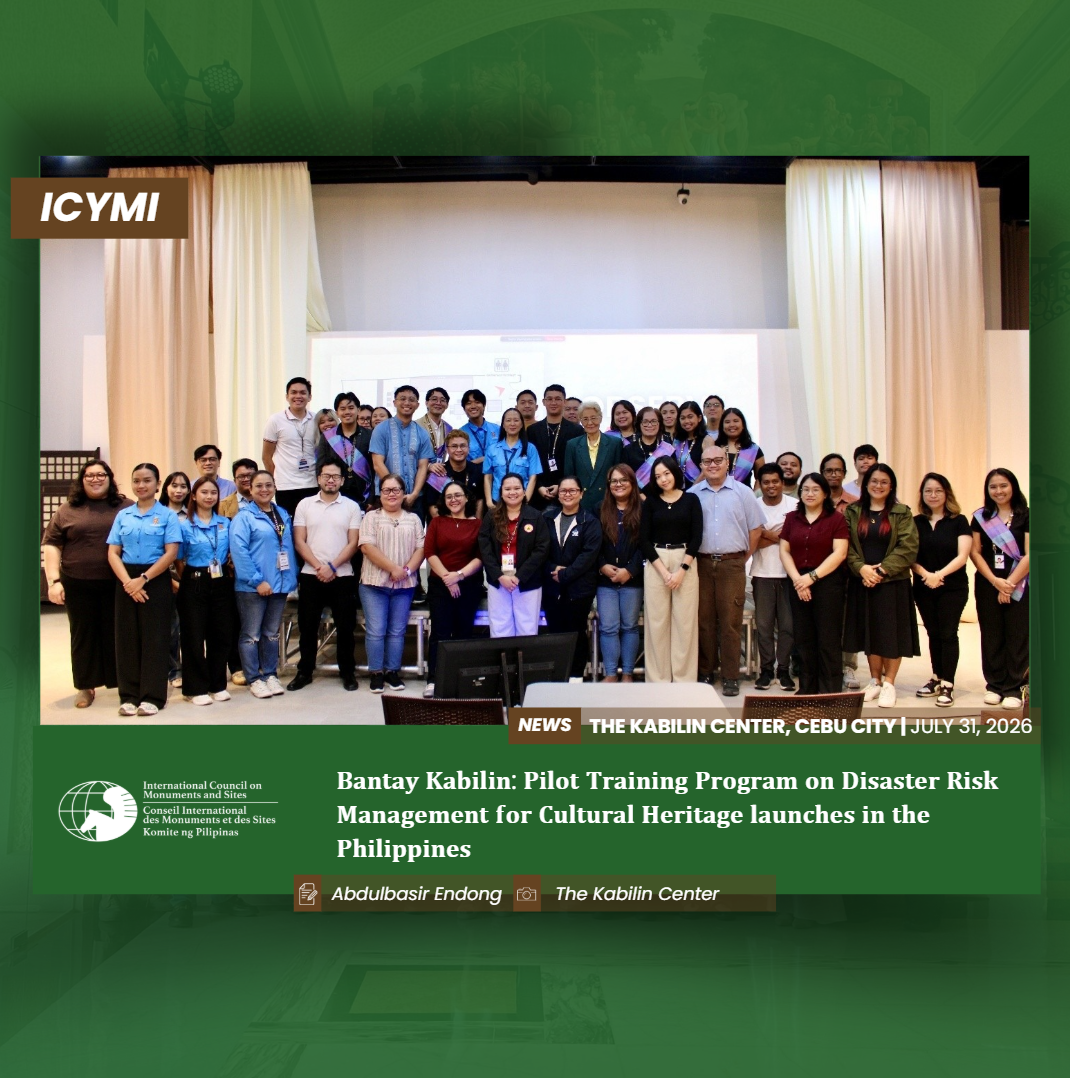
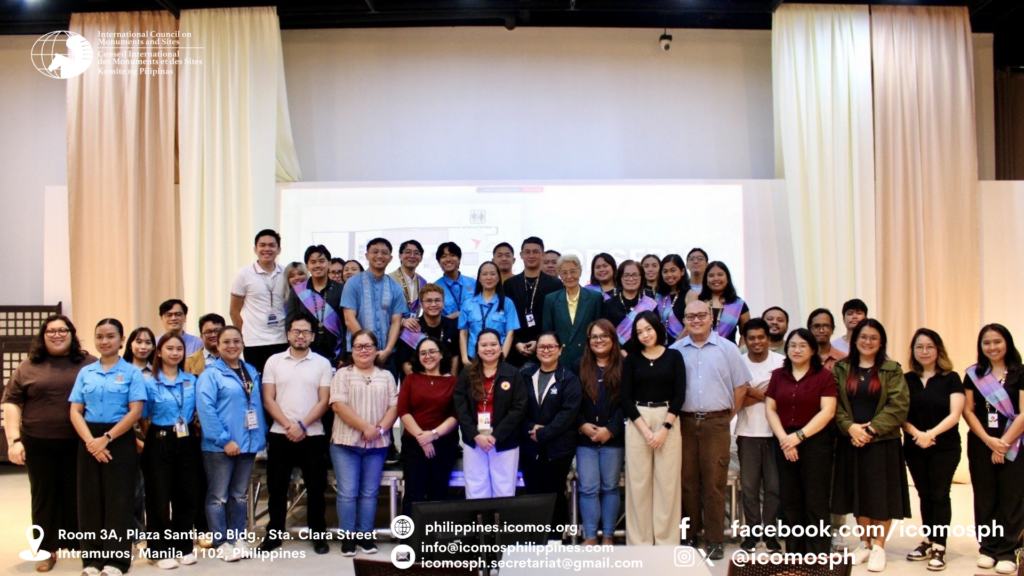
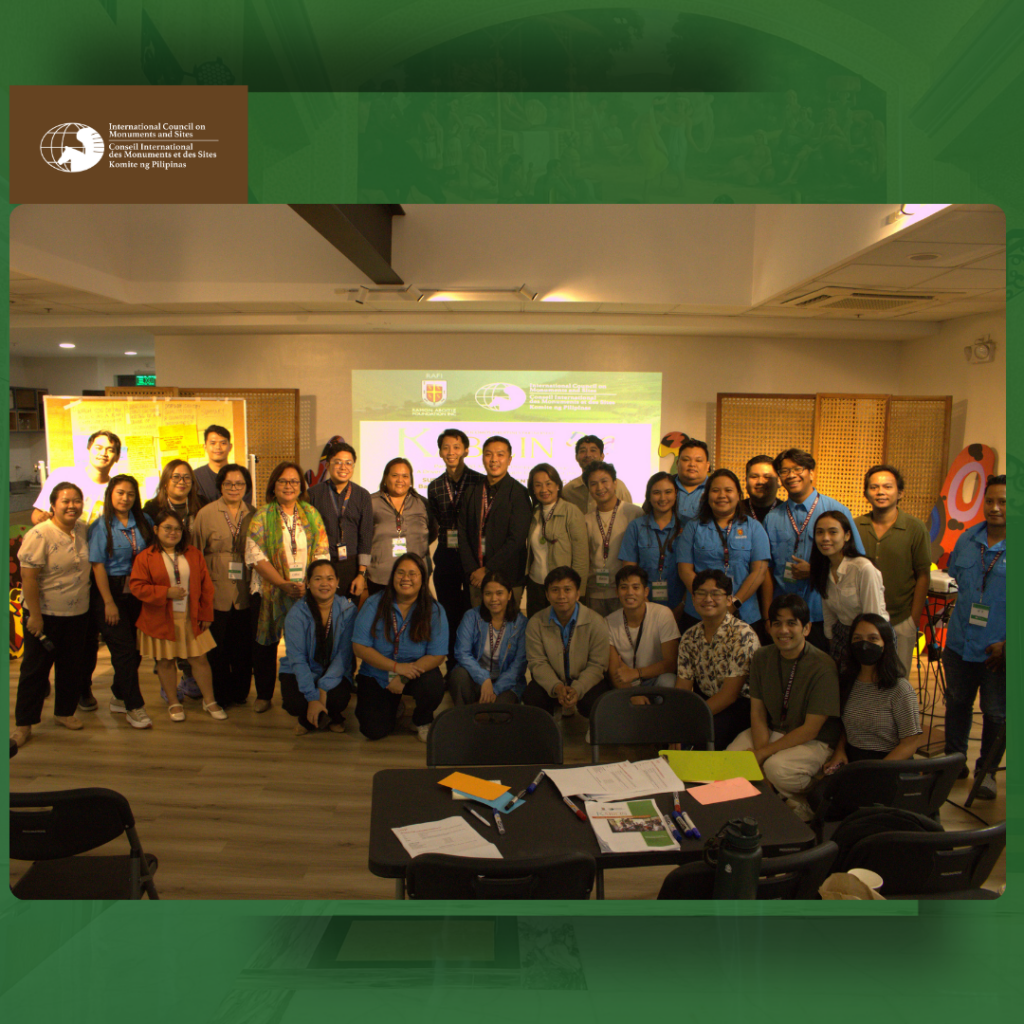
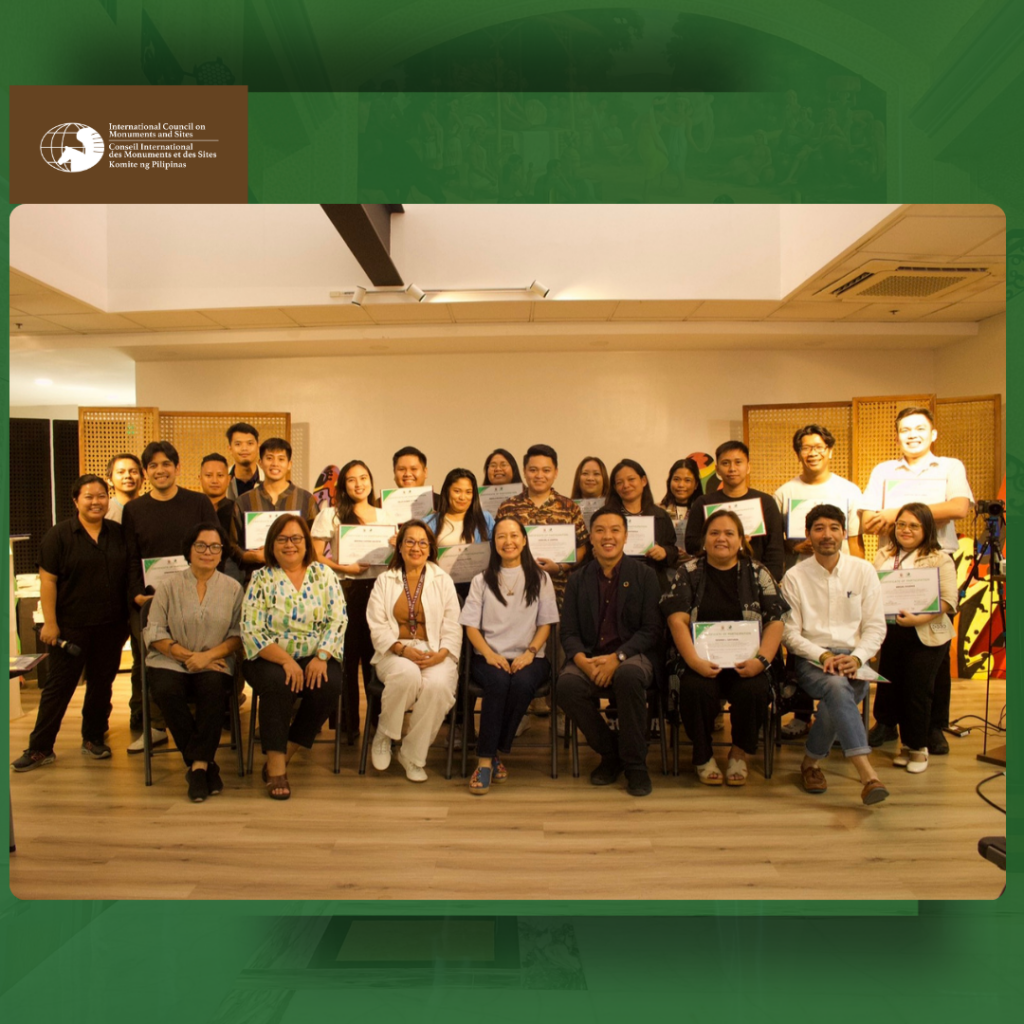
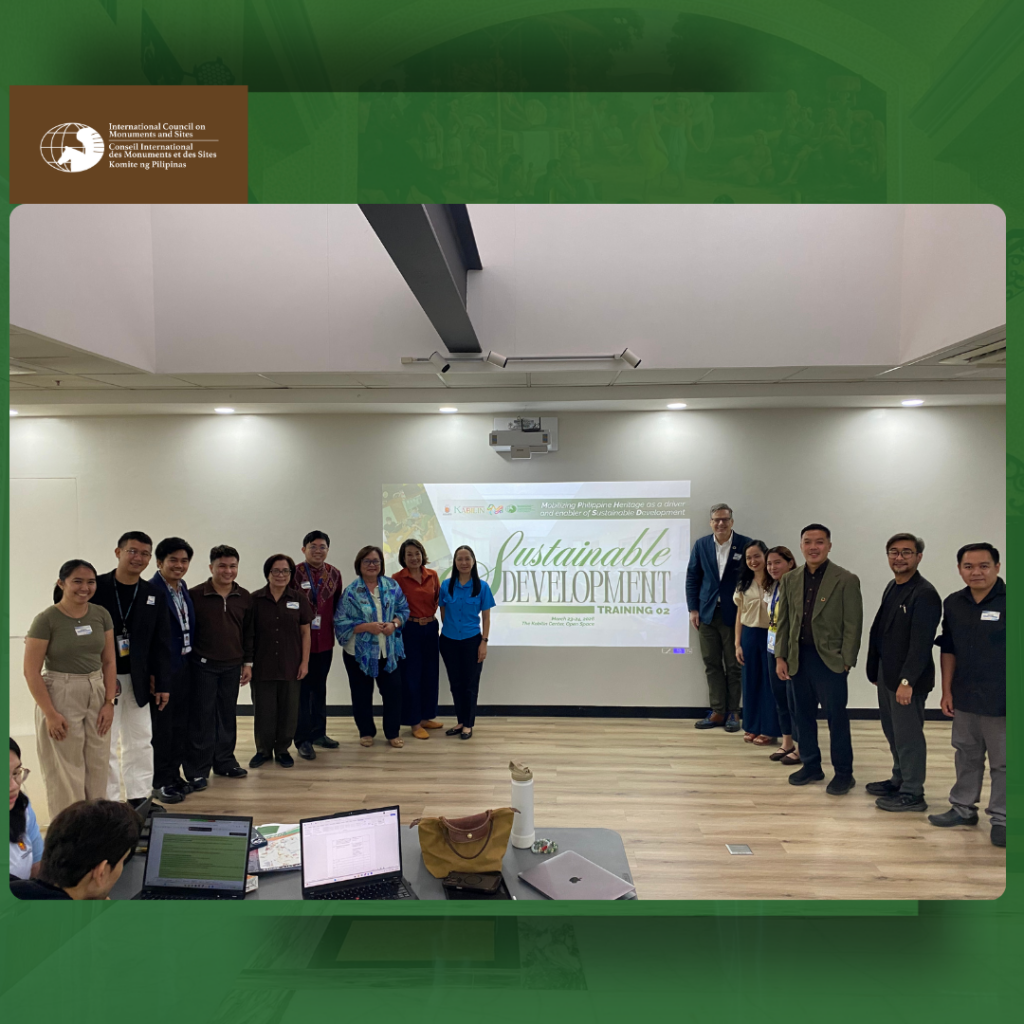
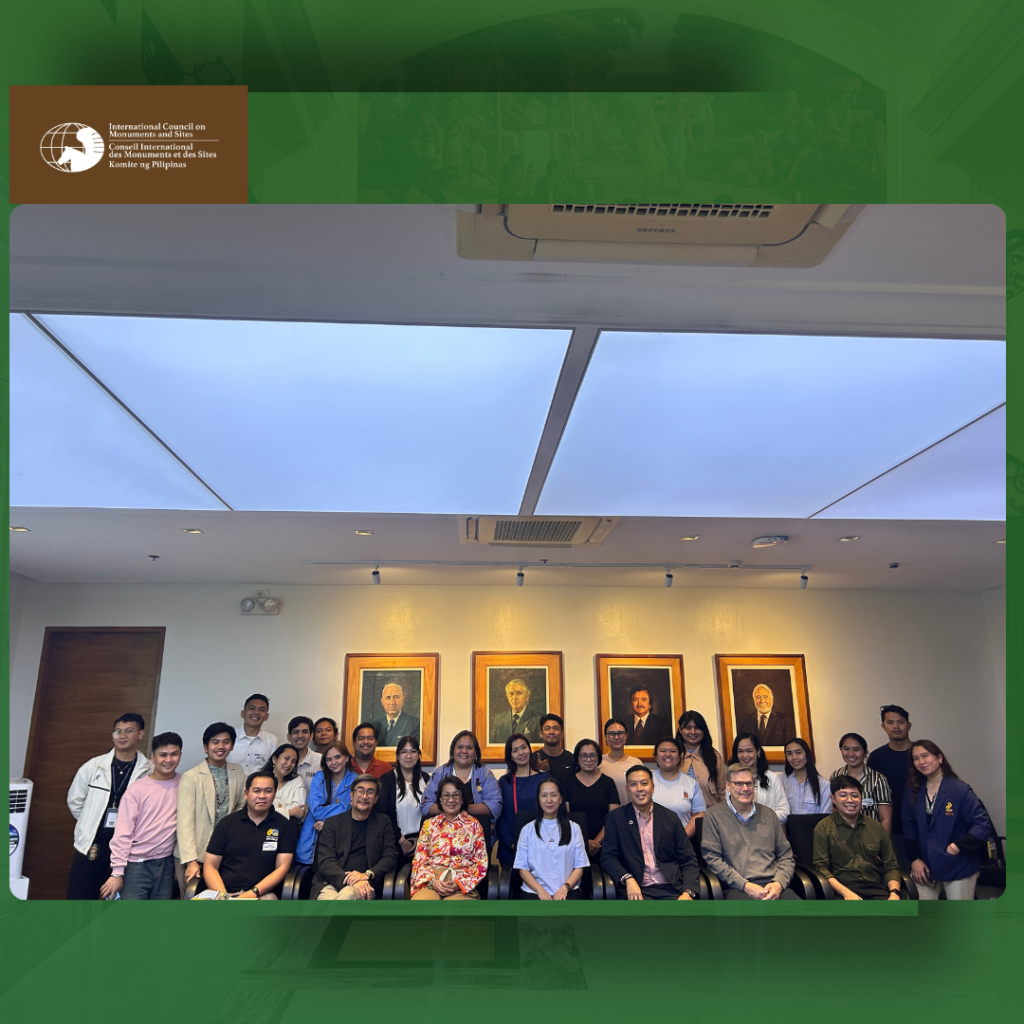
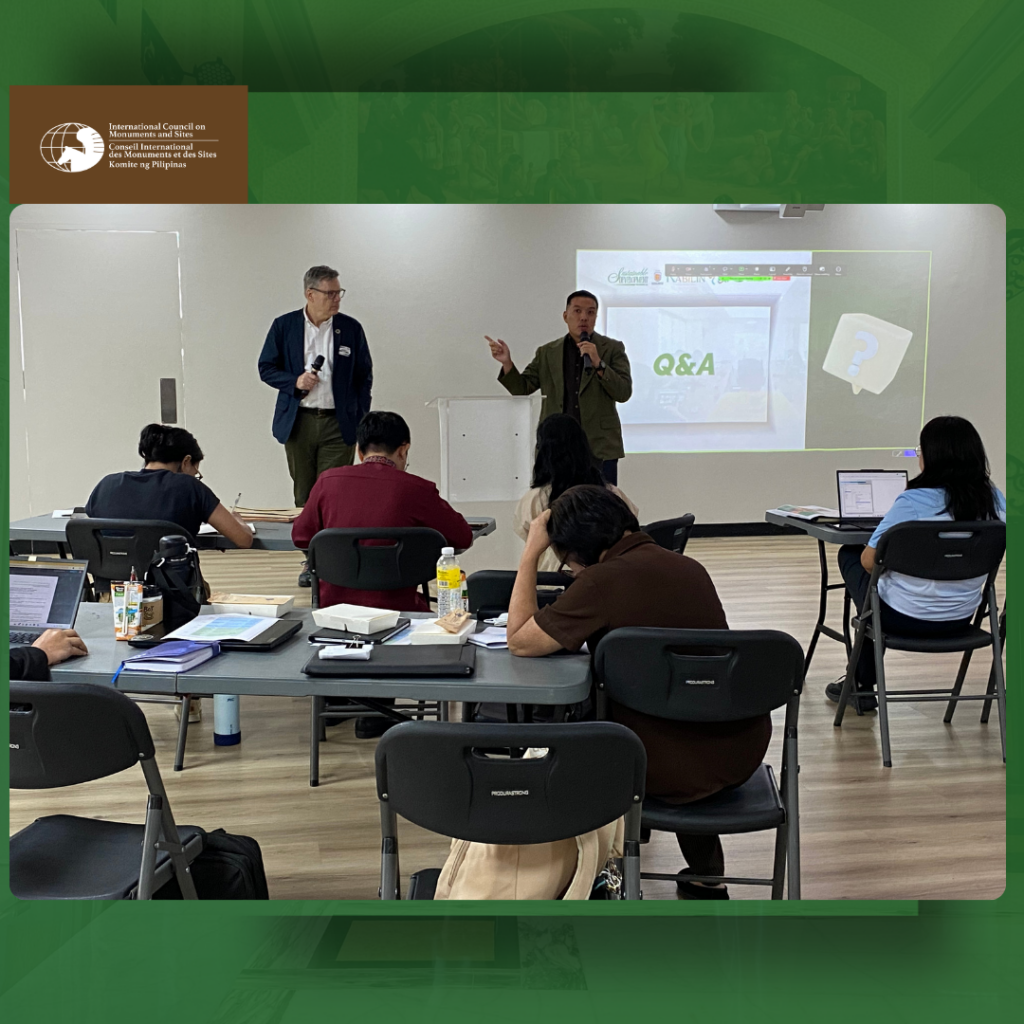
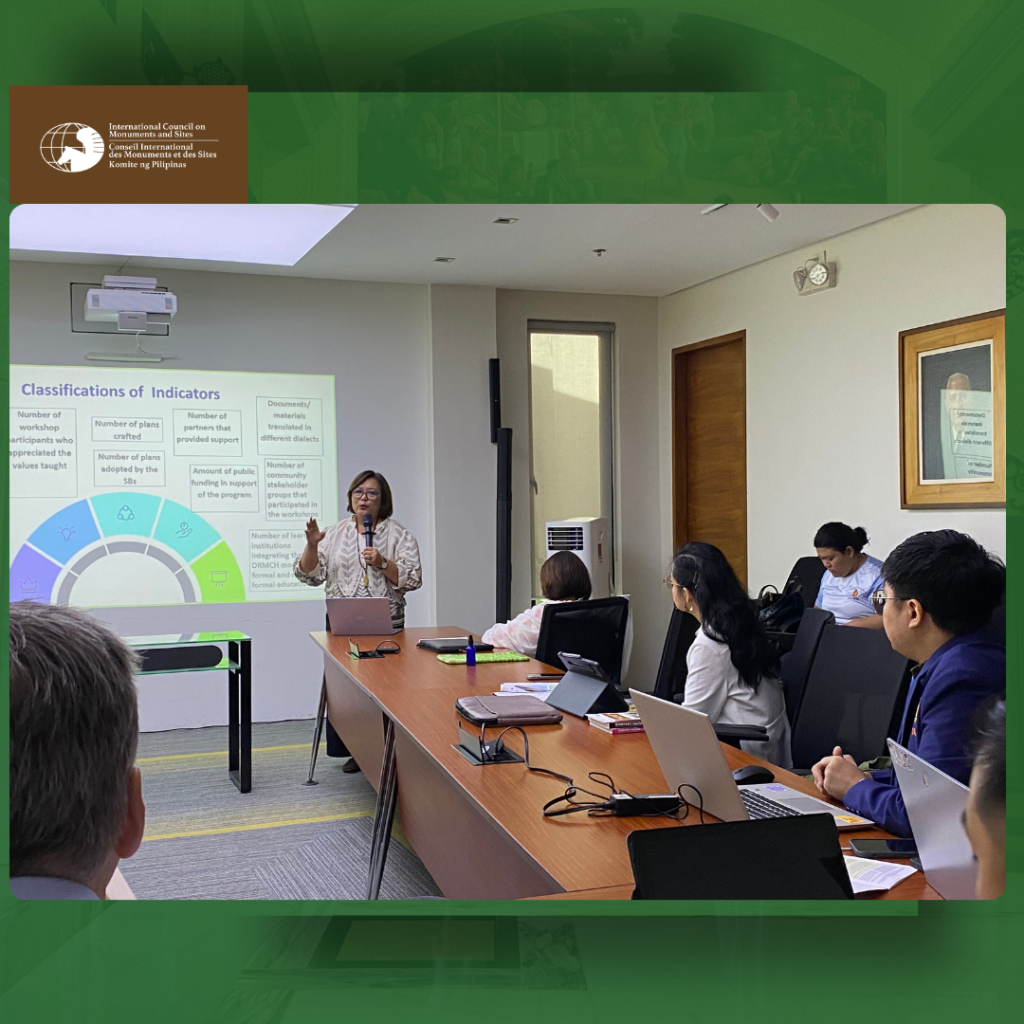
Participants and organizers gather at The Kabilin Center in Barangay Tinago, Cebu City, on July 30, 2026, for the launch and opening ceremony of the Philippines’ first National Training Course on Disaster Risk Management for Cultural Heritage under the Kabilin Partnership Program. – PHOTO COURTESY OF THE KABILIN CENTER
THE KABILIN CENTER, CEBU CITY–THE KABILIN CENTER, CEBU CITY—The International Council on Monuments and Sites (ICOMOS) Philippines and the Ramon Aboitiz Foundation, Inc. (RAFI) marked a significant milestone in protecting Philippine cultural heritage against disasters with the opening of the Bantay Kabilin: Pilot Training Program on Disaster Risk Management for Cultural Heritage (DRMCH).
The origins of the program drew from the experiences of ICOMOS Philippines team members who participated in the International Training Course on Disaster Risk Management of Cultural Heritage organized by ICCROM and Ritsumeikan University’s Institute of Disaster Mitigation for Urban Cultural Heritage (DMUCH). Building upon this foundation, ICOMOS Philippines and RAFI spent one year conducting research, consultations, curriculum development, and coordination with heritage professionals, government agencies, subject matter experts, participating institutions, and cultural heritage sites.
The pilot is being implemented through the partnership between ICOMOS Philippines and RAFI under the Kabilin Partnership Program, with support from The Japan Foundation, Manila, a funding partner of ICOMOS Philippines for the pilot.
The opening brought together leaders from ICOMOS Philippines and RAFI, heritage experts, development partners, and participants representing museums, churches, cultural institutions, civil society organizations, and local communities. Their presence reflected a shared commitment to safeguarding cultural heritage before, during, and after disasters.
Ms. Amaya Cristina Aboitiz-Fansler, President and Chief Executive Officer of RAFI, delivered the keynote address. She emphasized the importance of connecting cultural heritage protection with disaster risk reduction and climate resilience. She encouraged participants to build lasting professional networks and a shared commitment to the future of Philippine heritage.
Ar. Giuseppe Luigi H. Abcede, Trustee of ICOMOS Philippines, delivered his message. He emphasized the importance of cooperation among heritage organizations, government institutions, technical experts, and local communities in translating international conservation principles into practical action. He reaffirmed ICOMOS Philippines’ commitment to strengthening professional capacity and helping communities protect their heritage from disaster risks.
Ar. Kenneth Tua, PhDAgSci, Chief Project Officer of the Kabilin Partnership Program, recognized Cebu City as an important setting for piloting the training. He encouraged participants to address disaster risks through preparedness, cooperation, and shared responsibility. He also acknowledged the organizations and institutions that contributed to the program.
The opening introduced participants to the learning journey they will undertake throughout the pilot.
Mr. Joselito H. Corpus, Project Director of Bantay Kabilin: DRMCH, presented the program framework, learning methodology, and participant journey. He led the development of the pilot with the ICOMOS Philippines and RAFI project team, guiding its curriculum, modules, subject matter experts, institutional partnerships, case-study sites, lectures, workshops, site visits, and practical outputs. Drawing from his experience in heritage conservation and disaster risk management, he helped adapt international DRMCH principles to Philippine hazards, heritage conditions, and community needs.
Ar. King Rosales, Project Lead, presented the program’s objectives, structure, activities, and expected outcomes. Working closely with the Project Director, he helped coordinate the project team, partners, subject matter experts, participants, institutions, and heritage sites while supporting the program’s day-to-day implementation.
Bantay Kabilin draws upon ICOMOS Philippines’ technical knowledge, interdisciplinary experience, professional network, and international connections. Through lectures, workshops, case studies, and site visits, participants learn to assess heritage values, hazards, and vulnerabilities and to prepare measures for mitigation, response, recovery, and long-term resilience. Cebu City, with its churches, museums, historic landmarks, traditional communities, and heritage districts, provides a meaningful setting for applying these lessons.
The initiative is supported by RAFI through the Strategic Initiative Grant of its North and Central Portfolio. The Japan Foundation, Manila, a funding partner of ICOMOS Philippines for the pilot, supported the participation of international subject matter experts and the exchange of knowledge within the program. Bantay Kabilin begins a longer effort to develop a nationally relevant training model that integrates cultural heritage conservation with disaster risk management while strengthening community resilience.
SD Training 01: Basics of Heritage and Sustainable Development
13 to 15 August 2025 | The Kabilin Center, Cebu City
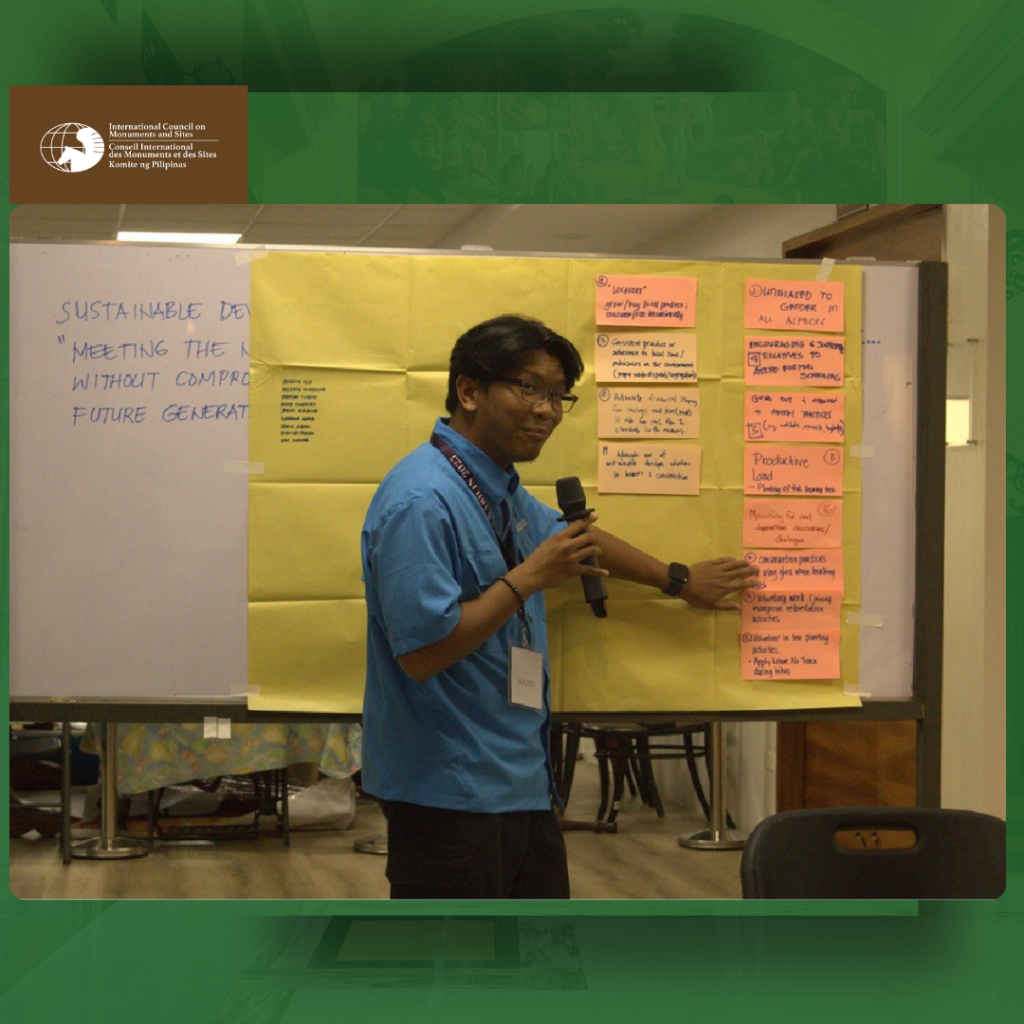
ICOMOS Philippines and the Ramon Aboitiz Foundation Inc. conducted the first Sustainable Development Training under the Pamana 2030: Mobilizing Philippine Heritage as a Driver and Enabler of Sustainable Development initiative. Held at The Kabilin Center in Cebu City, the training brought together RAFI teams, ICOMOS Philippines, heritage workers, and development partners to build a common understanding of how cultural heritage can support sustainable development.
The sessions introduced participants to the wider role of culture and heritage in development work. Discussions looked at how heritage is connected to social inclusion, local economies, environmental care, community resilience, and identity. Participants also engaged with national and international frameworks, including the Sustainable Development Goals, the Philippine Development Plan, inputs from the National Commission for Culture and the Arts, and the UNESCO Culture 2030 Indicators.
Through lectures, case studies, and group discussions, the training helped show that heritage is not only something to protect or preserve. It can also help communities respond to present needs and plan for the future. Examples from tourism, community mapping, disaster risk management, and heritage management showed how culture can be linked to practical concerns on the ground.
This first training laid the groundwork for the succeeding MPHSD activities. It helped participants move from a general understanding of heritage and sustainability toward a clearer view of how heritage work can be documented, measured, and connected to planning. It also helped establish the shared direction that would later guide the development of indicators and assessment tools under Pamana 2030.
Supporting agencies and representatives:
DepDev / national development planning input: Lester Owen Go, Chief Economic Development Specialist, DepDev Development Research Division
NCCA: Jesuben Angel S. Bongolan, Head of the Regional Coordination Unit, NCCA Planning and Policy Office
CIT-U: Engr. Erlyn Ivy O. Rago, Head of the Student Success Office, Cebu Institute of Technology – University
RAFI: Christian Anuta, Director, Program Excellence Group
SMEs / resource persons / facilitators:
Andrew Mason, WSP Canada Inc., ICOMOS SDGWG Member (Canada), Task Team on Heritage Evaluation Criteria and Indicators
Chen Mencias, ICOMOS Philippines SDGWG Member and former NEDA Stakeholders Chamber Representative for ICOMOS Philippines
Maria Lourdes ‘Joy’ Martinez Onozawa, ICOMOS Philippines SDGWG Member and Subject Matter Expert
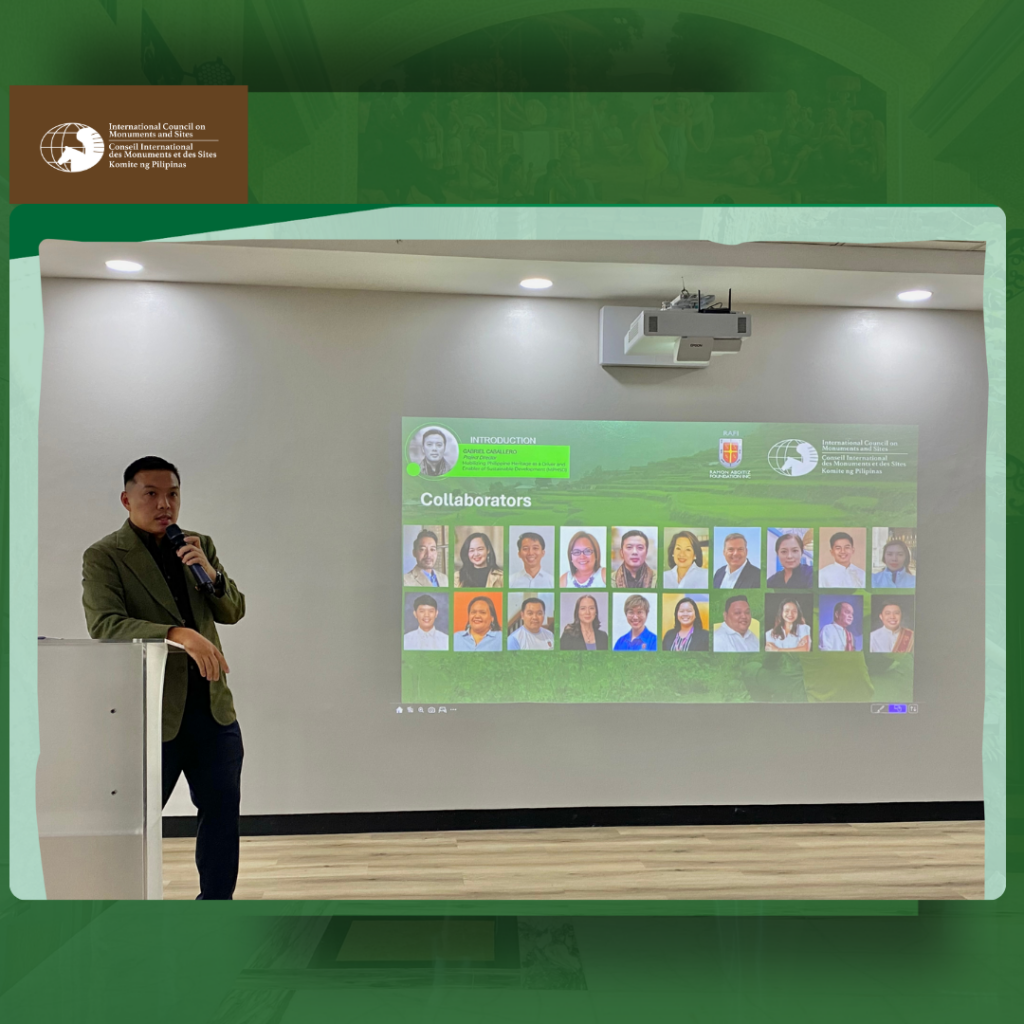
Gabriel Caballero, MPHSD Project Director
Carmencita Solis, ICOMOS Philippines SDGWG Member and Facilitator
SD Training 02 Module 1: Designing Indicators and MOVs
22 and 29 January 2026 | Online and In-Person Sessions
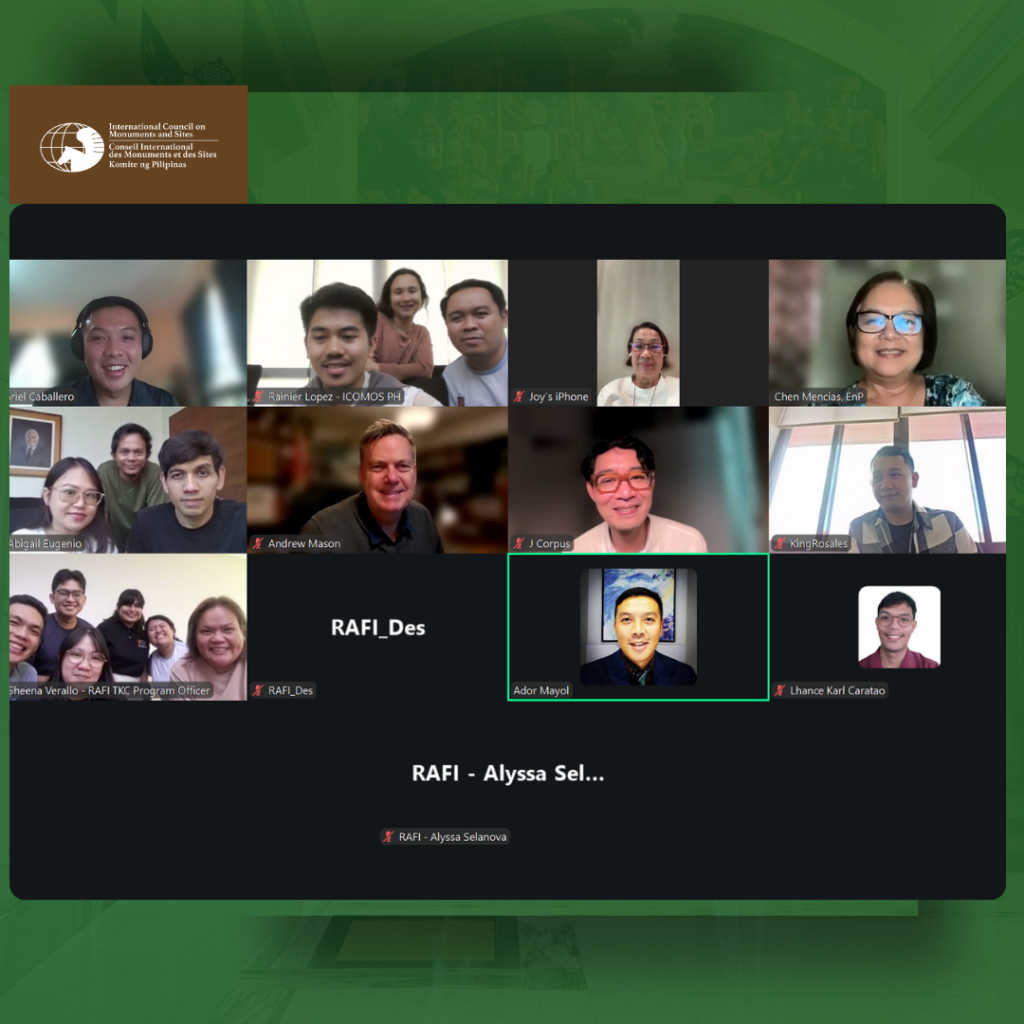
Sustainable Development Training 02 Module 1 moved the discussion from general concepts of heritage and sustainable development toward the practical design of indicators and Means of Verification. Held through online and in-person sessions, the module focused on how RAFI’s heritage-related projects could be connected to national cultural policy priorities, especially the Philippine Development Plan for Culture and the Arts 2024-2029.
The sessions helped participants look at how each project could identify relevant indicators, available data sources, and possible evidence that can show culture’s contribution to sustainable development using the framework set by the National Commission for Culture and the Arts. The module introduced the idea that heritage projects need clear measures and documentation so that their social, cultural, economic, and governance contributions can be better understood over time.
Participants worked through the four RAFI project components, namely Casa Gorordo Museum, The Kabilin Center, the National Training Course on Disaster Risk Management of Cultural Heritage, and the Safeguarding of the Intangible Cultural Heritage of the Santo Nino Devotion. Through these discussions, project teams began matching their work with PDP-CA outcomes and identifying what kinds of data could realistically be collected from ongoing project activities.
This module became an important bridge between the first training and the later work on the UNESCO Culture 2030 Indicators. It helped prepare the teams for deeper indicator development by clarifying what can be measured, what evidence is available, and what still needs to be strengthened in the projects’ monitoring and documentation systems.
Supporting agencies and representatives:
NCCA: Jesuben Angel S. Bongolan, Head of the Regional Coordination Unit, NCCA Planning and Policy Office
SMEs / resource persons / facilitators:
Andrew Mason, WSP Canada Inc., ICOMOS SDGWG Member (Canada), Task Team on Heritage Evaluation Criteria and Indicators
Chen Mencias, ICOMOS Philippines SDGWG Member and former NEDA Stakeholders Chamber Representative for ICOMOS Philippines
Chanelle Mesjena Custorio, ICOMOS Philippines Member and Facilitator
Maria Lourdes ‘Joy’ Martinez Onozawa, ICOMOS Philippines SDGWG Member and Subject Matter Expert
Project perspective inputs included Joselito Corpuz for DRMCH, and Ador Vincent Mayol as MPHSD Project Lead
SD Training 02 Module 2: Building the Indicator Foundation
23 February and 5 March 2026 | Online and In-Person Sessions
Following the earlier discussions on heritage and sustainable development, Sustainable Development Training 02 Module 2 focused on building the indicator foundation for the MPHSD initiative. The module helped connect wider cultural monitoring frameworks with the ongoing work of RAFI, the Kabilin Partnership, and CEBloom Operations.
The sessions introduced the UNESCO Culture 2030 Indicators and explored how these could be applied to RAFI’s heritage-related projects. Building on previous discussions, participants looked at how international frameworks could help guide the process of measuring culture’s contribution to sustainable development.
One important part of the module was the discussion on Baguio City’s experience with the Culture 2030 Indicators. This example helped participants see how cultural data and heritage indicators can be used in an actual local applications. Participants also worked through RAFI’s own project data from four initiatives: Casa Gorordo Museum, The Kabilin Center, the National Training Course on Disaster Risk Management of Cultural Heritage, and the Safeguarding of the Intangible Cultural Heritage of the Santo Niño Devotion.
Through breakout sessions, participants identified possible indicators, reviewed available data sources, and reflected on how each project contributes to broader development outcomes. This module marked an important step in moving from broad ideas into more practical indicator work. It helped prepare the ground for a common assessment framework that can support reporting, learning, and planning across the Kabilin Partnership.
Supporting agencies and representatives:
Baguio Culture 2030 Indicators experience: Dr. Raymond Rovillos, College President III of Pangasinan Polytechnic College and former Chancellor of the University of the Philippines Baguio
SMEs / resource persons / facilitators:
Andrew Mason, WSP Canada Inc., ICOMOS SDGWG Member (Canada), Task Team on Heritage Evaluation Criteria and Indicators
Chen Mencias, ICOMOS Philippines SDGWG Member and former NEDA Stakeholders Chamber Representative for ICOMOS Philippines
Chanelle Mesjena Custorio, ICOMOS Philippines Member and Facilitator
Maria Lourdes ‘Joy’ Martinez Onozawa, ICOMOS Philippines SDGWG Member and Subject Matter Expert
Project perspective inputs included Joselito Corpuz for DRMCH, Dr. Laya Boquiren-Gonzales for ICHSN, and Ador Vincent Mayol as MPHSD Project Lead
SD Training 02 Module 3: Consolidating and Institutionalizing the Framework
23 to 24 March 2026 | The Kabilin Center, Cebu City
Sustainable Development Training 02 Module 3 brought together the work developed in the earlier sessions and focused on consolidating the MPHSD indicator framework. Held in person at The Kabilin Center, the module gathered participants from the Kabilin Partnership, RAFI, CEBloom Operations, and ICOMOS Philippines to refine how heritage-related project outcomes could be linked to monitoring, evaluation, accountability, and learning.
The session focused on making the methodology more practical for long-term use. Using the inputs from the earlier modules, participants worked toward a common framework that connected local project outcomes with RAFI’s MEAL plans, while also aligning with the Philippine Development Plan for Culture and the Arts and the UNESCO Culture 2030 Indicators. This helped show how local heritage work can contribute to wider national and international development conversations.
The module also included discussions on impact scoring, policy alignment, and the updated Cultural Heritage Assessment Methodology. Case examples from the four RAFI projects helped participants test how the framework could apply to different types of heritage work, including museums, cultural facilities, training programs, and intangible cultural heritage initiatives. These discussions helped clarify how indicators could be prioritized, scored, and used for reporting and decision-making.
By the end of the module, the MPHSD work had moved closer to a working system for tracking how heritage contributes to sustainable development. The session also helped prepare the direction for the first MPHSD publication, which will continue the process of documenting, reviewing, and refining the knowledge produced through the trainings. Through this module, the Kabilin Partnership continued to show that heritage is not only cultural work, but also development work.
NCCA: Jesuben Angel S. Bongolan, Head of the Regional Coordination Unit, NCCA Planning and Policy Office and Rhea Lyn H. Dela Cruz, Culture and Arts Officer, Regional Exchange Unit
SMEs / resource persons / facilitators:
Andrew Mason, WSP Canada Inc., ICOMOS SDGWG Member (Canada), Task Team on Heritage Evaluation Criteria and Indicators
Chen Mencias, ICOMOS Philippines SDGWG Member and former NEDA Stakeholders Chamber Representative for ICOMOS Philippines
Maria Lourdes ‘Joy’ Martinez Onozawa, ICOMOS Philippines SDGWG Member and Subject Matter Expert
Chanelle Mesjena Custorio, ICOMOS Philippines Member and Facilitator
Gabriel Caballero, MPHSD Project Director
Project perspective inputs included Joselito Corpuz for DRMCH, Dr. Laya Boquiren-Gonzales for ICHSN, and Ador Vincent Mayol as MPHSD Project Lead
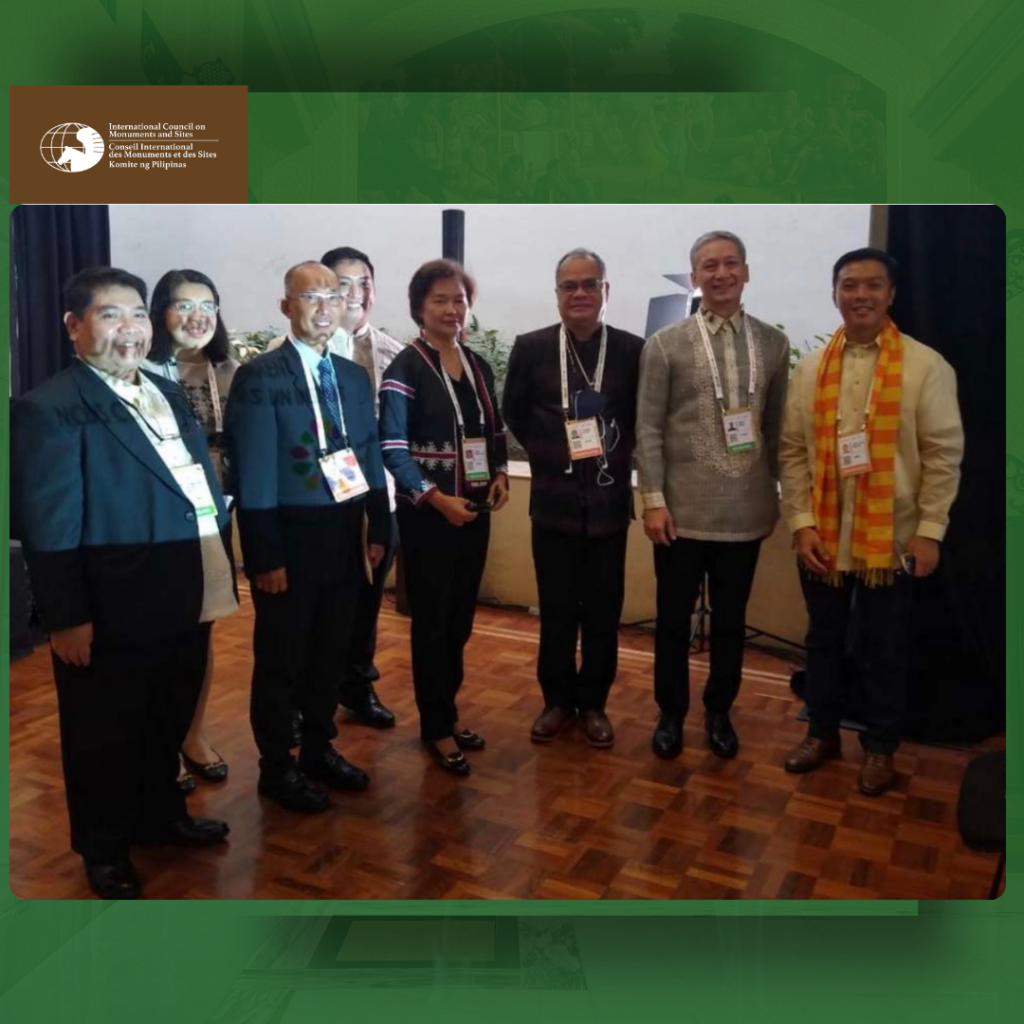
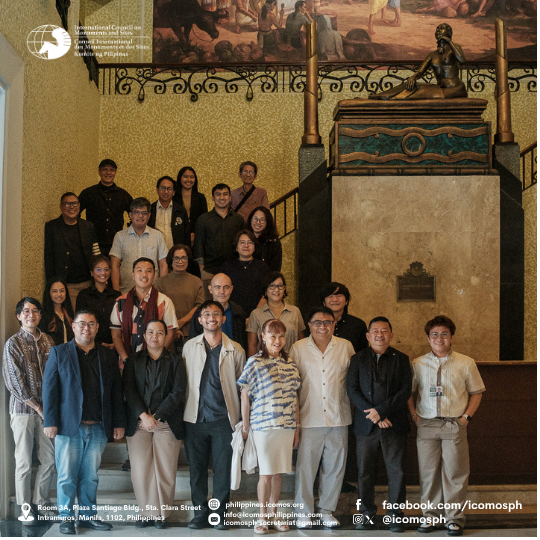
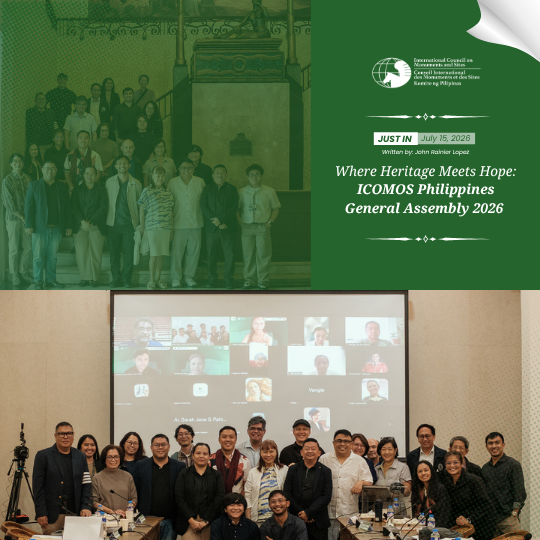
July 11, 2026 | Manila Metropolitan Theater, Philippines — Organizers in Barong Tagalog and Filipiniana moved with quiet precision, guiding participants into the hall. Attendees came bearing narratives of achievements and possibilities, each one a thread in the tapestry of Philippine heritage, some representing universities, others local governments, and many carrying the stories of their communities. Online, faces appeared on Zoom screens from distant cities and provinces. This was not just a meeting. It was a gathering of stewards of memory, people who believe heritage is a living force that shapes identity and resilience.
The assembly opened with a welcome to members, guests, and the outgoing Board of Trustees: Dr. Cheek S. Fadriquela, Ms. Caroline Marie Lising, Ms. Liliane Rosa Rejante-Manahan, Ar. Harvey Vasquez, and Ar. Ramil Tibayan. Quorum was confirmed, the minutes of the previous meeting approved, and technical reminders shared. Yet beyond the formalities, there was a sense of urgency. Heritage is fragile, and its guardians know this well.
Dr. Cheek Fadriquela’s President’s Report reflected on the organization’s journey from 2023 to 2026. He spoke of accomplishments: disaster risk management trainings, active participation in international dialogues that placed the Philippines on the global heritage map, publications and research that deepened conservation knowledge, and strengthened compliance with statutes that ensured credibility. His words carried the weight of collective effort. Members listened intently, others simply nodding, their faces showing pride in what had been achieved.
The Corporate Secretary’s Report, delivered by Ms. Liliane Rosa “Tats” Rejante-Manahan, focused on organizational updates and compliance, ensuring that ICOMOS Philippines remained aligned with international standards. The Treasurer’s Report was represented by Mr. Abdulbasir Endong on behalf of Ar. Harvey Vasquez, who was unable to attend. Endong presented financial updates, underscoring transparency and sustainability in resource management.
In his own Strategic Communications report, Endong highlighted the organization’s growing presence online. He spoke of social media engagements, of posts that reached thousands, of conversations sparked in digital spaces. His words painted a picture of heritage advocacy thriving in the virtual world. Meanwhile, Ar. Ramil Tibayan’s Membership Relations report focused on how ICOMOS engaged with its membership through outreach, collaborations, and active participation. He also presented the current status of membership, emphasizing that the strength of the organization lies in the strength of its members.
The assembly then turned to the Board of Trustees candidates. Each spoke not only of projects but of visions. Ar. Carmencita Solis described Tabang Cebu, her voice steady as she spoke of community-based conservation. Ar. Timothy Augustus Ong presented the Sanchez Mira, Cagayan Project, weaving together architecture and digital humanities. Ms. Beverly Bautista introduced the Samar Sentinel Project, her words carrying the urgency of community engagement. Mr. Phillip Norbert Ahmad Medina shared his Stakeholders’ Imperative on Heritage Conservation, reminding everyone of the importance of grassroots involvement. Ar. Giuseppe Luigi Abcede championed the Pasig River as National Cultural Treasure, his passion evident as he spoke of heritage in the heart of the city. Finally, Ar. Ramil Tibayan outlined his Heritage Consultancy Works Program, drawing from years of experience in conservation. Each presentation was more than a proposal. It was a call to action, urging communities to see heritage as a living, breathing part of daily life.
The spotlight then turned to the Kabilin Partnership Program, an initiative of the Ramon Aboitiz Foundation Inc. (RAFI) and ICOMOS Philippines. This collaboration reflects a shared vision of mobilizing heritage as a driver of sustainable development and resilience. Among the featured initiatives were Dr. Laya Bouqiren-Gonzales’ safeguarding of the Santo Niño devotion, Joselito Corpus’ disaster risk management training, and Lar. Gabriel Victor Caballero’s mobilization of heritage for sustainable development. As each speaker presented, the hall seemed to lean in, listening closely. These projects showed how heritage is not only a cultural anchor but also a catalyst for empowerment, sustainability, and hope.
As the day progressed, anticipation built toward the announcement of the newly elected Board of Trustees for 2026–2029. When the results were revealed, the hall erupted in applause. The new officers are: President Ar. Ramil Tibayan, Vice President Ms. Beverly Bautista, Corporate Secretary Ar. Timothy Augustus Ong, Treasurer Mr. Phillip Norbert Ahmad Medina, and Spokesperson Ar. Giuseppe Luigi H. Abcede. Their election signaled continuity and renewal, blending experience with fresh perspectives to guide ICOMOS Philippines into the next three years. Faces lit up with smiles, some clapping enthusiastically, others quietly reflecting on the responsibility that lay ahead.
It ended with pride etched on faces and hopes rising for the future of heritage conservation in the Philippines. Behind the smiles lay the weight of responsibility. Heritage is fragile, and its guardians know this well. Yet in every report, project, and election result, ICOMOS Philippines reaffirmed its commitment: heritage is not a relic of the past but a living force shaping the nation’s future.
Like the living memories of the past, the story of this assembly was not about titles or procedures. It was about people — the organizers who kept the program flowing, the members who traveled far to be present, the candidates who spoke with conviction, and the leaders who reflected on years of service. Together, they carried a shared promise: to keep memory alive.