
๐— ๐—”๐—ž๐—”๐—›๐—ก๐—œ ๐Ÿฎ๐Ÿฌ๐Ÿฎ๐Ÿฒ: ๐—ฆ๐˜๐—ฟ๐—ฒ๐—ป๐—ด๐˜๐—ต๐—ฒ๐—ป๐—ถ๐—ป๐—ด ๐—›๐—ฒ๐—ฟ๐—ถ๐˜๐—ฎ๐—ด๐—ฒ ๐—–๐—ผ๐—ป๐˜€๐—ฒ๐—ฟ๐˜ƒ๐—ฎ๐˜๐—ถ๐—ผ๐—ป ๐—ฎ๐—ป๐—ฑ ๐——๐—ถ๐˜€๐—ฎ๐˜€๐˜๐—ฒ๐—ฟ ๐—ฅ๐—ฒ๐˜€๐—ถ๐—น๐—ถ๐—ฒ๐—ป๐—ฐ๐—ฒ

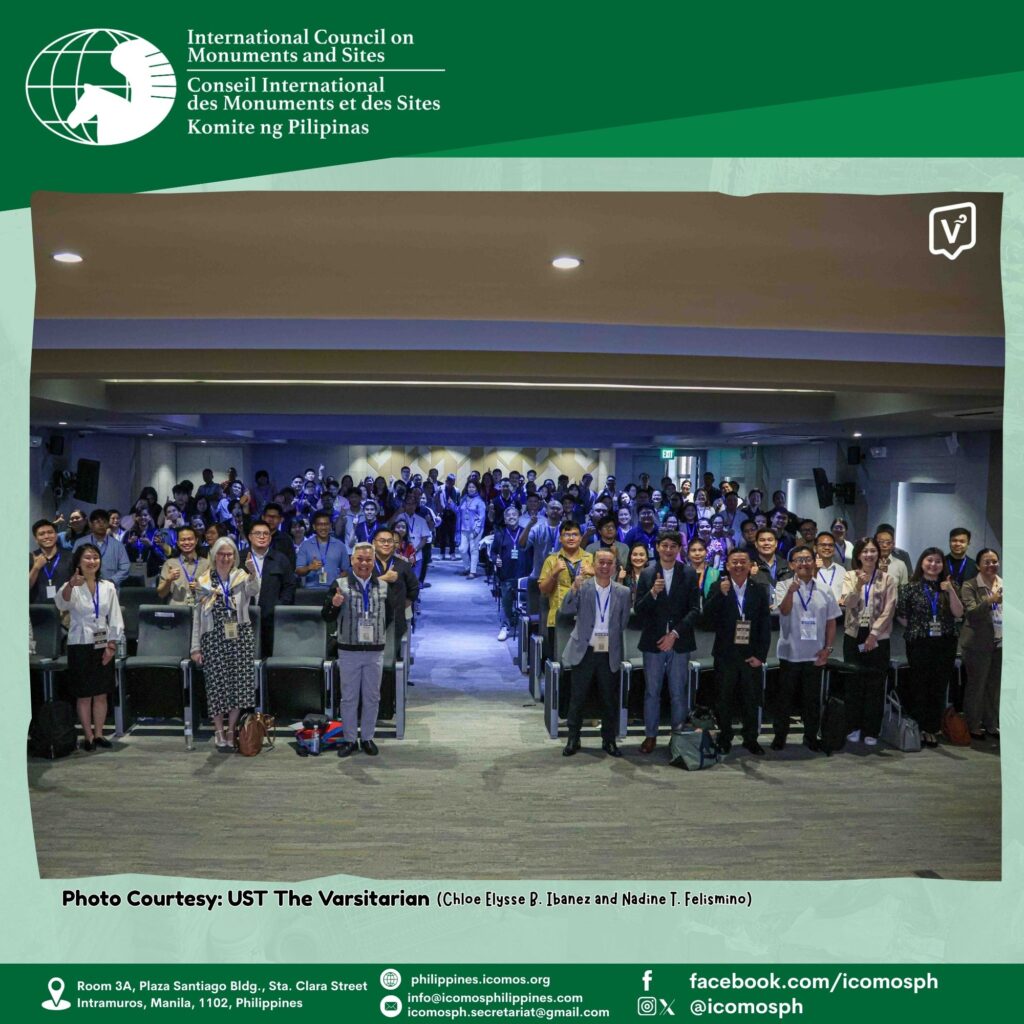
MANILA – In recognition of the Philippinesโ€™ vulnerability to natural hazards and the urgent need to safeguard its cultural heritage, the MAKAHNI 2026 International Conference for Heritage Conservation and Disaster Resilience convened heritage professionals, conservation practitioners, engineers, academics, and policymakers in a meaningful exchange of knowledge and expertise. Derived from the Ivatan word makahni, meaning โ€œto be resilientโ€ or โ€œto become strong,โ€ the conference underscored the collective responsibility to protect heritage structures from the increasing risks posed by disasters.

Hosted at the historic campus of the University of Santo Tomas (UST), the conference was organized UST Graduate School – Center for Conservation of Cultural Property and Environment in the Tropics (USTGS – CCCPET) in partnership with the ICOMOS Philippines, the National Commission for Culture and the Arts, and the Japan Foundation Manila, bringing together national and international experts committed to advancing disaster risk reduction (DRR) in heritage conservation.

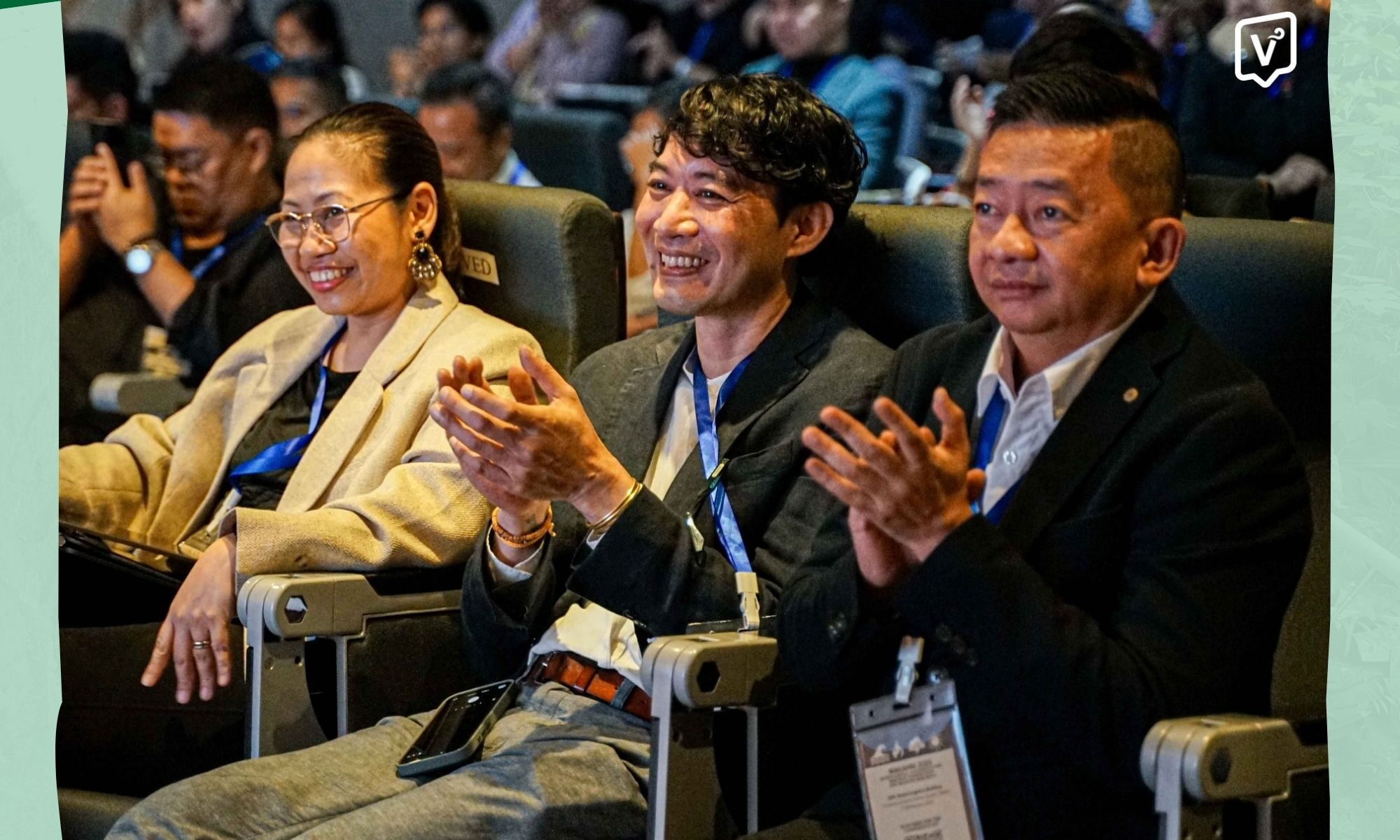
The conference formally commenced with welcome messages from distinguished institutional leaders who reaffirmed their commitment to heritage protection and resilience. Messages were delivered by Ar. Rodolfo P. Ventura, MSAAE, Dean of the UST College of Architecture; Dr. Eric B. Zerrudo, Executive Director and Chairman of the National Commission for Culture and the Arts; Mr. Ben Suzuki, Director of Japan Foundation Manila; and Dr. Cheek S. Fadriquela, President of ICOMOS Philippines.

These messages emphasized the importance of interdisciplinary collaboration, institutional commitment, and capacity-building in ensuring that cultural heritage remains protected in the face of disasters.

This was followed by the presentation of the conference rationale and acknowledgement of participants by the Acting Directors of the UST Graduate School โ€“ Center for Cultural Heritage, Conservation and Preservation Engineering and Technology (USTGS-CCCPET), setting the tone for the conferenceโ€™s objectives and expected outcomes.

The first module laid the groundwork for understanding disaster risks and their impact on built heritage. Engr. Dina Dโ€™Ayala, UNESCO Chair in Disaster Risk Reduction and Resilience Engineering at University College London, introduced the ISCARSAH Scientific Committee and highlighted global frameworks for strengthening heritage resilience. Director Jose Harry M. Barber of the National Disaster Risk Reduction and Management Council presented the Philippinesโ€™ disaster profile, underscoring the countryโ€™s exposure to multiple hazards. Engr. Lessandro G. Garciano of De La Salle University discussed the effects of typhoons and floods, while Dr. Rhommel Grutas of PHIVOLCS examined earthquake and volcanic risks. Ms. Li Min of Ritsumeikan University emphasized preventive and strategic approaches to disaster risk management, and the session concluded with a historical overview of Philippine built heritage, focusing on its types, cultural significance, and conservation principles in disaster contexts. A plenary discussion followed, allowing participants to engage directly with the speakers and deepen the exchange of insights.

The succeeding modules focused on preparedness, response, recovery, and institutional integration. Experts including Ms. Aya Miyazaki of Tokyo University, Ar. Reynaldo Lita of the National Historical Commission of the Philippines, Ar. Caryn Paredes-Santillan of UST College of Architecture, and Mr. Toru Tateishi of The Museum of the Imperial Collections shared strategies on preventive conservation and disaster preparedness planning. Discussions then shifted to response and recovery, with Mr. Joseph Patrick Lee of the National Commission for Culture and the Arts presenting inter-agency coordination during the 2025 Bogo Earthquake, Joselito Corpus of ICORP highlighting safety and salvage operations, and Dr. Cheek S. Fadriquela detailing ICOMOS Philippinesโ€™ post-earthquake heritage assessments under UNESCO Jakartaโ€™s Heritage Emergency Fund. The final module emphasized communication, community engagement, and institutional collaboration, featuring insights from Ms. Vanessa Marquez-Nicolas of the National Commission for Culture and the Arts, Ms. Kinna Mae Kwan of Guiuan, Eastern Samar, and Fr. Milan Ted D. Torralba. Each module concluded with plenary exchanges, and participants further engaged in thematic breakout sessions organized around disaster cycles and hazard types to develop focused, long-term resilience strategies.

The conference concluded with a closing message from Prof. Michael Anthony C. Vasco, PhD, Dean of the UST Graduate School, who emphasized that, given the countryโ€™s vulnerability to various calamities, it is essential to take proactive measures to protect historical heritage sites that embody our national identity. He highlighted the importance of restoring and preserving these sites, congratulated the organizing committee, expressed gratitude to all participants, and encouraged the continuation of the work initiated over the two days of the conference.

Participants included experts and members of ICOMOS Philippines, whose presence reinforced the organizationโ€™s leadership in heritage conservation and disaster resilience. Notable attendees were Ar. Carmencita Solis, Ar. Giuseppe Luigi Abcede, Ar. Timothy Augustus Ong, Ing. Ar. Ronald Allan M. Mabunga Jr., Ar. Ramil Tibayan, Ar. Roy De Guzman, Ar. Julius Artates, Engr. Mary Grace Casuncad, Phillip Norbert Medina, Engr. Joaquin Ramos, Ar. Eunice Valerie Lim, and John Michael Cayme.

Part 1 of the conference, focusing on Strengthening Heritage Conservation Policy, Protocols, and Practices across the Disaster Cycle, was held at the UST College of Architecture AVR Beato Angelico Building from February 17โ€“18, 2026. Part 2, the Technical Workshop on Multi-Hazard Vulnerability Assessment of Unreinforced Masonry Heritage Structures, took place on February 19โ€“20, 2026, with day one at the same venue and day two at Betis Church in Guagua, Pampanga. The participation of these experts facilitated meaningful exchanges of knowledge and strengthened professional collaboration within the heritage conservation community.

MAKAHNI 2026 reaffirmed the importance of interdisciplinary collaboration, institutional preparedness, and community engagement in protecting cultural heritage. Through expert presentations, interactive discussions, and collaborative workshops, the conference strengthened the collective capacity of professionals and institutions to respond to disaster risks.

In the true spirit of makahni, the conference stands as a testament to the shared commitment of ensuring that cultural heritage remains resilient, safeguarded, and preserved for future generations.

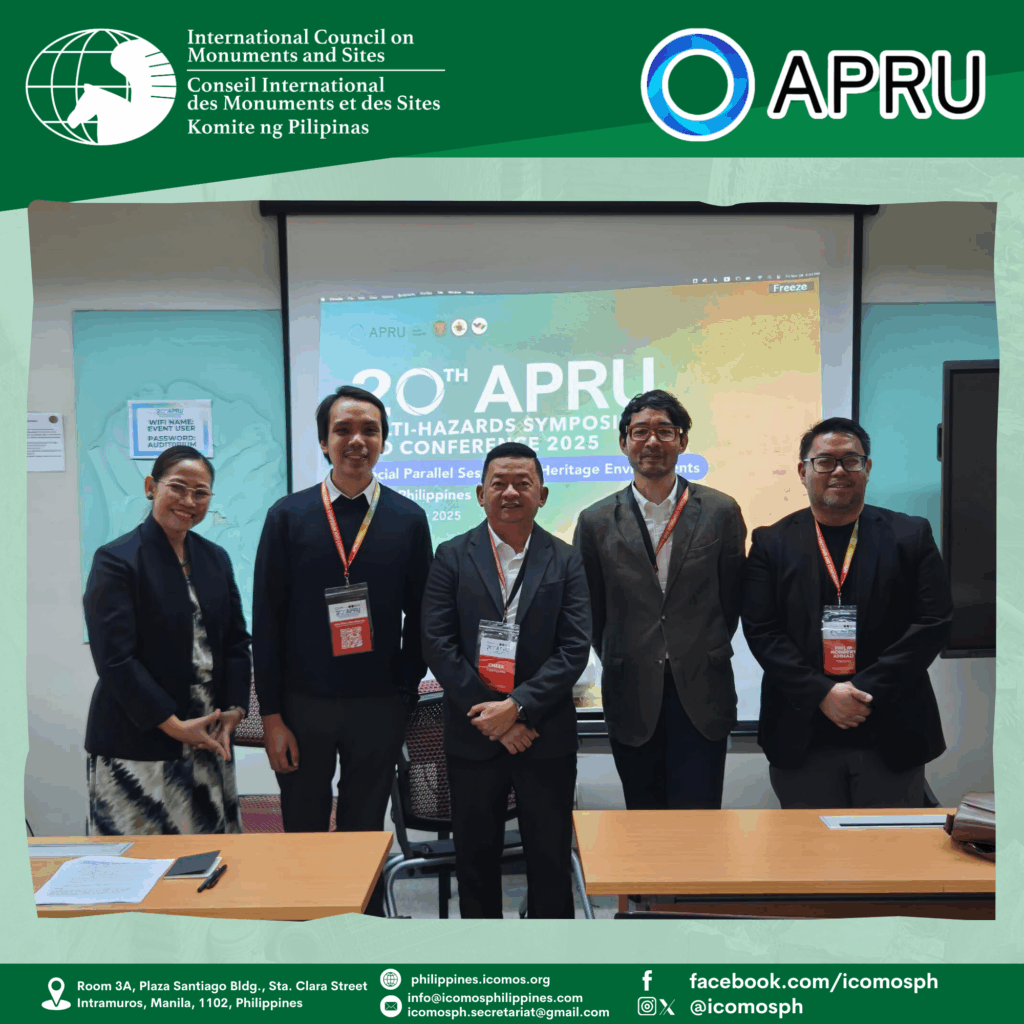
๐—œ๐—–๐—ข๐— ๐—ข๐—ฆ ๐—ฃ๐—ต๐—ถ๐—น๐—ถ๐—ฝ๐—ฝ๐—ถ๐—ป๐—ฒ๐˜€ ๐—˜๐˜…๐—ฝ๐—ฒ๐—ฟ๐˜๐˜€ ๐—Ÿ๐—ฒ๐—ฎ๐—ฑ ๐—›๐—ฒ๐—ฟ๐—ถ๐˜๐—ฎ๐—ด๐—ฒ ๐—ฅ๐—ฒ๐˜€๐—ถ๐—น๐—ถ๐—ฒ๐—ป๐—ฐ๐—ฒ ๐——๐—ถ๐—ฎ๐—น๐—ผ๐—ด๐˜‚๐—ฒ ๐—ฎ๐˜ ๐Ÿฎ๐Ÿฌ๐Ÿฎ๐Ÿฑ ๐—”๐—ฃ๐—ฅ๐—จ ๐— ๐˜‚๐—น๐˜๐—ถ-๐—›๐—ฎ๐˜‡๐—ฎ๐—ฟ๐—ฑ๐˜€ ๐—–๐—ผ๐—ป๐—ณ๐—ฒ๐—ฟ๐—ฒ๐—ป๐—ฐ๐—ฒ

November 26โ€“29, 2025 โ€” ICOMOS Philippines brought forward the countryโ€™s most urgent heritage concerns and innovative conservation approaches at the 2025 APRU Multi-Hazards (MH20) Conference, presenting a strong and unified call for disaster preparedness, cultural resilience, and risk-informed heritage governance. The annual conference, which gathers global experts across the Pacific Rim, served as a platform for Filipino scholars and practitioners to highlight groundbreaking work addressing the vulnerabilities of heritage sites in disaster- and conflict-prone areas.

Across various sessionsโ€”ranging from heritage environments to resilience-focused designโ€”the ICOMOS Philippines delegation emphasized a central theme: heritage conservation must be rooted in risk awareness, scientific documentation, inclusivity, and community collaboration.

One of the key contributions was presented during Parallel Session 1B: Designing for Resilience, where Ar. Harvey Vasquez explored Fabulation and the Architecture of Survival: Speculative Fiction as Method in Maynila in Manila. His work offered a compelling narrative approach to envisioning adaptive urban futures in the face of climate and socio-environmental challenges.

Meanwhile, during Special Parallel Session 6B: Heritage Environments, several noteworthy studies from the Philippine contingent deepened the conversation on resilience. The session opened with Heritage Conservation as a Driver of Post-disaster Sustainable Resilience: Case of the 2022 Mw 7.0 Northwestern Luzon Earthquake at the World Heritage City of Vigan, Philippines, authored by Dr. Cheek Fadriquela, Dr. Kenneth Javier Tua, Maria Cristina Paterno, and Anjelike Orui. Their research demonstrated how heritage spaces can become catalysts for sustainable recovery through multidisciplinary strategies.

Joselito Corpus, MHSP, strengthened the discourse on institutional preparedness through his presentation, Institutional Actions for Risk Preparedness, Response and Recovery, which drew from real post-disaster interventions and documented challenges following Typhoon Odette (rai) in December 2021. The typhoon brought widespread destruction across Eastern and Central Visayas, severely damaging historic churches, convents, and ecclesiastical structures in the Diocese of Maasin. Many of these Spanish colonial-era landmarksโ€”long-standing symbols of cultural and religious continuityโ€”revealed not only structural vulnerabilities but also the absence of a comprehensive Disaster Risk Management for Cultural Heritage (DRMCH) framework.

Another significant study, Heritage Preservation in Conflict-Affected Areas: The Case of Lanao del Sur, presented by Ruhollah Al-Husseini Javier Alonto with co-author Sittie Ayena H. Caye (BCPCHโ€“Lanao del Sur), shed light on centuries of conflict that have shapedโ€”and continue to threatenโ€”the Meranaw cultural landscape. From the Spanish-Moro Wars to the 2017 Marawi Siege, the researchers revealed how cultural assets, such as the torogan, the okir, and the UNESCO-inscribed Darangen, persist despite historical upheavals. Their research underscored the need for intentional, structured programs that reinforce both tangible and intangible heritage preservation as pillars for future peacebuilding.

Complementing these heritage environment discussions was an in-depth study on Caviteโ€™s Spanish colonial churches by Philip Lacson Medina, whose research featured prominently in the conferenceโ€™s exploration of heritage risk. His project, Hazards to Heritage, emphasized lessons from past disastersโ€”including the 2013 Bohol earthquakeโ€”and advocated for early institutional cooperation in documenting vulnerabilities through frameworks such as ISO 31000:2009. Initial collaboration with the Provincial Disaster Risk Reduction and Management Office (PDRRMO) of Cavite showcases a promising model for local government alignment in heritage risk governance.

Collectively, the Philippine studies painted a vivid and urgent picture: the countryโ€™s cultural heritage is at the crossroads of natural hazards, climate risks, conflict, and chronic neglect. Yet, they also showcased a future of possibilityโ€”rooted in scientific rigor, collaboration, and community-based resilience.

With ICOMOS Philippines President Dr. Cheek S. Fadriquela and Ar. Caryn Virginia Paredes-Santillan serving as session moderator, the organization reaffirmed its commitment to advancing evidence-driven, risk-based, and community-grounded conservation strategies. The diverse contributions from Filipino experts underscored a shared vision: strengthening the protection of the nationโ€™s cultural legacy through informed research, proactive governance, and holistic resilience planning.

๐—œ๐—–๐—ข๐— ๐—ข๐—ฆ ๐—˜๐˜…๐—ฝ๐—ฒ๐—ฟ๐˜๐˜€ ๐—•๐—ฒ๐—ด๐—ถ๐—ป ๐—›๐—ฒ๐—ฟ๐—ถ๐˜๐—ฎ๐—ด๐—ฒ ๐—ฅ๐—ฒ๐—ฐ๐—ผ๐˜ƒ๐—ฒ๐—ฟ๐˜† ๐—˜๐—ณ๐—ณ๐—ผ๐—ฟ๐˜๐˜€ ๐—ถ๐—ป ๐—˜๐—ฎ๐—ฟ๐˜๐—ต๐—พ๐˜‚๐—ฎ๐—ธ๐—ฒ-๐—”๐—ณ๐—ณ๐—ฒ๐—ฐ๐˜๐—ฒ๐—ฑ ๐—–๐—ฒ๐—ฏ๐˜‚

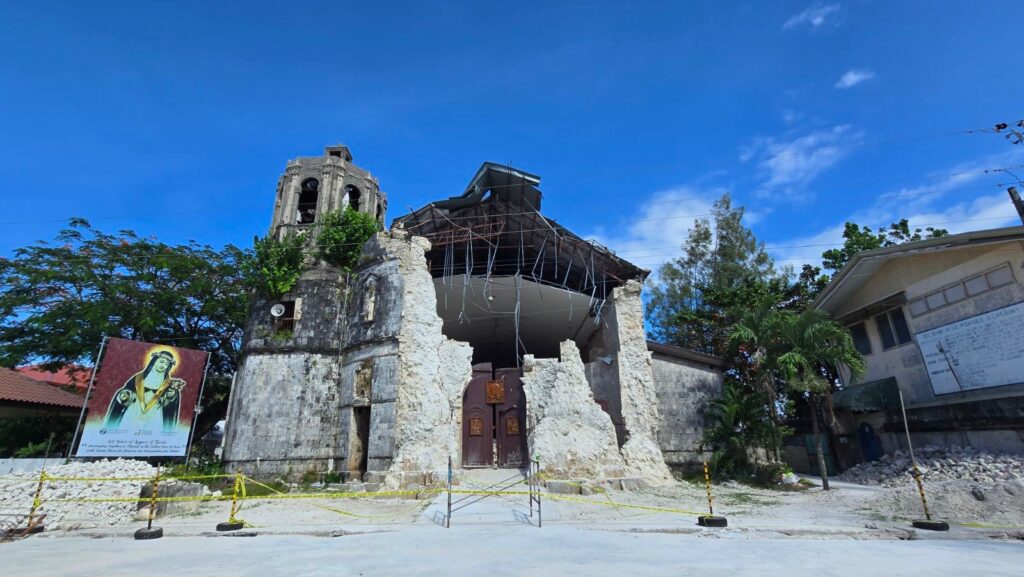
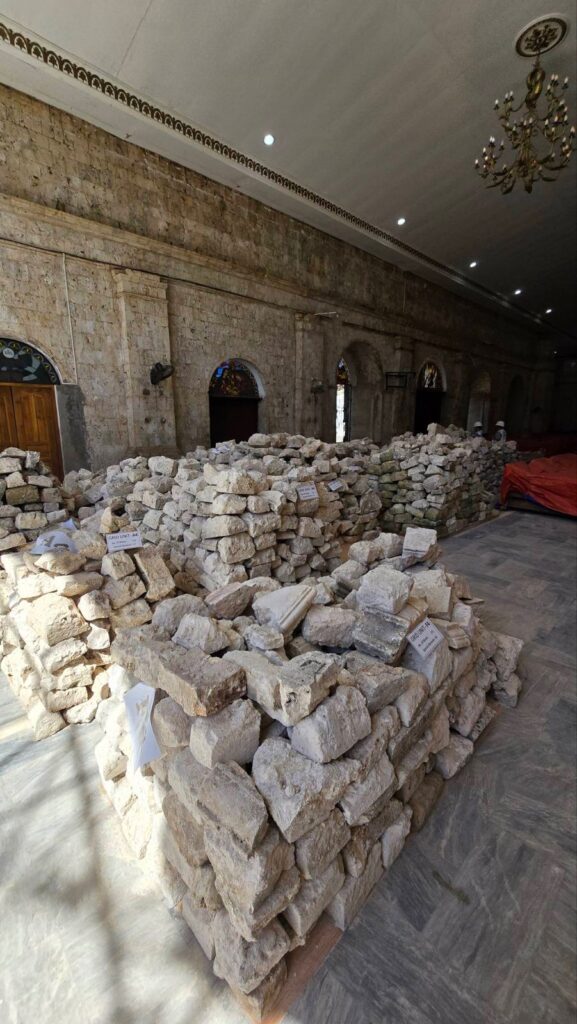
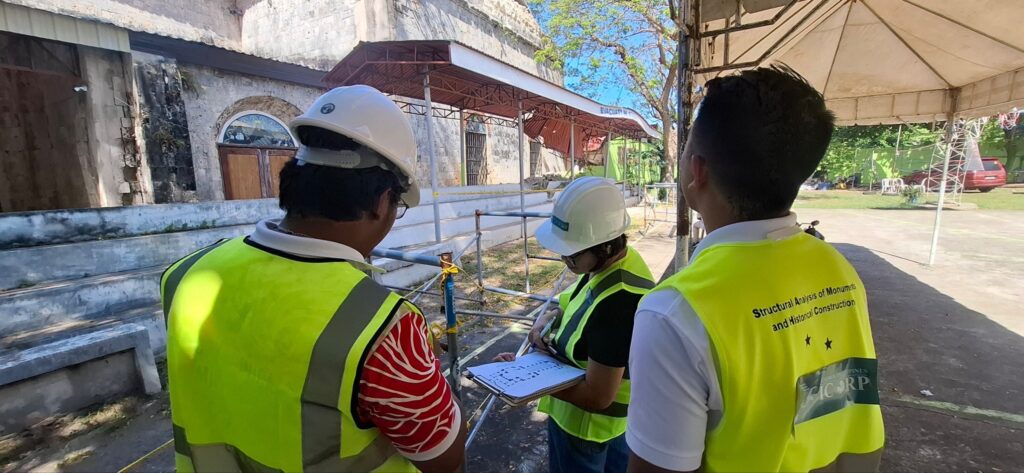
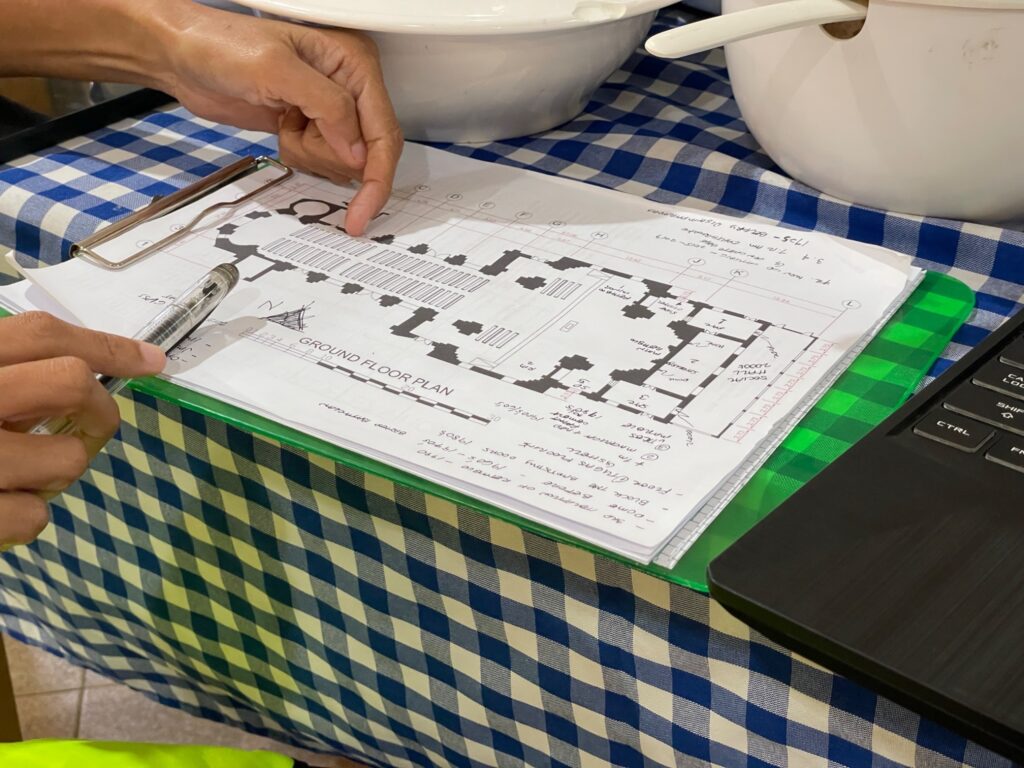
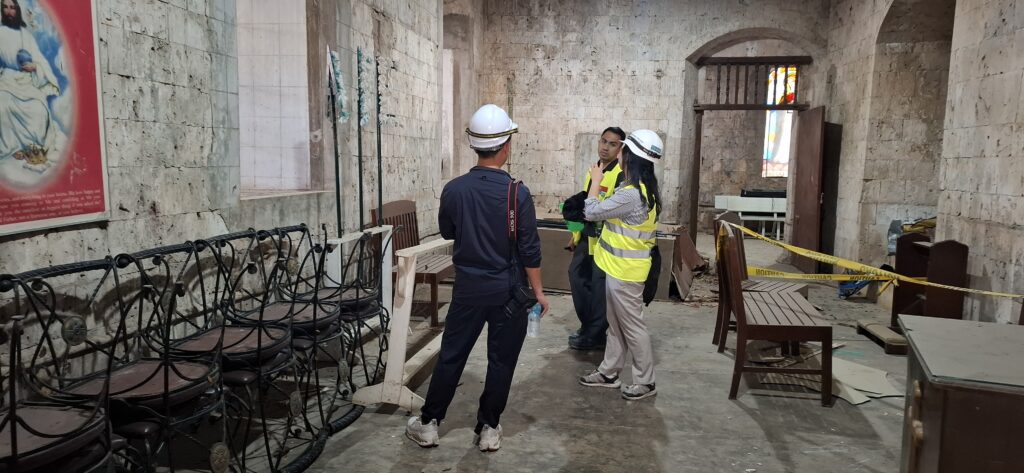
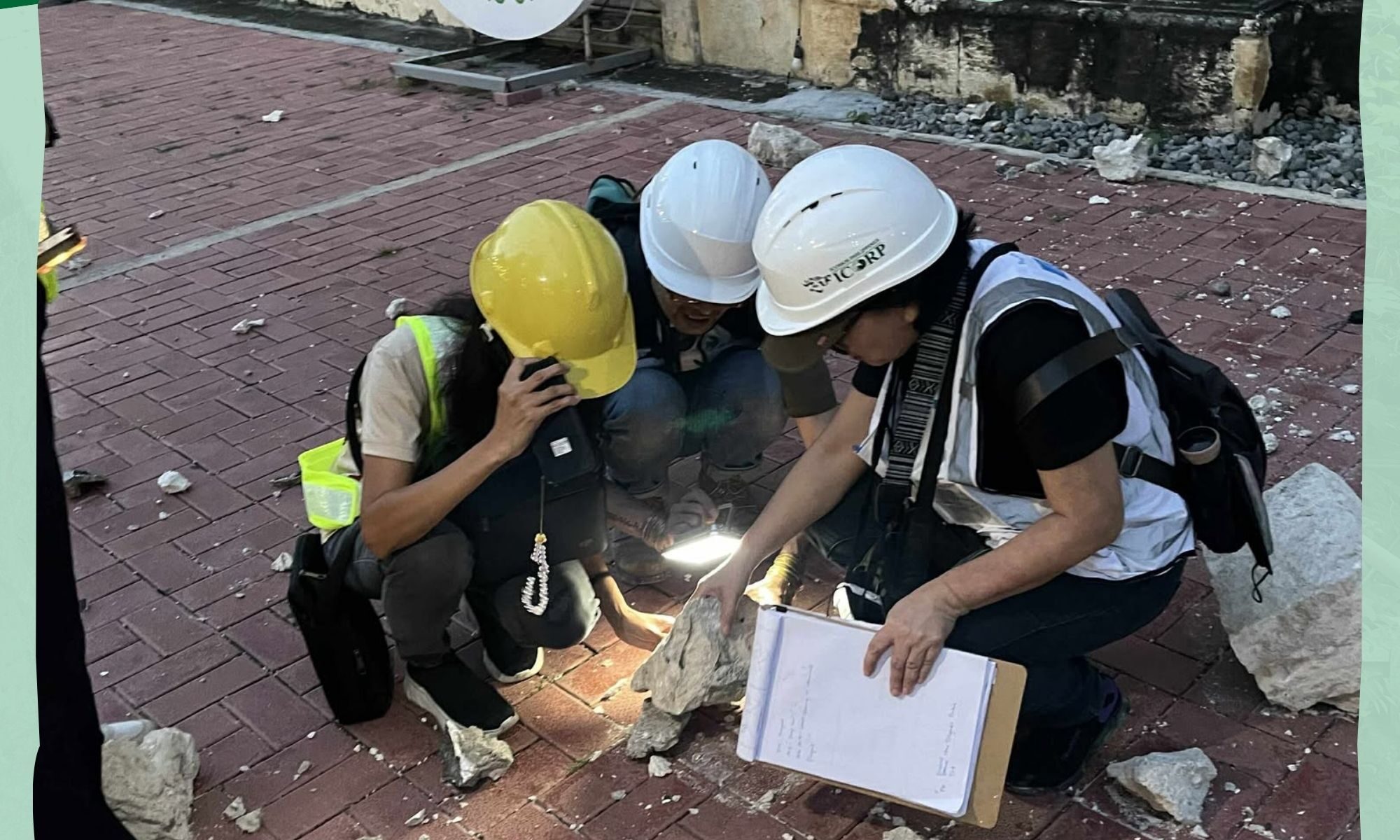
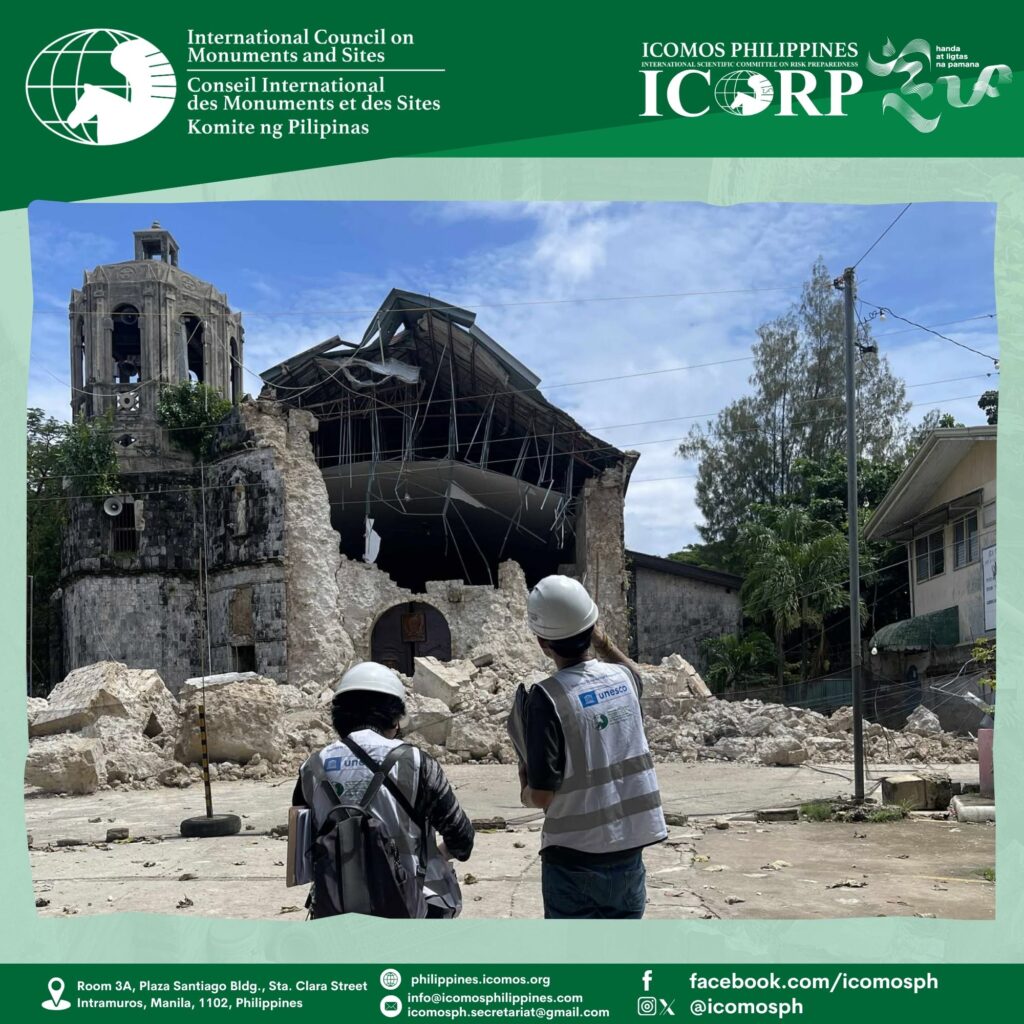
Cebu โ€“ The International Committee for Risk Preparedness (ICORP) of ICOMOS Philippines, under the leadership of Mr. Joselito Corpus, Head of ICORP Philippines, conducted an onsite assessment and evaluation of heritage sites in Bantayan, Daanbantayan, and Bogo City, Cebu, that were severely affected by the recent earthquake. The initiative aims to assess the extent of structural damage, document the condition of these significant cultural landmarks, and recommend appropriate conservation and restoration measures.

Accompanying Mr. Corpus in the field were Ar. Carmen Solis, ICOMOS Philippines Cebu-based member; Abdulbasir Endong, Heritage Affairs Officer; and University of San Carlosโ€“Talamban faculty members Engr. Joel Pagaratos and Engr. Monica Ann Louise Intong. Supporting the team remotely were Dr. Cheek S. Fadriquela, President of ICOMOS Philippines, along with Board of Trustees and ICOMOS PH members Engr. Joaquin Ramos, Engr. Mary Grace Casuncad, and Engr. Timothy Augustus Ong.

The assessment forms part of Tabang Cebu, a collaborative initiative that brings together heritage advocates, cultural workers, and partner institutions to provide technical support and capacity building for heritage conservation and disaster recovery. This collective effort not only focuses on rebuilding damaged structures but also on preserving the cultural identity and shared history that define Cebuโ€™s communities.

This activity also marks the beginning of a long-term initiative by ICORP Philippines to establish a comprehensive Risk Preparedness and Conservation Management Plan for Cebuโ€™s heritage assets. The data and insights gathered from the site assessments will serve as essential references for local government units, diocesan representatives, and heritage custodians in guiding restoration priorities and developing disaster-resilient conservation strategies.

Through Tabang Cebu, ICOMOS Philippines underscores the importance of proactive heritage management โ€” promoting collaboration, preparedness, and community involvement. The initiative is envisioned to strengthen local capacity, raise public awareness on the value of preventive conservation, and ensure that heritage sites remain protected, resilient, and valued for generations to come.

Ultimately, Tabang Cebu symbolizes hope and unity โ€” a collective commitment to heal, rebuild, and preserve not only Cebuโ€™s historical landmarks but also the enduring spirit, identity, and resilience of its people.

๐—ฅ๐—ฒ๐—ฑ๐—ถ๐˜€๐—ฐ๐—ผ๐˜ƒ๐—ฒ๐—ฟ๐—ถ๐—ป๐—ด ๐˜๐—ต๐—ฒ ๐—ก๐—ผ๐—ฟ๐˜๐—ต: ๐—œ๐—–๐—ข๐— ๐—ข๐—ฆ ๐—ฃ๐—› ๐—˜๐˜…๐—ฝ๐—น๐—ผ๐—ฟ๐—ฒ๐˜€ ๐—–๐—ฎ๐—ด๐—ฎ๐˜†๐—ฎ๐—ป ๐—ฉ๐—ฎ๐—น๐—น๐—ฒ๐˜†โ€™๐˜€ ๐—–๐˜‚๐—น๐˜๐˜‚๐—ฟ๐—ฎ๐—น ๐—Ÿ๐—ฒ๐—ด๐—ฎ๐—ฐ๐˜†

Official Frame (Template) – 12

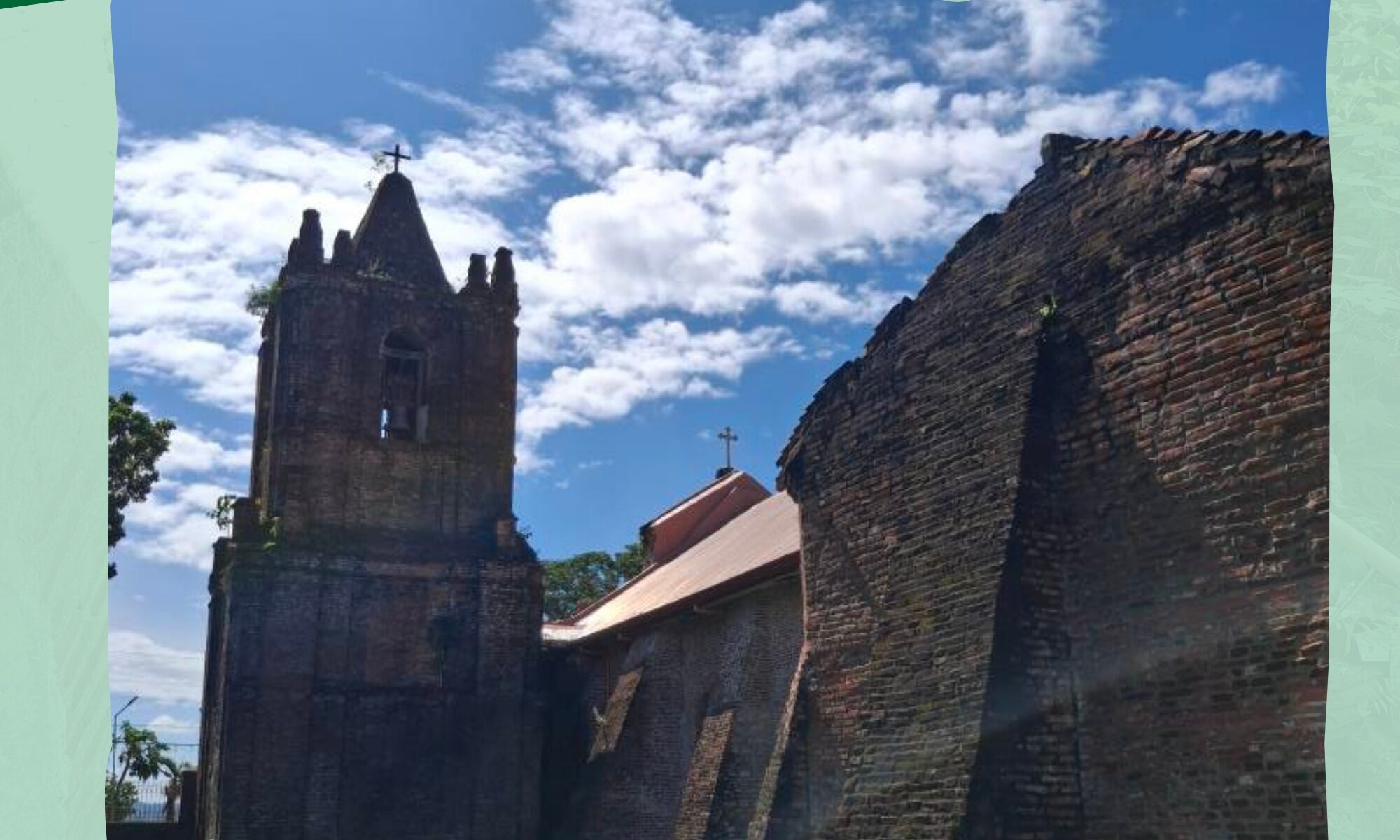
In its continuing commitment to safeguard and promote the Philippinesโ€™ cultural heritage, the International Council on Monuments and Sites (ICOMOS) Philippines conducted a four-day Cagayan Valley Study Tour from September 26 to 29, 2025. The activity formed part of the organizationโ€™s field-based heritage assessment and community engagement efforts in Northern Luzon, focusing on significant ecclesiastical and historical structures that reflect the regionโ€™s enduring colonial legacy.

Leading the delegation was ICOMOS Philippines Vice President, Dr. Caroline Marie Lising, joined by Chairman and President, Dr. Cheek S. Fadriquela, and Corporate Secretary, Liliane โ€œTatsโ€ Manahan. Also joining the tour were ICOMOS Philippines members Mr. Joselito Corpus, Mr. Ivan Man Dy, and Ar. Michael Tabao, whose participation contributed valuable perspectives in heritage architecture, conservation, and cultural studies.

The study tour commenced in San Pablo, Isabela, home to the Church of San Pablo, a National Cultural Treasure. As part of ICOMOS Philippinesโ€™ community outreach, the team met with Parish Priest Fr. Darwin Mamauag, who shared updates on the siteโ€™s current condition. The church, under the administration of the Diocese of Ilagan, is presently being guided by Architect Raj Busmente as consultant.

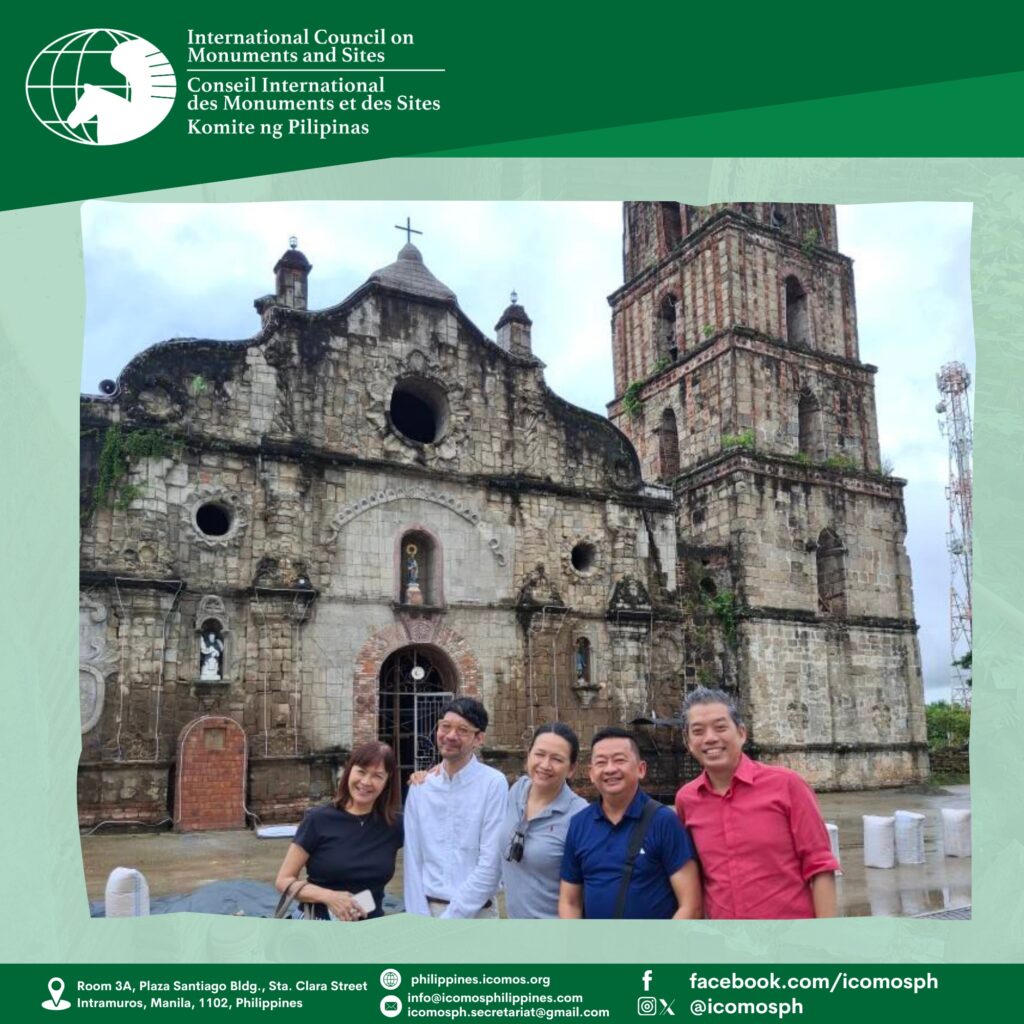
The team next visited the Church of San Matias in Tumauini, another National Cultural Treasure, renowned for its circular bell tower and intricate brickwork. Subsequent stops included the St. Peter Metropolitan Cathedral in Tuguegarao, the Horno ruins, which once supplied bricks for many colonial-era churches, the San Jacinto Ermita Church, and the Iguig Church and Calvary Hills, a significant pilgrimage site offering panoramic views of the Cagayan River.

The second day focused on the western municipalities of Cagayan, beginning with the Pata Church Ruins in Sanchez Mira, an evocative reminder of the areaโ€™s early missionary presence. The group proceeded to Lal-lo, where they examined the Lal-lo Church and nearby ruins, providing valuable insights into early Spanish settlement patterns along the Cagayan River.

In Camalaniugan, the team visited the site of the oldest bell in the Philippines, cast in 1595. They also studied the surrounding ruins, bas-reliefs, and horno structures that highlight the townโ€™s deep historical roots and architectural heritage.

The third day of the tour began with a visit to the Our Lady of Piat Church, one of Northern Luzonโ€™s most important pilgrimage destinations. The group then visited the Tabang Church Ruins, before proceeding to the Callao Caves, a remarkable geological formation that complements the regionโ€™s built heritage with its natural and archaeological significance.

The study tour concluded at the Cagayan Provincial Museum in Tuguegarao, where the participants viewed collections of artifacts, historical photographs, and materials that provided additional context to the sites visited.

In pursuit to continuing commitment to heritage preservation. The Cagayan Valley Study Tour served as a vital opportunity for ICOMOS Philippines to document, assess, and promote the preservation of key heritage sites in Northern Luzon. Beyond on-site evaluations, the activity strengthened connections with local stakeholdersโ€”clergy, parish communities, and heritage advocatesโ€”highlighting the importance of collaborative action in heritage conservation.

Through initiatives like the Cagayan Valley Study Tour, ICOMOS Philippines continues to fulfill its mission of protecting, conserving, and celebrating the nationโ€™s rich and diverse cultural heritage.

ICOMOS PH Holds 2025 General Assembly, Strengthens Commitment to Cultural Heritage Conservation

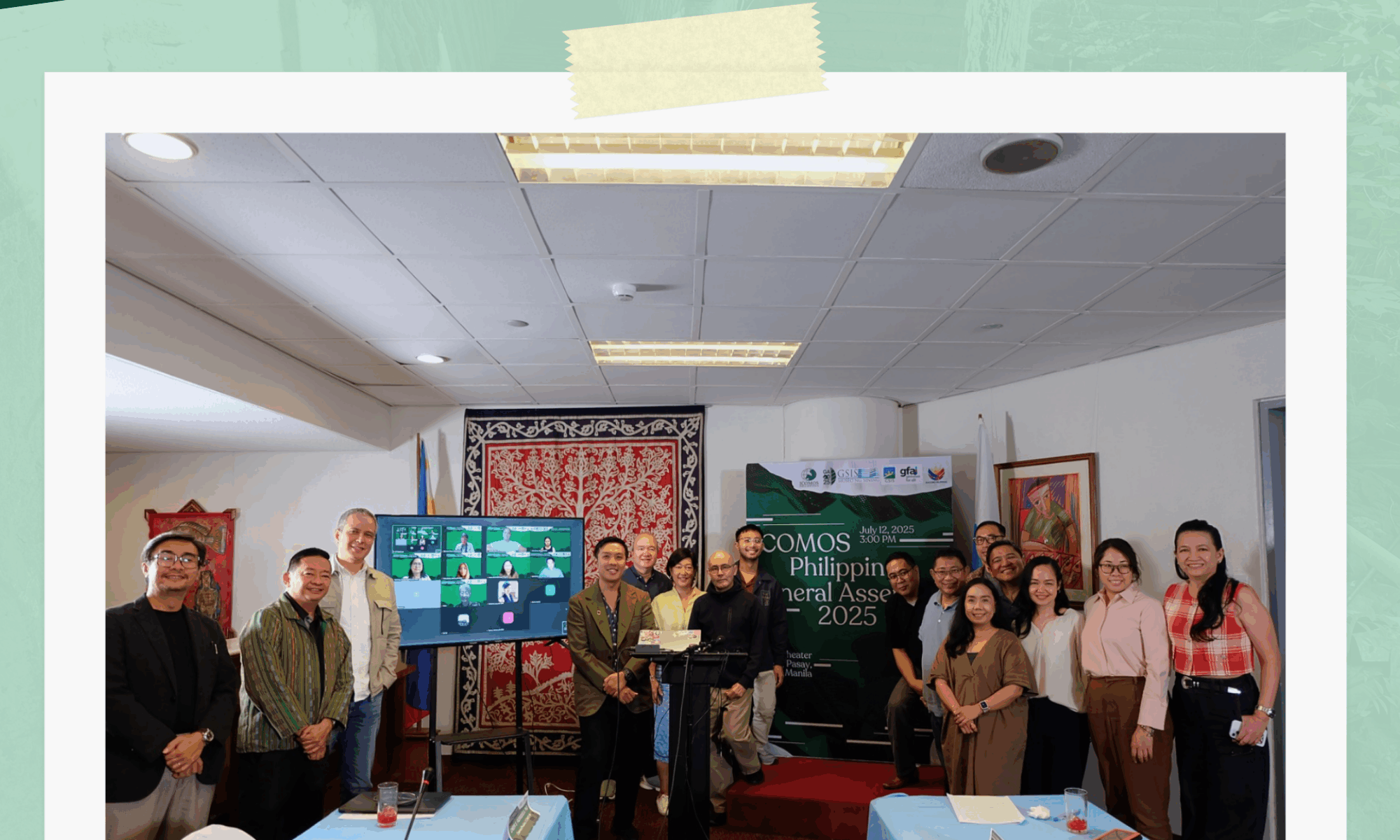
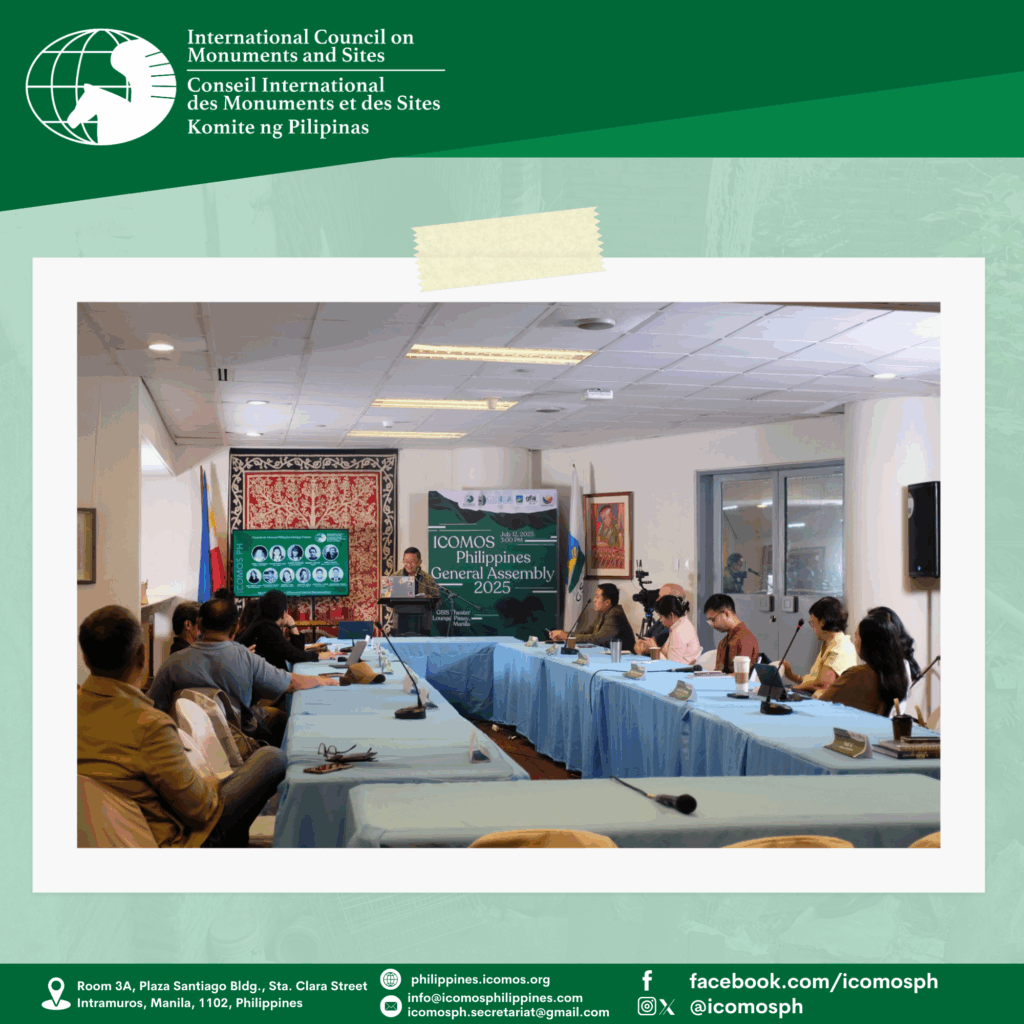
Pasay, Philippines โ€“ ICOMOS Philippines held its annual General Assembly (GA) on 12th July 2025 at the Government Service Insurance System (GSIS) Theater Lounge, Pasay City, Metro Manila. This yearly event gathers together the ICOMOS Philippinesโ€™ Board of Trustees, Committee Officers, and expert members to review their own respective efforts towards heritage conservation and protection, and to understand the organizationโ€™s operations, financials, and future actions. This yearโ€™s General Assembly, hosted by LAr. Gabriel Caballero, was conducted through a hybrid setup that allowed both in-person and online participation.

The reports from the Board of Trustees and Officers began with the Presidentโ€™s report. Dr. Cheek Fadriquela, ICOMOS President/Chairman, highlighted the key accomplishments of the ICOMOS over the year, including the conclusion of the Heritage Emergency Fund (HEF) project under UNESCO. Additionally, the future initiatives and programs were also mentioned, including the participation of the organization in the upcoming History Month activities at the GSIS. Dr. Fadriquela also welcomed the new eight (8) members of ICOMOS from different cities in the country. The ICOMOS President also highlighted a breakthrough meeting with the Bangsamoro Commission for the Preservation of Cultural Heritage (BCPCH), further extending the capabilities of ICOMOS PH to the south of the Philippines.  The presentation of Dr. Fadriquela was followed by the Corporate Secretary.  Ms. Lilia Rosa โ€œTatsโ€ Rejante-Manahan, the corporate secretary of ICOMOS Philippines, assured the members of the board with her Corporate Secretaryโ€™s Report as she highlighted the smooth processing of various compliance requirements, including the mayorโ€™s permit, barangay clearance, SSS, Pag-IBIG, PhilHealth, and the BIR transfer-out process. She emphasized that there were no outstanding issues in these areas, as well as with the board resolutions by the board of trustees that have contributed to a more efficient organizational workflow. With this, she looks forward to the continuous cooperation of the board in the coming years. She also gave a brief presentation on the International Scientific Committee on Shared Built Heritage, wherein she highlighted her experience in the Southeast Asian Panel in Portugal. There, she presented how Filipino artists depict the complexion of saints and their attire through the local tradition of โ€œEncarnador.โ€ The positive response she received deepened her commitment to contribute, promote, and support shared built heritage where dialogue, collaboration, and mutual recognition of culture remain possible. 

ICOMOS Philippinesโ€™ Vice President Caroline โ€œMyleneโ€ Marie Lising, as the Honorary Consul of Georgia, showed the richness of Georgia in terms of cultural heritage and highlighted how the country effectively manages its cultural heritage sites. For her, these efforts could also serve as an inspiration for heritage conservation initiatives in the Philippines, considering that a Georgia study tour is being planned for ICOMOS members. Meanwhile, Ar. Harvey Vasquez, the treasurer of ICOMOS Philippines, gave the members an overview of finances for the year 2024, wherein he highlighted the reduced expenses for this year and the anticipated arrival of the first tranche of funding for the Kabilin project. Moreover, he expressed hopes of generating income through the continuation of previously launched workshops such as โ€œEnherit and โ€œPhotogrammetry.โ€ In that way, a more sustainable support can be established that is beyond grants. Thus, he invited the members to participate and support these projects, as these reinforce ICOMOS Philippinesโ€™ identity as a membership-driven organization. 

Presented also at the assembly was โ€œProject KABILIN,โ€ a current partnership with the Ramon Aboitiz Foundation Inc. towards heritage conservation, with a focus on Cebuano culture. Key ICOMOS members are involved in the project, such as Ar. Kenneth Tua as the Kabilin Chief Project Officer, Dr. Laya Boquiren-Gonzales as the Project Director for the project of Intangible Cultural Heritage of Santo Niรฑo (ICHSN), LAr. Gabriel Caballero as the PAMANA 2030: Mobilizing Philippine Heritage for Sustainable Development (MPHSD) Project Director, and Mr. Joselito โ€œJCโ€ Corpus as the project director of Disaster Risk Management of Cultural Heritage (DRMCH). This represents the commitment of ICOMOS Philippines to leveraging Philippine heritage conservation at the highest standard.ย 

The Committee Officers also presented the latest organizational progress. Mr. Abdulbasir Endong, the Heritage Affairs Officer and Secretariat, showed the overview of engagement metrics, platform performance, and also the content strategy efforts of the organization. Meanwhile, the Membership Officer, Mr. Jan-Michael Cayme, shared updates regarding the significant increase in the organizationโ€™s membership, which currently has 81 members. 

The GA also featured reports from expert members on their commitment to various International Scientific Committees, which includes the International Scientific Committee on Risk Preparedness (ICORP), International Scientific Committee on 20th Century Heritage (ISC20C), International Scientific Committee on Fortifications and Military Heritage (ICOFORT), International Cultural Tourism Committee (ICTC), International  Committee on Archaeological Heritage Management (ICAHM), International Education and Training Committee (CIF), International Scientific Committee on Shared Built Heritage (ICSBH), and Theory and Philosophy of Conservation and Restoration (TheoPhilos). This part of the program encourages members to join the International Scientific Committees as part of their privilege in joining ICOMOS. 

The 2025 General Assembly reflects ICOMOS Philippinesโ€™ continuous commitment to promote the conservation, protection, use, and enhancement of cultural heritage sites through its projects, partnerships, and committeesโ€”most notably the newly launched ICORP. The assembly provides an avenue for deeper collaboration among members across various areas through project involvement, participation, practice, research, policy development, and adoption. Above all, it acts as a bridge for future initiatives aimed at advancing conservation efforts.

#ICOMOSPhilippines #2025GeneralAssemblyPhilippines

Abdulbasir B. Endong (ICOMOS PH Heritage Affairs Officer) Contributors: Isabela Dansel Cruz, Romina Red Padilla, Juliana Marie Gaballo, Jenella Anne Castillo (ICOMOS PH Interns)

ICOMOS Philippines and BCPCH-BARMM Explore Cultural Heritage Collaboration in Strategic Online Meeting

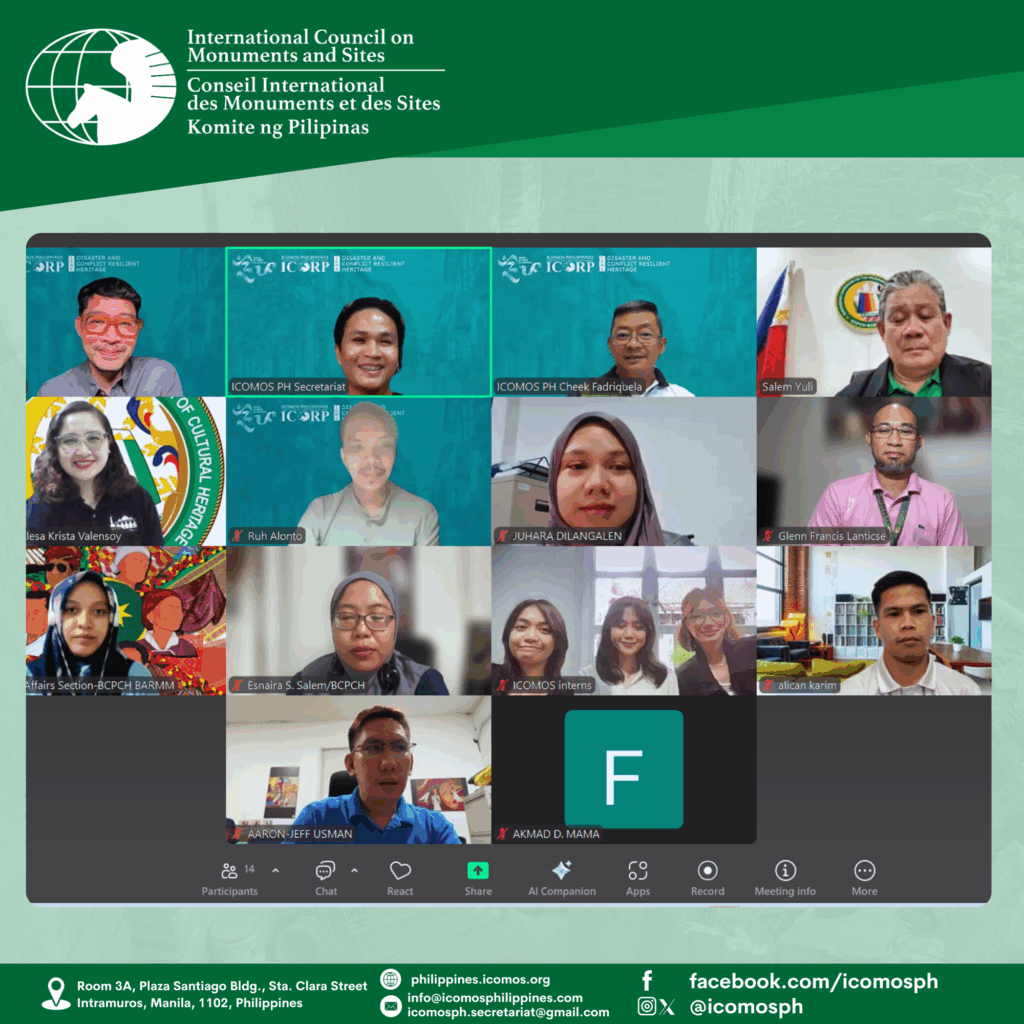
Metro Manila, Philippines โ€” The International Council on Monuments and Sites Philippines (ICOMOS PH) and the Bangsamoro Commission for the Preservation of Cultural Heritage (BCPCH-BARMM) successfully held a strategic online meeting on July 2, 2025, marking a significant step toward deepening cooperation in safeguarding cultural heritage in the Bangsamoro Autonomous Region in Muslim Mindanao and across Mindanao.

The meeting featured presentations from both organizations, laying the groundwork for a future partnership grounded in shared values and a common vision for heritage preservation.

Dr. Cheek S. Fadriquela, President and Chairman of ICOMOS Philippines, opened the session by presenting the background, mission, and mandate of ICOMOS PH, underscoring the organizationโ€™s commitment to heritage conservation in alignment with global standards and UNESCO frameworks.

Following this, Mr. Joselito Corpus, Project Director of KABILIN: DRMCH and ICORP Philippines head gave an overview of the International Scientific Committee on Risk Preparedness (ICORP). He was followed by Mr. Ruhollah Alonto, ICORP Regional Representative for BARMM and Mindanao, who shared insights on heritage preservation efforts in Lanao del Sur, highlighting local initiatives and the challenges faced in conflict-affected heritage areas.

From the BCPCH side, Dr. Salem Y. Lingasa, Chairperson of the Commission, briefly introduced the mandate of BCPCH, emphasizing its role in documenting, preserving, and promoting the diverse cultural heritage of the Bangsamoro people. This was followed by Ms. Alesa Krista Valensoy, Community Affairs Officer III, who provided a more detailed presentation on the structure and functions of BCPCH-BARMM, paving the way for possible institutional collaboration.

Other BCPCH staff in attendance included Mr. Glenn Francis Lanticse (Bangsamoro Curator), Ms. Esnaira Salem (Senior History Researcher), Ms. Juhara Dilangalen (Accountant III), Mr. Aaron-Jeff Usman (Community Affairs Officer V), and other dedicated members of the BCPCH team, who also actively participated in the discussion.

The meeting concluded with both organizations expressing their intent to formalize the partnership through a Memorandum of Understanding (MoU), which is expected to be drafted by the end of the month. The MoU will outline areas of collaboration such as joint research, technical training, risk preparedness, and community-based heritage management.

This collaboration signals a strong beginning toward a meaningful and long-term partnership aimed at empowering heritage workers and institutions in the Bangsamoro region, with guidance and leadership from the ICORP Scientific Committee.

Dr. Lingasa likewise expressed BCPCH’s openness to joint projects and partnerships that would amplify the cultural identity and pride of the Bangsamoro people through inclusive, culturally sensitive, and professionally guided conservation practices.

This joint effort reflects a shared commitment to building resilient and inclusive approaches to heritage management in the region, aligned with national priorities and international standards.

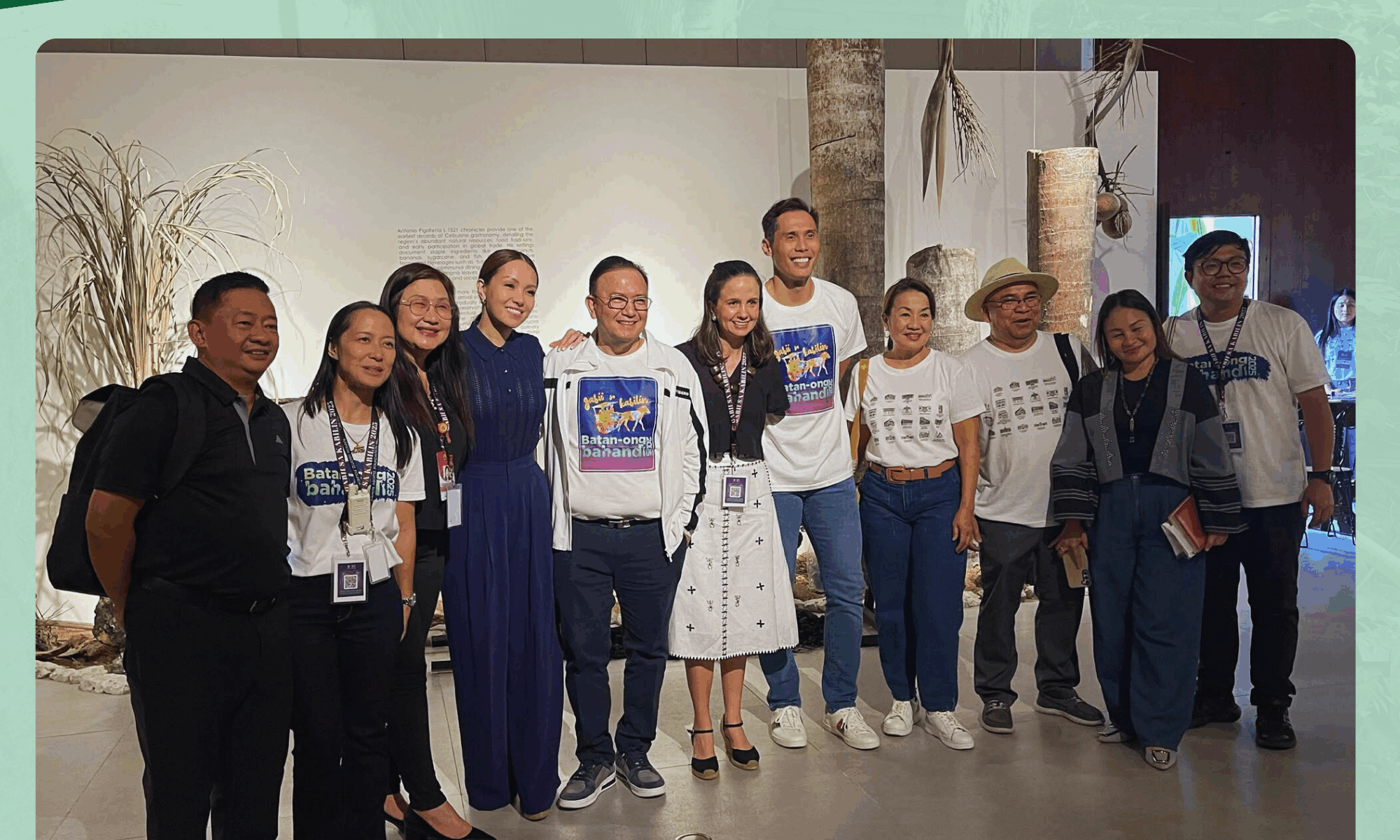
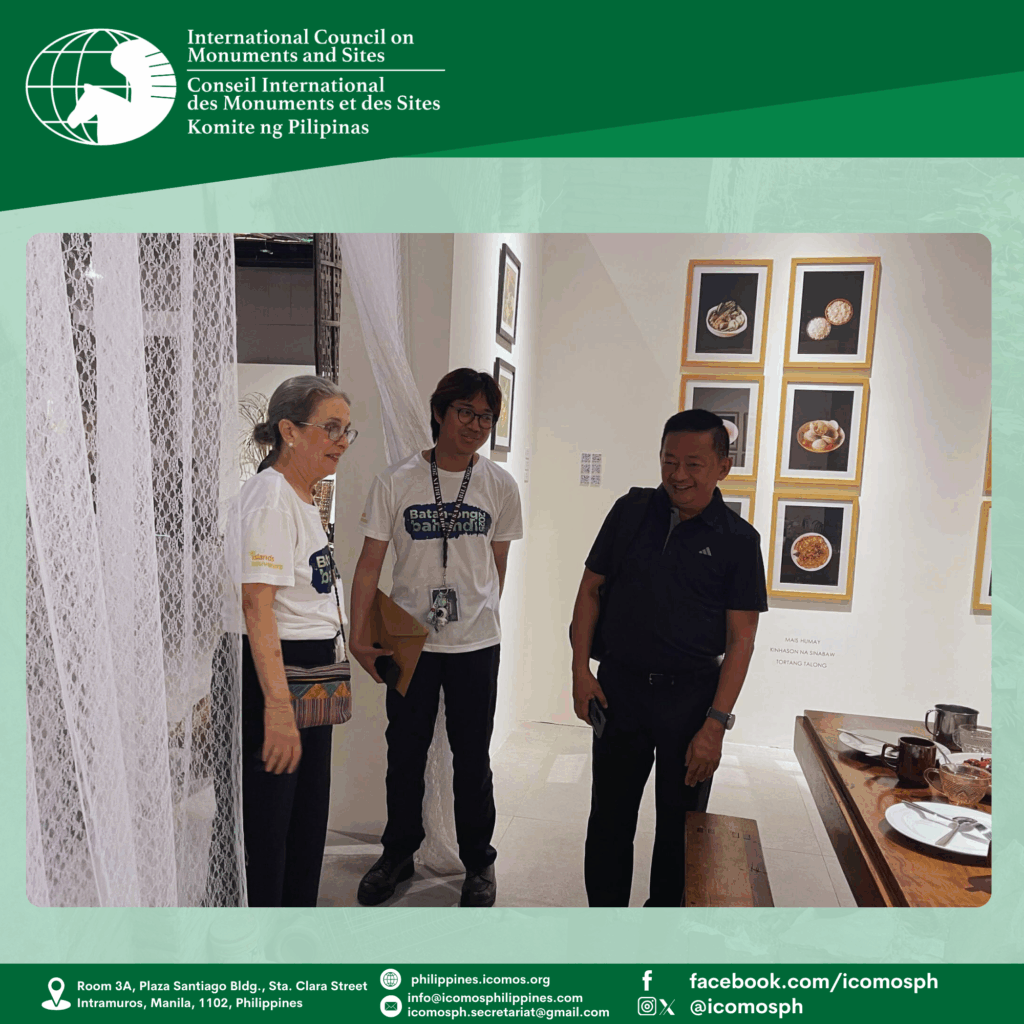
Gabii sa Kabilin at 18: ICOMOS PH Joins Youthful Heritage Night

Cebu City โ€” The cobblestone streets of Cebu were once again alive with footsteps, music, and cultural wonder as Gabii sa Kabilin (GSK) celebrated its 18th year on May 23, 2025. Marking its โ€œdebutโ€ into adulthood, the much-loved heritage night took on a vibrant, youthful spirit with the theme โ€œBatan-ong Bahandiโ€ (Youthful Treasures), highlighting the powerful role of young Cebuanos in shaping the future of cultural heritage.

GSK, which began in 2007 through the Ramon Aboitiz Foundation Inc. (RAFI), was inspired by the European โ€˜Long Night of Museumsโ€™. Since then, it has evolved into a hallmark cultural event in Cebu, offering a unique opportunity for residents and tourists alike to explore the cityโ€™s history through extended nighttime access to museums and heritage sites. From 6:00 p.m. to midnight, GSK 2025 featured 22 participating sites across Cebu City, Mandaue, Lapu-Lapu, and Talisay, drawing large crowds of culture lovers, families, students, and curious explorers.

This yearโ€™s celebration was deeply resonant, coinciding with the National Historical Commission of the Philippinesโ€™ (NHCP) declaration of 2025 as the Year of the Youth in Philippine History. With the 150th birth anniversaries of young heroes Emilio Jacinto, Gregorio del Pilar, and Gregoria de Jesus, the event emphasized how the energy, creativity, and idealism of todayโ€™s youth mirror those who once stood at the forefront of the nationโ€™s fight for freedom and identity.

One of the newest partners of RAFI, the International Council on Monuments and Sites Philippines (ICOMOS PH), joined in the festivities for the first time. Representing the organization were ICOMOS PH President Dr. Cheek S. Fadriquela, Dr. Laya Boquiren-Gonzales, Ar. Joy Onozawa, and Heritage Affairs Officer Abdulbasir B. Endong. The team visited several sites, engaging in meaningful conversations with cultural workers, volunteers, and attendeesโ€”all while appreciating the youth-centric programming that ran throughout the evening.

Seeing heritage celebrated in such an engaging, youthful way reminds everyone that the future of cultural conservation lies in inspiring the next generation. Gabii sa Kabilin perfectly embodies that blend of tradition and innovation, and weโ€™re honored to be part of its 18th year.

True to its theme, this yearโ€™s GSK infused fresh energy into every stopโ€”whether through interactive exhibits, live performances by student artists, or storytelling sessions led by young heritage advocates. For many first-time visitors and seasoned supporters alike, the night served as a powerful reminder that heritage is not a static memory of the past, but a living, evolving narrative shaped by each generation.

As the cityโ€™s most awaited cultural night matured into its symbolic debutante year, Gabii sa Kabilin 2025 proved that heritage, when passed down with purpose and passion, blossoms anewโ€”especially in the hands of the youth. With organizations like ICOMOS PH supporting these efforts, the future of Philippine cultural preservation is in promising hands.

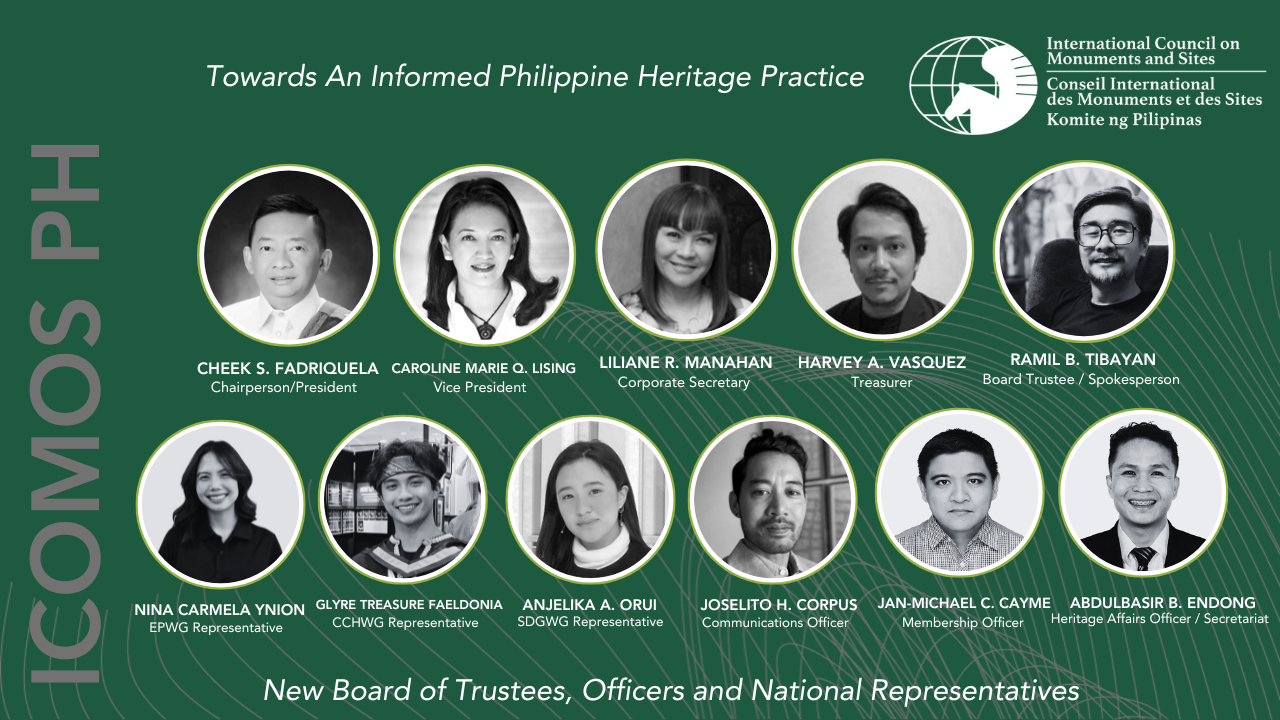
Strengthening Heritage Leadership: Welcoming the New Board and Officers of ICOMOS Philippines

ICOMOS Philippines proudly announces the appointment of its new Board of Trustees and Officers, ushering in a new era of leadership, expertise, and dynamic collaboration in the field of cultural heritage conservation. Their diverse backgrounds and commitment to excellence will further strengthen the organization’s mission to safeguard the nation’s cultural legacy.

New Board of Trustee: Ar. Ramil Tibayan

Architect Ramil Tibayan joins the Board of Trustees, bringing a distinguished background in architectural heritage conservation and education. He currently serves as a lecturer at the College of Architecture of the University of Santo Tomas (UST), his alma mater where he earned both his Bachelorโ€™s Degree in Architecture and Masterโ€™s Degree in Cultural Heritage Studies.

Ramil previously headed the Cultural Properties Conservation Division of the Intramuros Administration, an attached agency of the Department of Tourism, and worked with Design Coordinates, Incorporated in construction project management. He also taught at the Far Eastern University, Institute of Architecture and Fine Arts.

In 2009, he placed first in the Architecture Licensure Examination. His dedication to heritage conservation is further exemplified through his training with the Getty Conservation Institute and ThinkCity Malaysia, and by completing the Getty Conservation Institute’s Conserving Modern Architecture course in 2021.

Ramil currently serves as a Panel of Experts member for Architectural Heritage at the National Commission for Culture and the Arts (NCCA), an Expert Member of the ICOMOS International Scientific Committee on Twentieth-Century Modern Heritage, and now a Board Trustee of ICOMOS Philippines.

New Membership Officer: Dr. Jan-Michael Cayme

Dr. Jan-Michael Cayme has been appointed as the new Membership Officer. He holds a PhD in Chemistry from the University of Tartu, Estonia, specializing in the chemical analysis of heritage clay-based materials, including historic bricks, pottery, and lime mortars used in traditional structures.

His expertise supports evidence-based conservation strategies essential to preserving the material authenticity of cultural properties. Dr. Cayme is also an associate member of ICOFORT (ICOMOS International Scientific Committee on Fortifications and Military Heritage), further enriching the scientific strength of ICOMOS Philippines.

Continuing Communication Officer: Joselito “JJ” Corpus

Taking on the role of Communication Officer is Mr. Joselito “JJ” Corpus, a leading figure in disaster-related heritage recovery. JH has developed methodologies for material recovery and collection treatment following major disasters, including the 2013 Bohol Earthquake, Typhoon Yolanda, and Typhoon Odette.

He previously served as Project Manager for the UNESCO Heritage Emergency Fund in the Historic City of Vigan and continues to lecture at the University of Northern Philippines on disaster risk management for cultural heritage. He also served as a technical advisor to Escuela Taller Foundation, Inc., after leading its satellite school in Maribojoc to train out-of-school youth in church restoration.

JH Corpus earned his undergraduate degrees in history and communications from the University of California, Berkeley, and pursued further studies at the Universitร  degli Studi di Bologna (D.A.M.S.). He completed his graduate degree in Historic Preservation, with an emphasis on conservation science, at Columbia Universityโ€™s Graduate School of Architecture, Planning and Preservation. He also participated in ICCROM-ITCโ€™s Disaster Risk Management for Cultural Heritage Program at Ritsumeikan University in Kyoto, Japan.

JHโ€™s contributions to media and education, including as a writer for the Philippine Star, continue to advance public understanding of heritage protection in vulnerable contexts.

New Climate Change and Heritage Working Group (CCHWG) Representative: Glyre Treasure Faeldonia

Mr. Glyre Treasure Faeldonia has been appointed the new National Coordinator and Representative of the Climate Change and Heritage Working Group (CCHWG). A sustainable development and urban policy researcher, Glyre focuses on climate action, urban mobility, and heritage conservation.

He holds an MSc in Global Development (Environment and Climate Change), graduating summa cum laude from the Global Development Institute at the University of Manchester. Glyreโ€™s career is deeply rooted in youth-led and youth-focused initiatives, including leading research efforts with Keep the Change: Youth Policy Lab and the ASEAN Youth Organisation. His contributions have supported projects commissioned by the Japanese Ministry of Economy, Trade, and Industry (METI) on e-waste management and the Circular Economy.

Currently serving as Organizational Relationships Manager at Young Urbanists of Southeast Asia (YUSEA), Glyre fosters regional collaboration on sustainable urban development.

A proud member of the Subanon Indigenous Group of Zamboanga del Norte, Glyre emphasizes the importance of Indigenous knowledge systems and community participation in heritage conservation. Having previously interned with ICOMOS Philippines, he now brings a multidimensional and inclusive approach to climate-responsive heritage safeguarding.

New Emerging Professionals Working Group (EPWG) Representative: Nina Carmela Ynion

Ms. Nina Carmela Ynion steps into the role of EPWG Representative. She is currently pursuing her Juris Doctor degree at the University of Asia and the Pacific (UA&P), aiming to specialize in Cultural Heritage Law at the intersections of international law and property law.

Nina holds both Bachelorโ€™s and Masterโ€™s degrees in Humanities from UA&P, and she furthered her specialization in art conservation by completing a Postbaccalaureate Certificate in Art Conservation at Studio Arts College International in Florence, Italy. There, she trained in the conservation of paintings on canvas and wood, later applying her expertise as an Assistant Art Conservator under Mrs. Missy Sanares-Reyes.

Currently on leave from the PhD program in Philippine Studies at the University of the Philippines Diliman, Ninaโ€™s dissertation focuses on the technical art history of ecclesiastical art in Laguna. Her work underscores the urgent need to integrate legal frameworks into art preservation and cultural heritage conservation in the Philippines.

Continuing Sustainable Development Goals Working Group (SDGWG) Representative: Anjelika Orui

Ms. Anjelika Orui continues her dedicated leadership as the SDGWG Representative for ICOMOS Philippines. Based in Melbourne, Australia, Anjelika is an architect, public relations ambassador, and writer committed to integrating sustainable development principles into heritage conservation.

She holds a Masterโ€™s degree in Property Development from the University of Melbourne and a Bachelor’s degree in Architecture, earned with Latin honors, from the De La Salle-College of Saint Benilde. She has worked on architectural and conservation projects across Asia and Europe, including engagements with MVRDV, the Kobe City Government, and La Biennale di Venezia 2024.

Anjelika has been actively involved with ICOMOS Philippines since 2022, serving as Task Team Coordinator for the SDGWG and leading the localization of ICOMOS Internationalโ€™s Policy Guidance for Heritage and the SDGs. She also participated as a Research Associate for the UNESCO-funded project โ€œPost-Earthquake Damage Assessment of Vernacular Buildings in the World Heritage City of Viganโ€ (PEDAVBV).

She remains an active member of ICOMOS Australia and the International Scientific Committee on Energy and Sustainability.

The appointment of these outstanding professionals marks an important milestone for ICOMOS Philippines. As the organization continues to advocate for the conservation of cultural heritage in the face of modern challenges, their collective leadership ensures that heritage protection remains a dynamic, inclusive, and sustainable endeavor.

We warmly welcome our new Board Members and Officers and look forward to achieving greater milestones together!

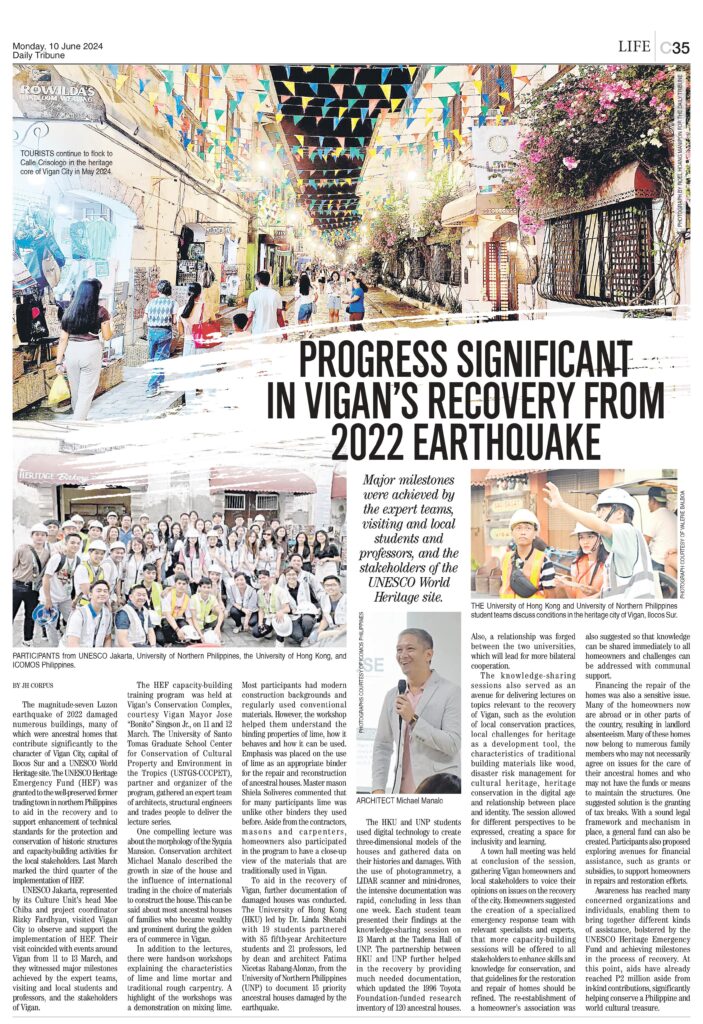
Progress Significant in Vigan’s Recovery from 2022 Earthquake

Last March 2024, marked the third quarter of the implementation of the first Heritage Emergency Fund [HEF] granted to the Republic of the Philippines by UNESCO.

UNESCO Jakarta under the leadership of Moe Chiba, Culture Unit Head, and Rizky Fardhyan, Project Coordinator, visited Vigan City to observe and support the activities spurred by the HEF. Their visit coincided with events around Vigan from the 11th to 13th of March, and they witnessed major milestones achieved by expert team, visiting and local students and professors, and the stakeholders of Vigan.

One activity was the HEF capacity-building training program whose audience were the homeowner’s, custodians, contractors, technicians, tradespersons and other concerned stakeholders of the WHS Historic City of Vigan. Not only were they given lectures about Vigan specific topics, but they were also involved in a hands-on workshop to try their hand at mixing lime mortar and also attempting traditional joinery.

Another highlight were the activities at Tadena Hall at University of Northern Philippines where Hong Kong University and University of the Northern students presented their documentation of fifteen priority ancestral vernacular houses that they completed in about a week with the aide of digital documentation.

Lastly, there was Town Hall Meeting where homeowners and local stakeholders had an open forum to discuss the challenges of recovery and also how to move forward as a community sustainably and effectively.

This activity was supported by the UNESCO Heritage Emergency Fund. We wish to thank its donors: the Qatar Fund for Development, the Government of Canada, the Kingdom of Norway, the French Republic, the United Kingdom of Great Britain and Northern Ireland, the Principality of Monaco, the Republic of Estonia, ANA Holdings INC, the Kingdom of the Netherlands, the Slovak Republic, the Grand Duchy of Luxembourg, the Principality of Andorra, the Republic of Serbia.

Concerned stakeholders who are interested in providing in-kind contribution, you may contact Ar. Kenneth Javier Tua, Country Project Director, through kenneth.javier.tua@icomosphilippines.com and cc.: info@icomosphilippines.com. Letโ€™s protect and promote our diverse cultural heritage together.

For more information on ICOMOS Philippines โžก๏ธ https://philippines.icomos.org/

#UNESCO #unescoJAKARTA #ICOMOS #icomosPHILIPPINES #HeritageEmergencyFund #firstHEF #WorldHeritageSite #HistoricCityofVigan #PhilippineHeritage #SustainableHeritageManagement #ProtectHeritage

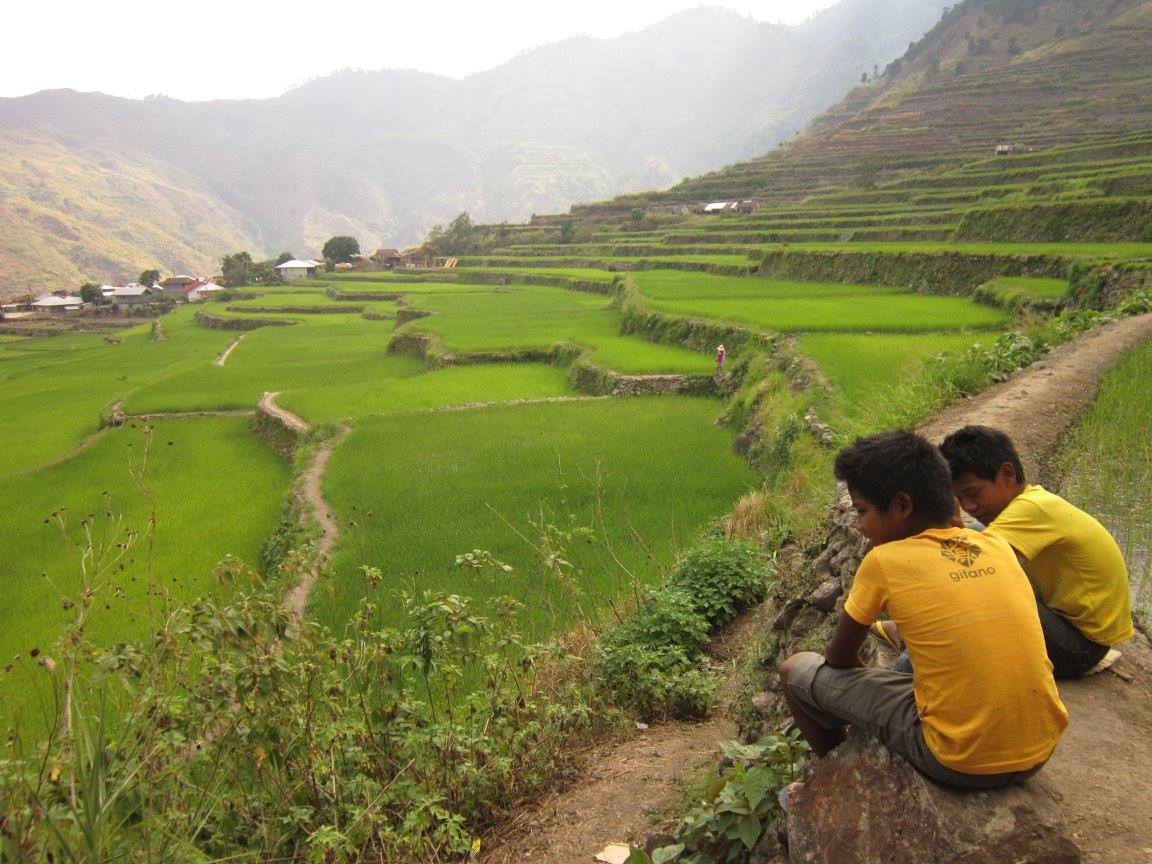
Preserving the Legacy of the Rice Terraces of the Philippine Cordilleras

From Oct. 10 to 14 in Banaue, a conference entitled โ€œClimate Risk and Resilience at the Rice Terraces of the Philippine Cordillerasโ€ was organized by Preserving Legacies, ICOMOS International, and ICOMOS Philippines in partnership with Climate Heritage Network and National Geographic Society, and funded by Manulife.

Participants from the local governmental units of Kiangan, Hungduan, Mayoyao, Bangaan, Batad, and Banaue, stakeholderโ€™s organizations, and local community members, along with natural and cultural heritage site custodians from Cambodia, Togo, Colombia, the United States of America, Ireland, Jordan, Bangladesh, and Tunisia were in attendance.

Victoria Herrman, National Geographic Explorer and project director of Preserving Legacies, adds, โ€œ[We] firmly believe in the power of cultural and heritage for climate change. This important project will empower communities and site custodians to protect their heritage from the images of climate change. It will also provide them with a platform for their stories and their valuable experiences with the world.โ€

Photo credit: Philippine Star, November 11, 2023

ERRATA:ย 

RE: Col. 1. Par. 2. For โ€œIfugao Rice Terraces of the Cordillerasโ€ read/to โ€œRice Terraces of the Philippine Cordilleras.โ€

RE: Col. 2. Par. 2. For โ€œKiangan rice harvest festivalโ€ read/to โ€œBakle, post-harvest rice ritual.โ€

RE: Col 3. Par. 1. For โ€œMarlon Martin, founder of the Save the Ifugao Terraces Movement (SITMo)โ€ read/to โ€œMarlon Martin, Chief Operating Officer of the Save the Ifugao Terraces Movement (SITMo).โ€

RE: Photo and Credits. For โ€œView of the Ifugao Rice Terraces of the Philippine Cordilleras, Photo by GREG VALERIO, ICOMOS Philippinesโ€ read/to โ€œView of the Mayoyao cluster, Rice Terraces of the Philippine Cordilleras, Photo by BHONG TAWANA.โ€

RE: Col. 3. Par. 2. For โ€œDr. Maria Laurice Jamero, Resilience Coordinator, Klima, Manila Observatoryโ€ read/to โ€œDr. Maria Laurice Jamero, Climate Scientist – Independent Consultant.โ€

Please see the article in the Philippine Daily Inquirer Lifestyle and Arts section. Read here โžก๏ธ https://bitly.ws/326hC

For more information on ICOMOS Philippines โžก๏ธ https://philippines.icomos.org/

For inquiries about ICOMOS Philippines and the Preserving Legacies Project: Rice Terraces of the Philippine Cordilleras, please email: info@icomosphilippines.com