
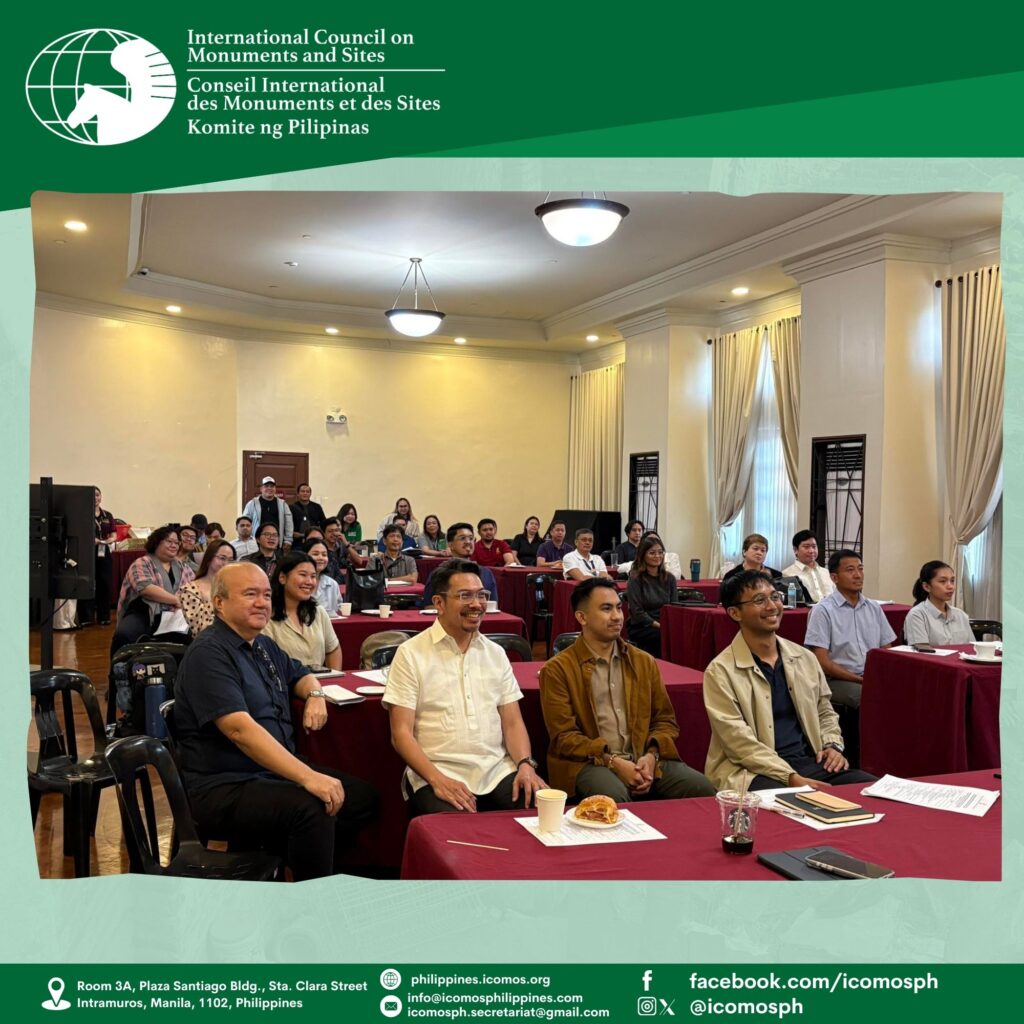
Manila, Philippines—April 8, 2026 —The National Commission for Culture and the Arts (NCCA) convened a Focus Group Discussion (FGD) and preliminary stakeholders’ meeting on April 8, 2026, at the Metropolitan Theater Music Hall as part of the ongoing process to declare the Pasig River a National Cultural Treasure.
The consultation brought together representatives from key government agencies and heritage organizations, including the Metropolitan Manila Development Authority (MMDA), Department of Environment and Natural Resources (DENR), Philippine Coast Guard, various local government units (LGUs), and the International Council on Monuments and Sites (ICOMOS).
The FGD forms part of the NCCA’s multi-stage evaluation process, which began on November 4, 2025, following the submission of a verified petition. This process includes stakeholder consultations, public notice and comment, expert panel review, and final deliberation by the NCCA Board.
In presenting the rationale for the declaration, the NCCA emphasized the need to assess the Pasig River’s multifaceted significance—historical, cultural, ecological, and urban—while identifying strategies for its protection and sustainable management.
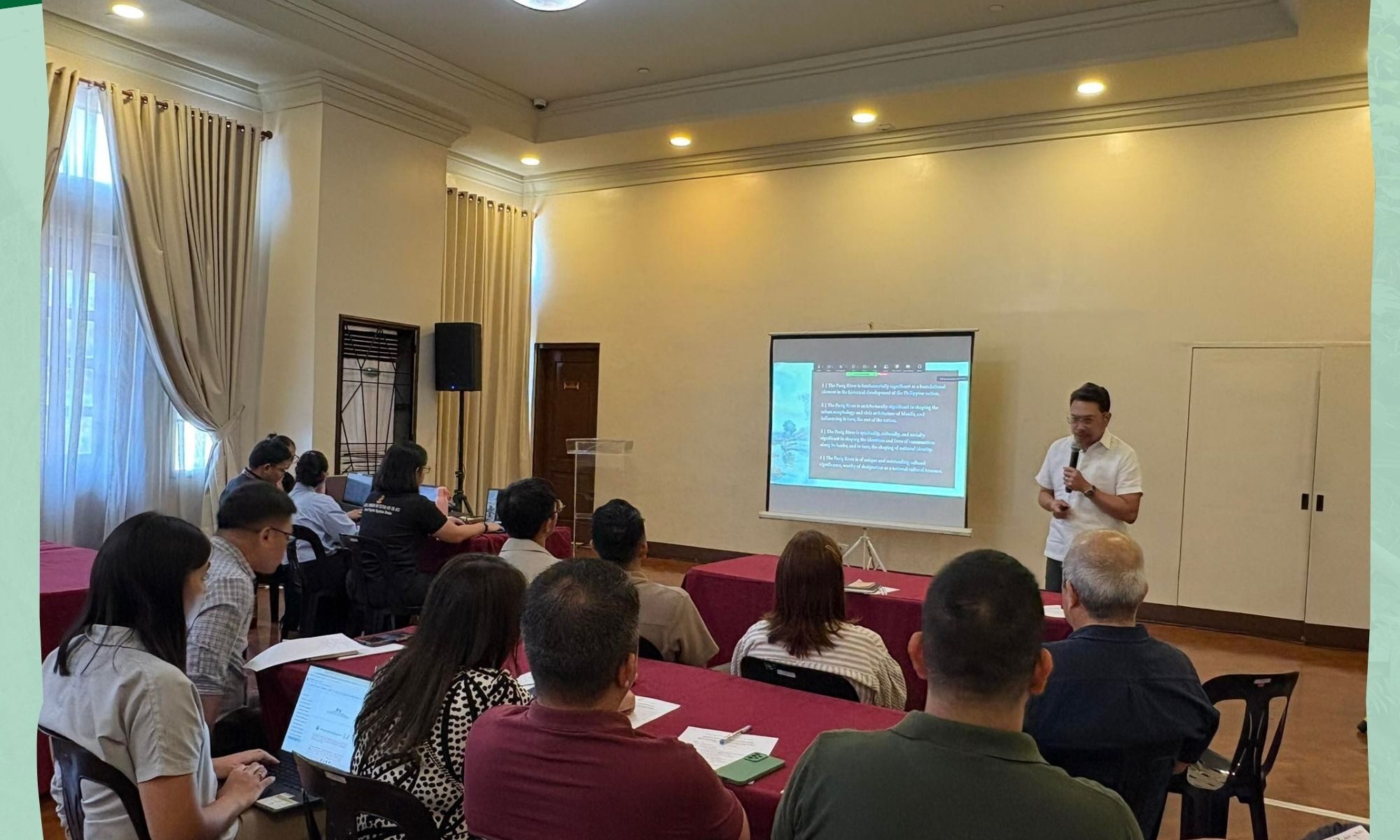
A key highlight of the discussion was the presentation of the petition by Atty. Mark Evidente who represented the two proponents of the declaration; ICOMOS Philippines and the Heritage Conservation Society. Framing the river as “a foundational element in the historical development of the Philippines,” Evidente underscored four core arguments: the Pasig River’s role in shaping early settlements, its influence on Manila’s urban and architectural form, its deep cultural and spiritual significance, and its outstanding value as a natural-cultural heritage corridor.
Tracing the river’s history from precolonial trade—evidenced by the Laguna Copper Plate Inscription and early settlements in Santa Ana—to the Spanish colonial period and the Manila-Acapulco Galleon Trade, the presentation highlighted how the Pasig River served as a lifeline for commerce, governance, and cultural exchange. It also noted the river’s role in the evolution of iconic districts such as Intramuros and Binondo, as well as its presence in Philippine literature, art, and identity.
Stakeholders shared diverse perspectives on the river’s present-day use and potential. Local government representatives cited its importance for tourism, transport, and community activities, including ferry services and fluvial parades. The Philippine Coast Guard emphasized its navigational function, while urban planners discussed ongoing efforts to develop esplanades, docking stations, and integrated ferry systems connecting Manila Bay to Laguna de Bay.
Programs on river rehabilitation, flood control, waste management, and urban renewal were also presented, alongside proposals for floating parks, linear parks, and expanded public access. Cultural initiatives highlighted the role of the river in fostering community identity, artistic expression, and youth engagement.
During the valuation segment, participants examined the Pasig River’s historical, social, and architectural significance. Agencies such as the National Museum and the National Historical Commission of the Philippines (NHCP) emphasized its enduring role in shaping the nation’s political, economic, and cultural landscape. Discussions also explored the river’s ecological history, intangible heritage, and its alignment with heritage structures such as bridges, churches, and civic spaces.
The session also addressed key considerations for protection and management, including legal classification under existing heritage laws, implementation of buffer zones, zoning regulations, and inter-agency coordination. Stakeholders underscored the need for a comprehensive and context-sensitive approach that recognizes both the natural and cultural dimensions of the river.
In closing, the NCCA reiterated that the FGD marks a critical step in the public consultation phase and signals the beginning of deeper engagement with stakeholders and the broader public.
“The Pasig River is not merely a backdrop to history—it is a living artery that connects our past and present,” Evidente emphasized. “Recognizing it as a National Cultural Treasure affirms its central role in shaping Filipino identity and urban life.”
Further consultations and public submissions are expected in the coming months as the declaration process progresses.