
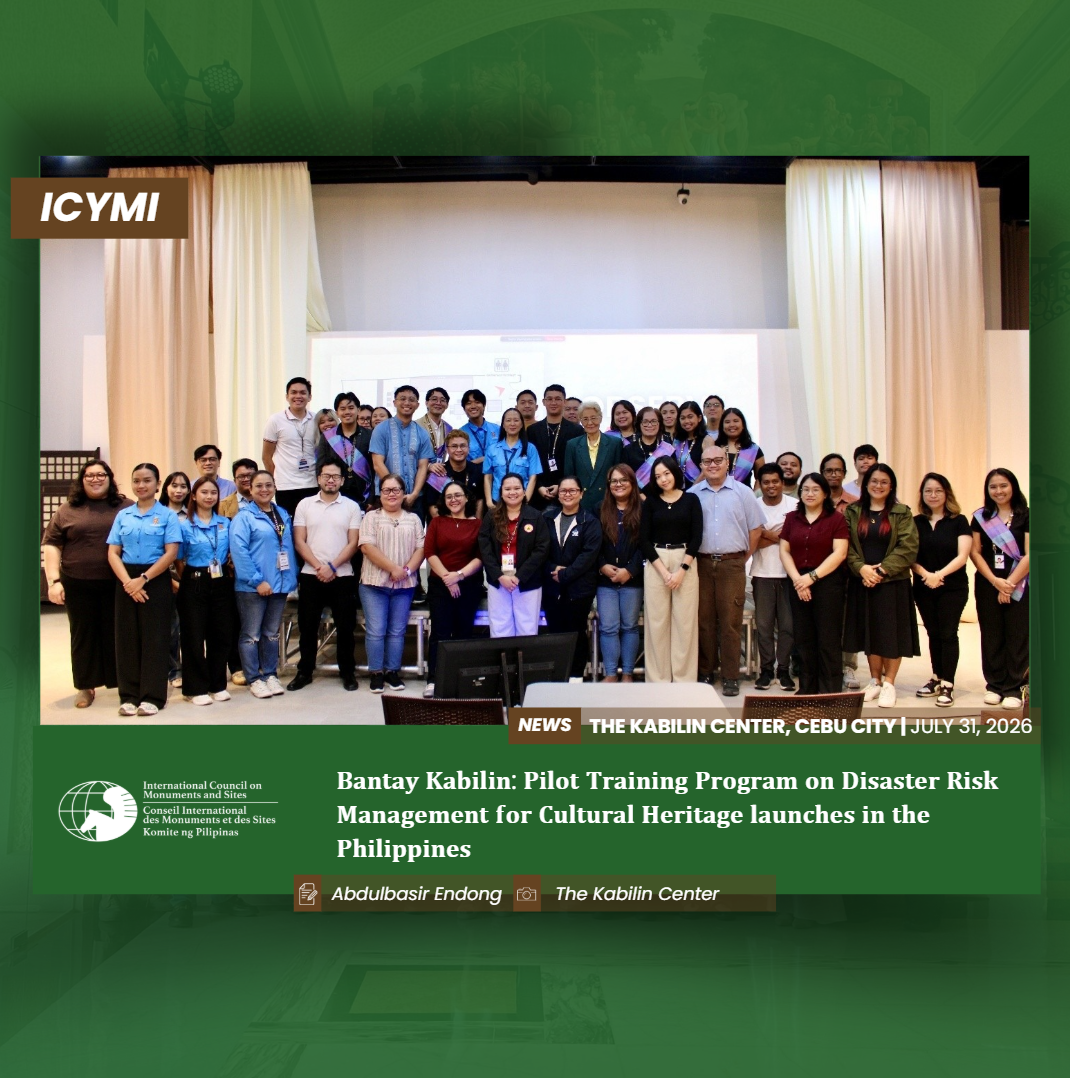
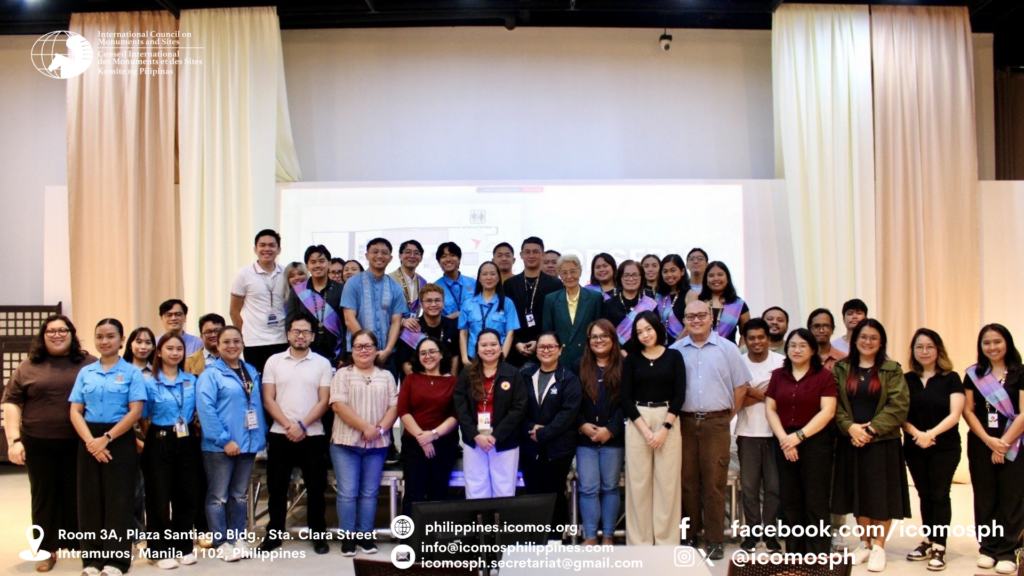
THE KABILIN CENTER, CEBU CITY–THE KABILIN CENTER, CEBU CITY—The International Council on Monuments and Sites (ICOMOS) Philippines and the Ramon Aboitiz Foundation, Inc. (RAFI) marked a significant milestone in protecting Philippine cultural heritage against disasters with the opening of the Bantay Kabilin: Pilot Training Program on Disaster Risk Management for Cultural Heritage (DRMCH).
The origins of the program drew from the experiences of ICOMOS Philippines team members who participated in the International Training Course on Disaster Risk Management of Cultural Heritage organized by ICCROM and Ritsumeikan University’s Institute of Disaster Mitigation for Urban Cultural Heritage (DMUCH). Building upon this foundation, ICOMOS Philippines and RAFI spent one year conducting research, consultations, curriculum development, and coordination with heritage professionals, government agencies, subject matter experts, participating institutions, and cultural heritage sites.
The pilot is being implemented through the partnership between ICOMOS Philippines and RAFI under the Kabilin Partnership Program, with support from The Japan Foundation, Manila, a funding partner of ICOMOS Philippines for the pilot.
The opening brought together leaders from ICOMOS Philippines and RAFI, heritage experts, development partners, and participants representing museums, churches, cultural institutions, civil society organizations, and local communities. Their presence reflected a shared commitment to safeguarding cultural heritage before, during, and after disasters.
Ms. Amaya Cristina Aboitiz-Fansler, President and Chief Executive Officer of RAFI, delivered the keynote address. She emphasized the importance of connecting cultural heritage protection with disaster risk reduction and climate resilience. She encouraged participants to build lasting professional networks and a shared commitment to the future of Philippine heritage.
Ar. Giuseppe Luigi H. Abcede, Trustee of ICOMOS Philippines, delivered his message. He emphasized the importance of cooperation among heritage organizations, government institutions, technical experts, and local communities in translating international conservation principles into practical action. He reaffirmed ICOMOS Philippines’ commitment to strengthening professional capacity and helping communities protect their heritage from disaster risks.
Ar. Kenneth Tua, PhDAgSci, Chief Project Officer of the Kabilin Partnership Program, recognized Cebu City as an important setting for piloting the training. He encouraged participants to address disaster risks through preparedness, cooperation, and shared responsibility. He also acknowledged the organizations and institutions that contributed to the program.
The opening introduced participants to the learning journey they will undertake throughout the pilot.
Mr. Joselito H. Corpus, Project Director of Bantay Kabilin: DRMCH, presented the program framework, learning methodology, and participant journey. He led the development of the pilot with the ICOMOS Philippines and RAFI project team, guiding its curriculum, modules, subject matter experts, institutional partnerships, case-study sites, lectures, workshops, site visits, and practical outputs. Drawing from his experience in heritage conservation and disaster risk management, he helped adapt international DRMCH principles to Philippine hazards, heritage conditions, and community needs.
Ar. King Rosales, Project Lead, presented the program’s objectives, structure, activities, and expected outcomes. Working closely with the Project Director, he helped coordinate the project team, partners, subject matter experts, participants, institutions, and heritage sites while supporting the program’s day-to-day implementation.
Bantay Kabilin draws upon ICOMOS Philippines’ technical knowledge, interdisciplinary experience, professional network, and international connections. Through lectures, workshops, case studies, and site visits, participants learn to assess heritage values, hazards, and vulnerabilities and to prepare measures for mitigation, response, recovery, and long-term resilience. Cebu City, with its churches, museums, historic landmarks, traditional communities, and heritage districts, provides a meaningful setting for applying these lessons.
The initiative is supported by RAFI through the Strategic Initiative Grant of its North and Central Portfolio. The Japan Foundation, Manila, a funding partner of ICOMOS Philippines for the pilot, supported the participation of international subject matter experts and the exchange of knowledge within the program. Bantay Kabilin begins a longer effort to develop a nationally relevant training model that integrates cultural heritage conservation with disaster risk management while strengthening community resilience.